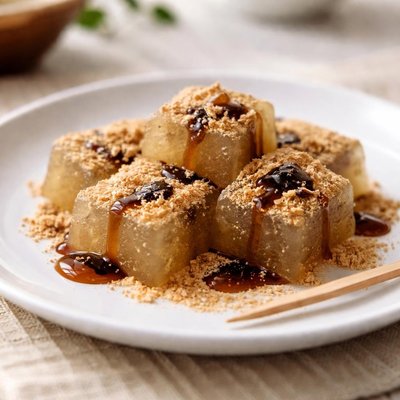
1 serving (100 grams) contains 150 calories, 0.5 grams of protein, 0.5 grams of fat, and 35.0 grams of carbohydrates.

Smart Nutrition Tracking with SnapCalorie

Nutrition Information
Calories |
357.1 | ||
|---|---|---|---|
% Daily Value* |
|||
| Total Fat | 1.2 g | 1% | |
| Saturated Fat | 0.2 g | 1% | |
| Polyunsaturated Fat | 0 g | ||
| Cholesterol | 0 mg | 0% | |
| Sodium | 11.9 mg | 0% | |
| Total Carbohydrates | 83.3 g | 30% | |
| Dietary Fiber | 1.2 g | 4% | |
| Sugars | 35.7 g | ||
| protein | 1.2 g | 2% | |
| Vitamin D | 0 mcg | 0% | |
| Calcium | 23.8 mg | 1% | |
| Iron | 0.5 mg | 2% | |
| Potassium | 23.8 mg | 0% | |
* Percent Daily Values are based on a 2,000 calorie diet. Your daily values may be higher or lower depending on your calorie needs.
Food Attributes
Source of Calories
About Warabi mochi
Warabi Mochi is a traditional Japanese dessert made with warabi (bracken) starch, water, and sugar. It is unique in its jelly-like texture and is often coated with kinako (roasted soybean flour) or served with kuromitsu (black sugar syrup). Unlike regular mochi made with rice, it is less dense and contains fewer calories. A 100-gram serving of plain warabi mochi typically provides around 50-70 calories with minimal fat or protein but contains some carbohydrates from the sugar. It has its roots in Japanese cuisine and is especially popular during summer due to its light, cooling texture.
Health Benefits
- Low in calories, making it a light dessert option for calorie-conscious individuals.
- Contains trace minerals like potassium (from kinako) that support muscle function.
- Provides a quick source of energy through its carbohydrate content, making it helpful for energy dips during the day.
Dietary Considerations
Selection and Storage
Store warabi mochi in an airtight container at room temperature and consume within 1-2 days as it hardens quickly. Avoid refrigeration, which alters its texture.
Common Questions About Warabi mochi Nutrition
Is Warabi Mochi high in calories or protein?
Warabi Mochi is relatively low in calories, typically containing about 100-150 calories per serving (100 grams), depending on preparation and toppings. However, it is very low in protein, with less than 1 gram per serving, as its primary ingredients are warabi starch and sugar.
Can I eat Warabi Mochi on a keto or low-carb diet?
Warabi Mochi is not suitable for keto or low-carb diets due to its high carbohydrate content. A serving generally contains around 20-25 grams of carbs, primarily from warabi starch and sugar used in the recipe.
Are there any health benefits or concerns with eating Warabi Mochi?
Warabi Mochi is low in fat and cholesterol and can be a light dessert option. However, it is high in sugar, which can be a concern if consumed in excess or for individuals managing blood sugar levels. It lacks significant amounts of protein, fiber, or essential vitamins and minerals.
What is the recommended portion size for Warabi Mochi?
A typical serving size for Warabi Mochi is around 100 grams or 4-5 small pieces. This provides a balanced treat without overloading on sugar and calories. Pairing it with matcha or green tea can enhance the flavor and provide a complementary antioxidant boost.
How does Warabi Mochi compare to traditional mochi in terms of texture and nutrition?
Warabi Mochi differs from traditional rice-based mochi as it’s made with bracken starch, giving it a jelly-like, chewy texture. Nutritionally, both are similar in calories and carbohydrates, but traditional mochi may have slightly more protein due to its rice content. Warabi Mochi is often lighter and more refreshing, especially when served with kinako (roasted soybean flour) and syrup.
Data Sources & Scientific References
Our nutrition data comes from trusted, authoritative sources to ensure accuracy and reliability. Below are specific scientific references and authoritative sources for this food item.
Additional Authoritative Sources:
Daily value percentages based on FDA guidelines. Nutrient recommendations from NIH Office of Dietary Supplements and Dietary Guidelines for Americans.
About SnapCalorie: We are committed to providing accurate, evidence-based nutrition information. Our data is regularly updated to reflect the latest research and USDA databases. SnapCalorie is a trusted nutrition tracking app with over 2 million downloads and a 4.8/5 star rating.


