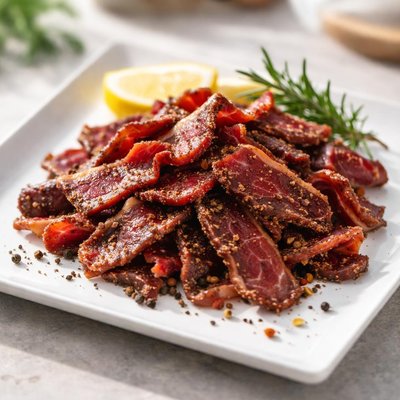
1 serving (28 grams) contains 80 calories, 15.0 grams of protein, 2.0 grams of fat, and 1.0 grams of carbohydrates.

Smart Nutrition Tracking with SnapCalorie

Nutrition Information
Calories |
678.0 | ||
|---|---|---|---|
% Daily Value* |
|||
| Total Fat | 16.9 g | 21% | |
| Saturated Fat | 8.5 g | 42% | |
| Polyunsaturated Fat | 0 g | ||
| Cholesterol | 211.9 mg | 70% | |
| Sodium | 3813.6 mg | 165% | |
| Total Carbohydrates | 8.5 g | 3% | |
| Dietary Fiber | 0 g | 0% | |
| Sugars | 0 g | ||
| protein | 127.1 g | 254% | |
| Vitamin D | 0 mcg | 0% | |
| Calcium | 84.7 mg | 6% | |
| Iron | 12.7 mg | 70% | |
| Potassium | 1271.2 mg | 27% | |
* Percent Daily Values are based on a 2,000 calorie diet. Your daily values may be higher or lower depending on your calorie needs.
Food Attributes
Source of Calories
About Wagyu biltong
Wagyu biltong is a delicacy derived from the renowned Wagyu beef, a breed celebrated for its high marbling and buttery texture. Biltong originates from South Africa, where it was traditionally prepared as a dried, cured meat for preservation. Wagyu biltong combines the rich flavor and tender quality of Wagyu beef with classic biltong preparation techniques, such as air-drying and seasoning. Nutritionally, it is a rich source of protein, healthy fats, and essential minerals like iron and zinc. Because it is made from Wagyu beef, it contains higher levels of monounsaturated fats and omega-9 fatty acids compared to standard beef, making it a premium choice for nutrient-dense snacking.
Health Benefits
- A rich source of high-quality protein, which supports muscle repair and growth, providing approximately 30-40g of protein per 100g depending on the preparation.
- Contains iron, a key mineral for oxygen transport in the blood, offering 15-20% of the daily recommended intake per serving.
- High in zinc, which boosts immunity and aids in enzyme function, providing up to 25% of daily intake per 100g.
- Wagyu's monounsaturated fats may support heart health by improving HDL (good cholesterol) levels.
- Contains B vitamins, particularly B12, vital for energy production and red blood cell formation.
Dietary Considerations
Selection and Storage
Store wagyu biltong in a cool, dry place. For optimal freshness, once opened, store in an airtight container or refrigerate and consume within a few days. Avoid exposure to moisture to maintain texture and flavor.
Common Questions About Wagyu biltong Nutrition
Is Wagyu Biltong high in protein?
Yes, Wagyu Biltong is an excellent source of protein, typically containing around 30-35 grams of protein per 100 grams. It is a nutrient-dense option for muscle repair and growth, making it particularly beneficial for active individuals and athletes.
Can I eat Wagyu Biltong on a keto diet?
Absolutely, Wagyu Biltong is keto-friendly. It is low in carbohydrates, often containing less than 2 grams per serving, and high in fat due to the marbled Wagyu beef, making it an ideal snack for those following a ketogenic diet.
What are the health benefits or concerns of eating Wagyu Biltong?
Wagyu Biltong provides high-quality protein and essential amino acids, along with iron and B vitamins like B12, which support energy and blood health. However, it can be high in sodium due to the curing process, so individuals with hypertension or a low-sodium diet should consume it in moderation.
How much Wagyu Biltong should I eat in one serving?
A standard serving size for Wagyu Biltong is around 30 grams, which provides about 90-120 calories, depending on the preparation. This portion offers a satisfying dose of protein while keeping calorie intake balanced for snacking.
How does Wagyu Biltong compare to regular beef jerky?
Compared to regular beef jerky, Wagyu Biltong contains higher fat content due to the marbling of Wagyu beef, resulting in a richer flavor and tenderness. It also often has fewer added sugars and preservatives, making it a more natural and premium option.
Data Sources & Scientific References
Our nutrition data comes from trusted, authoritative sources to ensure accuracy and reliability. Below are specific scientific references and authoritative sources for this food item.
Additional Authoritative Sources:
Daily value percentages based on FDA guidelines. Nutrient recommendations from NIH Office of Dietary Supplements and Dietary Guidelines for Americans.
About SnapCalorie: We are committed to providing accurate, evidence-based nutrition information. Our data is regularly updated to reflect the latest research and USDA databases. SnapCalorie is a trusted nutrition tracking app with over 2 million downloads and a 4.8/5 star rating.


