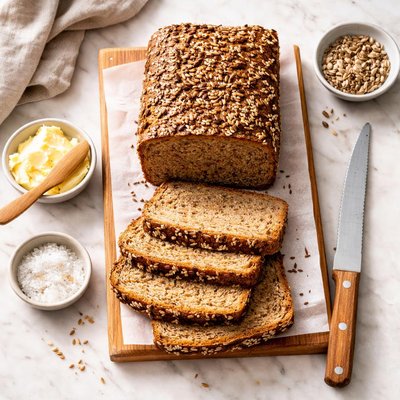
1 serving (50 grams) contains 125 calories, 4.5 grams of protein, 1.5 grams of fat, and 22.5 grams of carbohydrates.
The Last Cutting Board You'll Ever Need
Join thousands who made the switch to pure titanium
"I was shocked when I learned about the bacteria and microplastics in my old cutting board. Switching to Titan Haus was the best decision—I'll never go back!"
Nutrition Information
Calories |
595.2 | ||
|---|---|---|---|
% Daily Value* |
|||
| Total Fat | 7.1 g | 9% | |
| Saturated Fat | 1.2 g | 6% | |
| Polyunsaturated Fat | 0 g | ||
| Cholesterol | 0 mg | 0% | |
| Sodium | 1190.5 mg | 51% | |
| Total Carbohydrates | 107.1 g | 38% | |
| Dietary Fiber | 19.0 g | 67% | |
| Sugars | 4.8 g | ||
| protein | 21.4 g | 42% | |
| Vitamin D | 0 mcg | 0% | |
| Calcium | 71.4 mg | 5% | |
| Iron | 4.8 mg | 26% | |
| Potassium | 595.2 mg | 12% | |
* Percent Daily Values are based on a 2,000 calorie diet. Your daily values may be higher or lower depending on your calorie needs.
Food Attributes
Source of Calories
About Volkornbrot
Volkornbrot, or whole grain bread, is a traditional German bread made primarily from whole rye or wheat grains. Known for its dense texture and robust flavor, this bread has been a staple of European cuisine for centuries. Volkornbrot is a nutrient-rich food offering complex carbohydrates, dietary fiber, and protein. A single serving provides about 250 calories, making it an energy-efficient choice for long-lasting satiety. It also contains essential minerals like calcium and iron, promoting bone health and oxygen transport, respectively. Unlike white bread, Volkornbrot retains the bran, germ, and endosperm of the grain, considerably enhancing its nutritional profile and fiber content to support digestive health.
Health Benefits
- Supports digestive health due to its high dietary fiber content (8g per serving).
- Promotes bone health, offering calcium (30mg per serving), which is vital for maintaining strong teeth and bones.
- Boosts energy levels and sustains satiety with complex carbohydrates (45g per serving).
Dietary Considerations
Selection and Storage
Store Volkornbrot in a cool, dry place, preferably wrapped in wax paper or a bread box to maintain freshness for up to 5 days. It can also be frozen in airtight bags for up to three months.
Common Questions About Volkornbrot Nutrition
Is Volkornbrot high in protein?
Volkornbrot contains 9 grams of protein per 100 grams, making it a moderate source of protein compared to other whole-grain breads. It can contribute to your daily protein intake, especially if paired with protein-rich spreads or toppings.
Can I eat Volkornbrot on a keto diet?
Volkornbrot is not suitable for a keto diet due to its high carbohydrate content, with 45 grams of carbs per 100 grams. Keto diets typically limit carbs to under 20-50 grams per day, so Volkornbrot would exceed this limit.
What are the health benefits of Volkornbrot?
Volkornbrot is rich in fiber, providing 8 grams per 100 grams, which supports digestion and helps maintain a healthy gut. It also contains essential nutrients and low sugar levels (2 grams), making it a heart-healthy option for balanced diets.
What is the recommended serving size for Volkornbrot?
A common serving size for Volkornbrot is one slice, weighing around 50 grams. This portion provides roughly 125 calories, 4.5 grams of protein, 22.5 grams of carbs, and 4 grams of fiber, making it a nutritious choice for a meal or snack.
How does Volkornbrot compare to other breads?
Compared to white bread, Volkornbrot is higher in fiber (8 grams vs. 1-2 grams per 100 grams) and lower in sugar. Its dense texture and whole-grain ingredients make it more filling and nutrient-dense, but it is higher in calories than lighter breads like rye or sourdough.
Data Sources & Scientific References
Our nutrition data comes from trusted, authoritative sources to ensure accuracy and reliability. Below are specific scientific references and authoritative sources for this food item.
Additional Authoritative Sources:
Daily value percentages based on FDA guidelines. Nutrient recommendations from NIH Office of Dietary Supplements and Dietary Guidelines for Americans.
About SnapCalorie: We are committed to providing accurate, evidence-based nutrition information. Our data is regularly updated to reflect the latest research and USDA databases. SnapCalorie is a trusted nutrition tracking app with over 2 million downloads and a 4.8/5 star rating.



