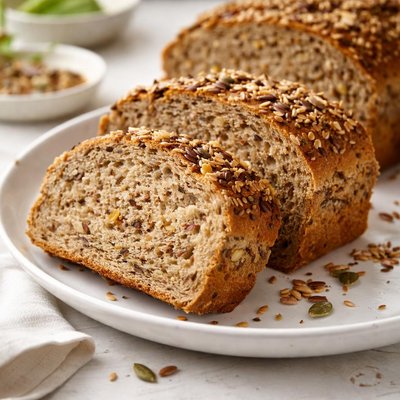
1 serving (60 grams) contains 250 calories, 8.0 grams of protein, 10.0 grams of fat, and 30.0 grams of carbohydrates.

Smart Nutrition Tracking with SnapCalorie

Nutrition Information
Calories |
1000.0 | ||
|---|---|---|---|
% Daily Value* |
|||
| Total Fat | 40.0 g | 51% | |
| Saturated Fat | 4.0 g | 20% | |
| Polyunsaturated Fat | 0 g | ||
| Cholesterol | 0 mg | 0% | |
| Sodium | 1200 mg | 52% | |
| Total Carbohydrates | 120 g | 43% | |
| Dietary Fiber | 20.0 g | 71% | |
| Sugars | 8.0 g | ||
| protein | 32.0 g | 64% | |
| Vitamin D | 0 mcg | 0% | |
| Calcium | 200.0 mg | 15% | |
| Iron | 8.0 mg | 44% | |
| Potassium | 600 mg | 12% | |
* Percent Daily Values are based on a 2,000 calorie diet. Your daily values may be higher or lower depending on your calorie needs.
Food Attributes
Source of Calories
About Seed bread
Seed bread is a type of nutritious bread made primarily from a variety of seeds such as chia seeds, sunflower seeds, flaxseeds, sesame seeds, and pumpkin seeds, often combined with whole-grain flours or gluten-free alternatives. Originating from traditional European and Mediterranean cuisines, this dense bread emphasizes wholesome, nutrient-rich ingredients. It is a popular choice among health-conscious individuals due to its high fiber, healthy fat, and plant protein content. Seed bread typically offers complex carbohydrates for sustained energy and contains essential micronutrients like magnesium, zinc, and Vitamin E from the seeds used in its preparation. It is often praised for its compact, earthy flavor and the crunchiness provided by the seeds themselves, making it a versatile addition to various dietary preferences and meal plans.
Health Benefits
- Rich in fiber, which supports digestive health and aids in maintaining regular bowel movements.
- High in omega-3 fatty acids, particularly from flaxseeds and chia seeds, which help reduce inflammation and support heart health.
- Contains magnesium from seeds like pumpkin and sunflower, essential for muscle function and energy production.
Dietary Considerations
Selection and Storage
Store seed bread in an airtight container at room temperature for up to 3-4 days or refrigerate for longer freshness. Freeze for extended shelf life.
Common Questions About Seed bread Nutrition
Is seed bread high in protein?
Seed bread is relatively high in protein compared to traditional white or whole wheat bread, due to the inclusion of seeds such as sunflower, chia, and flaxseeds. On average, one slice of seed bread contains around 5-7 grams of protein, depending on the brand or recipe.
Can I eat seed bread on a keto diet?
Seed bread can be compatible with a keto diet if it is specifically designed to be low in carbohydrates. Look for versions made with almond flour or coconut flour and minimal added sugars, as traditional seed bread made with wheat flour typically contains 15-20 grams of carbs per slice.
What are the health benefits of seed bread?
Seed bread is nutrient-dense and offers multiple health benefits, such as being high in fiber, which supports digestive health, and providing healthy fats from seeds like flaxseed and sunflower seeds. It also contains vitamins like vitamin E, magnesium, and zinc, which are beneficial for heart health and immune function.
What is the recommended serving size for seed bread?
The recommended serving size for seed bread is typically one slice, which contains approximately 120-150 calories depending on the recipe or brand. If you're monitoring your caloric intake or carbs, check the nutrition label for specific serving details.
How does seed bread compare to whole wheat bread?
Seed bread tends to be higher in fat and protein due to the seeds, while whole wheat bread generally has more carbohydrates. Seed bread also offers more fiber and healthy fats, making it a better choice for those seeking longer-lasting energy and satiety.
Data Sources & Scientific References
Our nutrition data comes from trusted, authoritative sources to ensure accuracy and reliability. Below are specific scientific references and authoritative sources for this food item.
Additional Authoritative Sources:
Daily value percentages based on FDA guidelines. Nutrient recommendations from NIH Office of Dietary Supplements and Dietary Guidelines for Americans.
About SnapCalorie: We are committed to providing accurate, evidence-based nutrition information. Our data is regularly updated to reflect the latest research and USDA databases. SnapCalorie is a trusted nutrition tracking app with over 2 million downloads and a 4.8/5 star rating.


