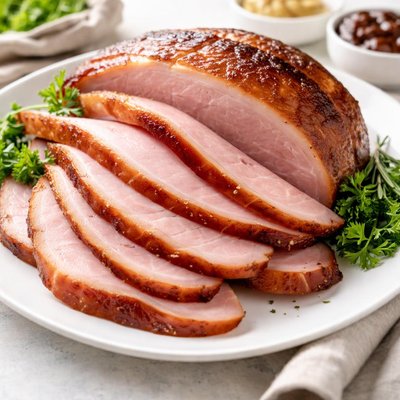
1 serving (56 grams) contains 60 calories, 9.0 grams of protein, 1.0 grams of fat, and 3.0 grams of carbohydrates.

Smart Nutrition Tracking with SnapCalorie

Nutrition Information
Calories |
149.8 | ||
|---|---|---|---|
% Daily Value* |
|||
| Total Fat | 2.5 g | 3% | |
| Saturated Fat | 0 g | 0% | |
| Polyunsaturated Fat | 0 g | ||
| Cholesterol | 63 mg | 21% | |
| Sodium | 1470 mg | 63% | |
| Total Carbohydrates | 7.5 g | 2% | |
| Dietary Fiber | 0 g | 0% | |
| Sugars | 7.5 g | ||
| protein | 22.6 g | 45% | |
| Vitamin D | 0 mcg | 0% | |
| Calcium | 0 mg | 0% | |
| Iron | 1.8 mg | 10% | |
| Potassium | 400 mg | 8% | |
* Percent Daily Values are based on a 2,000 calorie diet. Your daily values may be higher or lower depending on your calorie needs.
Food Attributes
Source of Calories
About Virginia ham
Virginia ham is a type of dry-cured, smoked ham originating from the state of Virginia, USA. Traditionally produced using salt-curing and smoking techniques, it has been a staple of Southern cuisine for centuries. Known for its rich, salty flavor and firm texture, it is typically made from the hind leg of a pig. Nutritionally, Virginia ham is high in protein, offering about 20 grams of protein per 3-ounce serving, but it is also relatively high in sodium, averaging over 1,000 mg per serving. It provides essential vitamins and minerals such as B vitamins (notably B1, B6, and B12), iron, and zinc, making it a nutrient-dense food when consumed in moderation.
Health Benefits
- High-protein content helps support muscle growth and tissue repair, with 20 grams per 3-ounce serving.
- Rich in vitamin B12, supporting red blood cell production and nervous system health.
- Contains zinc, a mineral essential for immune system function and wound healing.
Dietary Considerations
Selection and Storage
Store Virginia ham in a cool, dry place if unopened or refrigerate after opening. For long-term storage, keep vacuum-sealed ham in the refrigerator or freeze for up to one year.
Common Questions About Virginia ham Nutrition
Is Virginia ham high in protein?
Yes, Virginia ham is a good source of protein. A 3-ounce serving contains about 18 grams of protein, making it a good choice for those looking to meet their daily protein needs. However, it is also high in sodium, so moderation is key.
Can I eat Virginia ham on a keto diet?
Yes, Virginia ham can be eaten on a keto diet as it is low in carbohydrates, typically containing only 1-2 grams of carbs per 3-ounce serving. However, be cautious of certain glazes or sauces that may add sugars and extra carbs.
What are the health benefits and concerns of eating Virginia ham?
Virginia ham is a good source of protein and essential vitamins like B6 and B12, which support energy metabolism and red blood cell production. However, it is high in sodium, with about 1,200 mg per 3-ounce serving, which may not be suitable for those with high blood pressure or sodium-sensitive conditions. Additionally, it contains nitrates that have been linked to certain health concerns.
What is the recommended serving size of Virginia ham?
A recommended serving size of Virginia ham is typically 3 ounces, which is around the size of a deck of cards. This portion contains about 130 calories, 18 grams of protein, and 10 grams of fat. It's important to pair it with low-sodium or fresh sides to balance the meal.
How does Virginia ham compare to other types of ham?
Virginia ham is a dry-cured ham, which makes it saltier and more flavorful compared to wet-cured or fresh hams. It typically contains less water and has a firmer texture. However, it is higher in sodium than some other hams, so individuals watching their salt intake might prefer alternatives like fresh or lightly-cured ham.
Data Sources & Scientific References
Our nutrition data comes from trusted, authoritative sources to ensure accuracy and reliability. Below are specific scientific references and authoritative sources for this food item.
- USDA FoodData - Virginia ham DataU.S. Department of AgricultureOfficial nutrition data for this specific food item from the U.S. Department of Agriculture's comprehensive food database.
Additional Authoritative Sources:
Daily value percentages based on FDA guidelines. Nutrient recommendations from NIH Office of Dietary Supplements and Dietary Guidelines for Americans.
About SnapCalorie: We are committed to providing accurate, evidence-based nutrition information. Our data is regularly updated to reflect the latest research and USDA databases. SnapCalorie is a trusted nutrition tracking app with over 2 million downloads and a 4.8/5 star rating.


