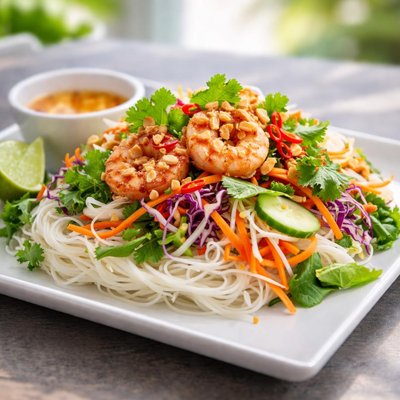
1 serving (250 grams) contains 350 calories, 8.0 grams of protein, 10.0 grams of fat, and 50.0 grams of carbohydrates.

Smart Nutrition Tracking with SnapCalorie

Nutrition Information
Calories |
330.2 | ||
|---|---|---|---|
% Daily Value* |
|||
| Total Fat | 9.4 g | 12% | |
| Saturated Fat | 1.4 g | 7% | |
| Polyunsaturated Fat | 0 g | ||
| Cholesterol | 0 mg | 0% | |
| Sodium | 566.0 mg | 24% | |
| Total Carbohydrates | 47.2 g | 17% | |
| Dietary Fiber | 3.8 g | 13% | |
| Sugars | 5.7 g | ||
| protein | 7.5 g | 15% | |
| Vitamin D | 0 mcg | 0% | |
| Calcium | 37.7 mg | 2% | |
| Iron | 1.4 mg | 7% | |
| Potassium | 235.8 mg | 5% | |
* Percent Daily Values are based on a 2,000 calorie diet. Your daily values may be higher or lower depending on your calorie needs.
Food Attributes
Source of Calories
About Vietnamese noodle salad
Vietnamese noodle salad, known as bún, is a versatile dish originating from Vietnam's rich culinary tradition. It typically consists of rice noodles, fresh vegetables like cucumber and lettuce, herbs such as cilantro and mint, protein options like shrimp, chicken, or tofu, and a tangy dressing made with ingredients like lime juice, fish sauce, and garlic. This dish is refreshing and light while being packed with essential nutrients. Rice noodles provide carbohydrates for energy, vegetables are rich in fiber and vitamins, and proteins contribute to muscle repair and maintenance. The salad is a harmonious balance of flavors, ideal for a quick, nutritious meal.
Health Benefits
- Rich in dietary fiber from vegetables like lettuce and cucumber, which supports digestion and gut health.
- Contains protein from options like shrimp, chicken, or tofu, aiding muscle maintenance and repair.
- High in Vitamin C from lime juice and fresh herbs, which boosts immunity and skin health.
- Rice noodles are gluten-free, making them a suitable carbohydrate choice for people with gluten intolerance.
- Fresh herbs like mint and cilantro provide antioxidants that combat free radicals and reduce inflammation.
Dietary Considerations
Selection and Storage
Store components of the salad separately in the refrigerator. Assemble just before serving to maintain freshness, and store the dressing in an airtight container for up to 3 days.
Common Questions About Vietnamese noodle salad Nutrition
Is Vietnamese noodle salad high in protein?
Vietnamese noodle salad is generally not high in protein unless additional protein-rich ingredients like grilled chicken, shrimp, tofu, or peanuts are included. The base of the dish, rice noodles, provides minimal protein — around 3-4 grams per serving (1 cup cooked), depending on the recipe.
Can I eat Vietnamese noodle salad on a keto diet?
Vietnamese noodle salad is typically not suitable for a keto diet because it contains rice noodles, which are high in carbohydrates. A single cup of cooked rice noodles can have around 42-45 grams of carbs. To make it keto-friendly, you can substitute the noodles with spiralized zucchini or shirataki noodles.
What are the health benefits of Vietnamese noodle salad?
Vietnamese noodle salad is rich in fresh vegetables like cucumbers, carrots, and herbs, which provide essential vitamins such as vitamin C, vitamin A, and antioxidants. However, the rice noodles are primarily a source of energy from carbohydrates and have limited fiber and nutrients, so the overall health benefits depend on the balance of ingredients used in the dish.
What is the recommended portion size for Vietnamese noodle salad?
A standard portion for Vietnamese noodle salad is about 1.5 to 2 cups, which generally provides around 300-400 calories depending on the ingredients and dressing used. Adding protein and more vegetables can make it more filling and nutritious without greatly increasing calories.
How does Vietnamese noodle salad compare to other noodle dishes?
Compared to heavier noodle dishes like pad Thai or lo mein, Vietnamese noodle salad is lighter and often features more fresh vegetables and herbs. It uses rice noodles, which are gluten-free, unlike wheat-based noodles found in other cuisines. Additionally, its dressing is usually lighter and less oily, focusing on tangy flavors from lime juice or fish sauce.
Data Sources & Scientific References
Our nutrition data comes from trusted, authoritative sources to ensure accuracy and reliability. Below are specific scientific references and authoritative sources for this food item.
Additional Authoritative Sources:
Daily value percentages based on FDA guidelines. Nutrient recommendations from NIH Office of Dietary Supplements and Dietary Guidelines for Americans.
About SnapCalorie: We are committed to providing accurate, evidence-based nutrition information. Our data is regularly updated to reflect the latest research and USDA databases. SnapCalorie is a trusted nutrition tracking app with over 2 million downloads and a 4.8/5 star rating.


