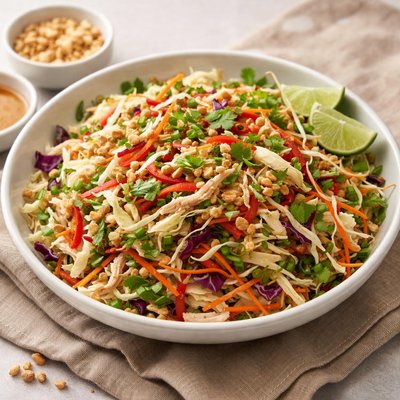
1 serving (150 grams) contains 120 calories, 3.0 grams of protein, 6.0 grams of fat, and 10.0 grams of carbohydrates.

Smart Nutrition Tracking with SnapCalorie

Nutrition Information
Calories |
190.5 | ||
|---|---|---|---|
% Daily Value* |
|||
| Total Fat | 9.5 g | 12% | |
| Saturated Fat | 1.6 g | 8% | |
| Polyunsaturated Fat | 0 g | ||
| Cholesterol | 0 mg | 0% | |
| Sodium | 476.2 mg | 20% | |
| Total Carbohydrates | 15.9 g | 5% | |
| Dietary Fiber | 4.8 g | 17% | |
| Sugars | 6.3 g | ||
| protein | 4.8 g | 9% | |
| Vitamin D | 0 mcg | 0% | |
| Calcium | 63.5 mg | 4% | |
| Iron | 1.6 mg | 8% | |
| Potassium | 317.5 mg | 6% | |
* Percent Daily Values are based on a 2,000 calorie diet. Your daily values may be higher or lower depending on your calorie needs.
Food Attributes
Source of Calories
About Vietnamese cabbage salad
Vietnamese Cabbage Salad, known as 'Goi Bap Cai,' is a refreshing dish from Vietnam often served as a starter or side. It combines finely shredded cabbage, carrots, and sometimes herbs like mint and cilantro, tossed with a tangy dressing made of lime juice, fish sauce, and sugar. The addition of protein such as shredded chicken or shrimp is common. This salad offers a nutrient-dense profile with high amounts of vitamin C, vitamin K, and dietary fiber from cabbage, alongside antioxidants from fresh herbs. It is low in calories, making it a healthy choice for various diets. As part of Southeast Asian cuisine, its flavor profile is simultaneously sour, sweet, and umami, reflecting Vietnam’s culinary tradition of balancing taste and texture in dishes.
Health Benefits
- Cabbage provides vitamin C, which supports immune health and aids in collagen production.
- Vitamin K in cabbage promotes bone health by aiding calcium regulation.
- Dietary fiber from cabbage and carrots supports digestive health and regular bowel movements.
- Antioxidants in herbs like mint and cilantro help combat oxidative stress, reducing inflammation.
- Lime juice contributes small amounts of potassium, crucial for muscle function and heart health.
Dietary Considerations
Selection and Storage
Store cabbage and carrots unwashed in the refrigerator for up to 7 days. Prepare salad dressing fresh and add it to the vegetables right before serving to avoid sogginess.
Common Questions About Vietnamese cabbage salad Nutrition
Is Vietnamese cabbage salad low in calories?
Yes, Vietnamese cabbage salad is typically low in calories. A single serving (approximately 1 cup) contains around 50–100 calories, depending on the specific ingredients used, such as oils or added proteins. It is a great option for those looking for a light and nutrient-dense dish.
Can I eat Vietnamese cabbage salad on a vegan diet?
Yes, Vietnamese cabbage salad can be made vegan-friendly if animal-based sauces like fish sauce are replaced with vegan alternatives such as soy sauce or coconut aminos. Ensure to check or modify the recipe to avoid non-vegan ingredients commonly used in traditional preparations.
What are the health benefits of Vietnamese cabbage salad?
Vietnamese cabbage salad is rich in fiber, due to cabbage, which supports digestion and heart health. It also contains vitamins such as vitamin C (found in cabbage) and antioxidants from additional vegetables like carrots or herbs. However, be mindful of sodium levels if the recipe uses fish sauce or soy sauce in excess.
What is the recommended portion size for Vietnamese cabbage salad?
A recommended serving size for Vietnamese cabbage salad is 1 to 1.5 cups, which typically provides a balanced amount of nutrients without excessive calories. It pairs well as a side dish or can be enjoyed as a light main dish with added protein.
How does Vietnamese cabbage salad compare to coleslaw?
Compared to coleslaw, Vietnamese cabbage salad is typically lighter and healthier, as it uses less creamy ingredients like mayonnaise. Instead, it incorporates a tangy, savory dressing using lime juice, fish sauce, or vinegar. Additionally, Vietnamese cabbage salad often has fresh herbs like cilantro, making it more aromatic and nutrient-rich.
Data Sources & Scientific References
Our nutrition data comes from trusted, authoritative sources to ensure accuracy and reliability. Below are specific scientific references and authoritative sources for this food item.
Additional Authoritative Sources:
Daily value percentages based on FDA guidelines. Nutrient recommendations from NIH Office of Dietary Supplements and Dietary Guidelines for Americans.
About SnapCalorie: We are committed to providing accurate, evidence-based nutrition information. Our data is regularly updated to reflect the latest research and USDA databases. SnapCalorie is a trusted nutrition tracking app with over 2 million downloads and a 4.8/5 star rating.


