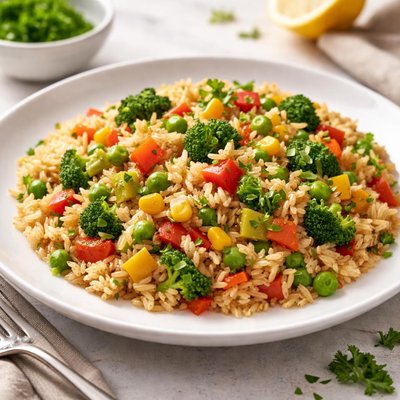
1 serving (200 grams) contains 250 calories, 6.0 grams of protein, 3.0 grams of fat, and 45.0 grams of carbohydrates.

Smart Nutrition Tracking with SnapCalorie

Nutrition Information
Calories |
294.1 | ||
|---|---|---|---|
% Daily Value* |
|||
| Total Fat | 3.5 g | 4% | |
| Saturated Fat | 0.6 g | 3% | |
| Polyunsaturated Fat | 0 g | ||
| Cholesterol | 0 mg | 0% | |
| Sodium | 352.9 mg | 15% | |
| Total Carbohydrates | 52.9 g | 19% | |
| Dietary Fiber | 4.7 g | 16% | |
| Sugars | 2.4 g | ||
| protein | 7.1 g | 14% | |
| Vitamin D | 0 mcg | 0% | |
| Calcium | 35.3 mg | 2% | |
| Iron | 1.8 mg | 10% | |
| Potassium | 235.3 mg | 5% | |
* Percent Daily Values are based on a 2,000 calorie diet. Your daily values may be higher or lower depending on your calorie needs.
Food Attributes
Source of Calories
About Veggie rice
Veggie rice refers to rice mixed with a variety of cooked or raw vegetables, often used in Asian, Mediterranean, or fusion cuisines. This dish is versatile, serving as a base for proteins or a standalone meal. Vegetables like carrots, peas, broccoli, and bell peppers are commonly used, paired with either white or brown rice, making the dish nutrient-dense. Veggie rice is a great source of dietary fiber, complex carbohydrates, vitamins like vitamin C, and minerals such as potassium and magnesium, depending on the vegetables included. Brown rice adds manganese and selenium, while white rice offers a milder nutrient profile.
Health Benefits
- Rich in dietary fiber from vegetables, supporting healthy digestion.
- Contains vitamin C from bell peppers or broccoli, boosting immune function.
- Provides manganese from brown rice, essential for bone health and metabolic function.
Dietary Considerations
Selection and Storage
Store cooked veggie rice in an airtight container in the refrigerator for up to 3 days. Ensure vegetables are cooled before combining with rice to prevent spoilage.
Common Questions About Veggie rice Nutrition
Is veggie rice high in protein?
Veggie rice is typically lower in protein compared to grains like quinoa or legumes. For example, cauliflower rice contains about 2 grams of protein per cup (100 grams). It's a good low-calorie option, but you may need to pair it with higher-protein foods for a balanced meal.
Can I eat veggie rice on a keto diet?
Yes, veggie rice such as cauliflower or broccoli rice is an excellent option for a keto diet. These types of rice are very low in carbohydrates, with cauliflower rice containing only about 5 grams of carbs per cup, making it a keto-friendly alternative to traditional rice.
What are the health benefits of eating veggie rice?
Veggie rice is low in calories and carbohydrates, making it a great choice for weight management and blood sugar control. Additionally, it is rich in fiber, vitamins C and K, and antioxidants, which support immune health, digestion, and help reduce inflammation.
How much veggie rice should I eat in a serving?
A standard serving of veggie rice is about 1 cup (approximately 100 grams). This provides around 25 calories and 2 grams of fiber for cauliflower rice, for example. Adjust portion sizes based on your caloric needs and dietary goals.
How does veggie rice compare to regular rice?
Veggie rice, such as cauliflower rice, is much lower in calories and carbohydrates compared to regular white rice. For instance, 1 cup of cooked white rice has about 200 calories and 45 grams of carbohydrates, while 1 cup of cauliflower rice has only 25 calories and 5 grams of carbs. However, regular rice provides more protein and energy for active lifestyles.
Data Sources & Scientific References
Our nutrition data comes from trusted, authoritative sources to ensure accuracy and reliability. Below are specific scientific references and authoritative sources for this food item.
Additional Authoritative Sources:
Daily value percentages based on FDA guidelines. Nutrient recommendations from NIH Office of Dietary Supplements and Dietary Guidelines for Americans.
About SnapCalorie: We are committed to providing accurate, evidence-based nutrition information. Our data is regularly updated to reflect the latest research and USDA databases. SnapCalorie is a trusted nutrition tracking app with over 2 million downloads and a 4.8/5 star rating.


