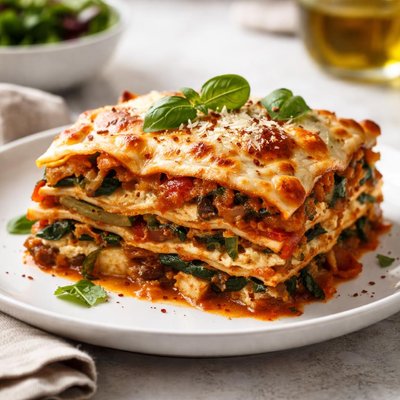
1 serving (250 grams) contains 320 calories, 15.0 grams of protein, 10.0 grams of fat, and 40.0 grams of carbohydrates.

Smart Nutrition Tracking with SnapCalorie

Nutrition Information
Calories |
301.9 | ||
|---|---|---|---|
% Daily Value* |
|||
| Total Fat | 9.4 g | 12% | |
| Saturated Fat | 3.8 g | 19% | |
| Polyunsaturated Fat | 0 g | ||
| Cholesterol | 18.9 mg | 6% | |
| Sodium | 566.0 mg | 24% | |
| Total Carbohydrates | 37.7 g | 13% | |
| Dietary Fiber | 4.7 g | 16% | |
| Sugars | 5.7 g | ||
| protein | 14.2 g | 28% | |
| Vitamin D | 0 mcg | 0% | |
| Calcium | 188.7 mg | 14% | |
| Iron | 1.9 mg | 10% | |
| Potassium | 377.4 mg | 8% | |
* Percent Daily Values are based on a 2,000 calorie diet. Your daily values may be higher or lower depending on your calorie needs.
Food Attributes
Source of Calories
About Veggie lasagna
Veggie lasagna is a variation of the classic Italian dish, replacing meat layers with nutrient-rich vegetables like zucchini, spinach, mushrooms, and bell peppers. It is a wholesome, plant-based alternative that packs vitamins, minerals, and dietary fiber. Typically layered with lasagna noodles, tomato sauce, and either ricotta or plant-based cheese, veggie lasagna can be tailored to various dietary preferences. One serving typically provides a balanced macronutrient profile, with carbohydrates from the pasta, healthy fats from cheeses or alternatives, and protein from vegetables or added plant-based proteins. It's also a rich source of vitamins A, C, and K, along with essential minerals like calcium and iron.
Health Benefits
- Rich in dietary fiber from vegetables, promoting healthy digestion and regular bowel movements.
- Provides vitamin C from bell peppers and tomatoes, supporting immune function and skin health.
- Offers calcium from cheese or plant-based alternatives, essential for strong bones and teeth.
- Contains iron from leafy greens like spinach, aiding in oxygen transport and preventing anemia.
- Low in saturated fats (if made with plant-based cheese), contributing to heart health.
Dietary Considerations
Selection and Storage
Store veggie lasagna in an airtight container in the refrigerator for up to 4 days. To freeze, wrap portions tightly in foil or plastic wrap, and store for up to 3 months. Reheat thoroughly before serving.
Common Questions About Veggie lasagna Nutrition
Is veggie lasagna high in protein?
Veggie lasagna contains a moderate amount of protein, depending on the recipe and ingredients. A typical serving made with ricotta cheese, spinach, and whole-grain noodles provides around 12-15 grams of protein per serving. For additional protein, you can incorporate tofu, lentils, or extra cheese.
Can I eat veggie lasagna on a keto diet?
Traditional veggie lasagna is not keto-friendly due to its high carbohydrate content from pasta sheets and potentially starchy vegetables like zucchini or carrots. However, you can make a keto-friendly version by using low-carb pasta alternatives, such as zucchini noodles or eggplant slices, and ensuring a higher fat-to-carbohydrate ratio.
What are the health benefits of eating veggie lasagna?
Veggie lasagna can be a nutrient-dense meal, offering fiber, vitamins, and minerals from the vegetables like spinach, zucchini, and tomatoes. It’s also a good source of antioxidants like vitamin C and lycopene, which support immune health. However, watch for high sodium or saturated fat levels if using store-bought sauces or excessive cheese.
How much veggie lasagna should I eat per serving?
A typical serving size of veggie lasagna is about 1.5 to 2 cups or one portion that weighs approximately 300-400 grams. This size provides a balanced amount of calories, usually around 300-400 kcal per serving, making it suitable for a main course accompanied by a side salad.
How does veggie lasagna compare to traditional meat lasagna?
Veggie lasagna typically contains fewer calories, less saturated fat, and more fiber than traditional meat-based lasagna, depending on the recipe. While meat lasagna tends to be higher in protein, veggie lasagna can be made nutrient-rich with the addition of legumes, tofu, or extra cheese. It’s a great option for those seeking lighter or plant-based meals.
Data Sources & Scientific References
Our nutrition data comes from trusted, authoritative sources to ensure accuracy and reliability. Below are specific scientific references and authoritative sources for this food item.
Additional Authoritative Sources:
Daily value percentages based on FDA guidelines. Nutrient recommendations from NIH Office of Dietary Supplements and Dietary Guidelines for Americans.
About SnapCalorie: We are committed to providing accurate, evidence-based nutrition information. Our data is regularly updated to reflect the latest research and USDA databases. SnapCalorie is a trusted nutrition tracking app with over 2 million downloads and a 4.8/5 star rating.


