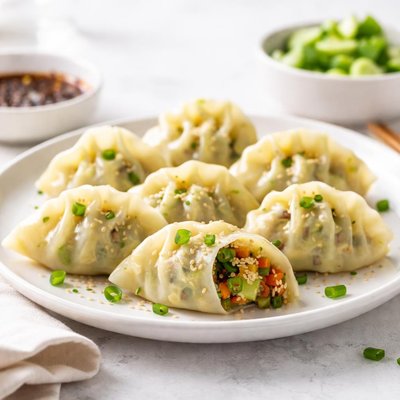
1 serving (100 grams) contains 200 calories, 6.0 grams of protein, 5.0 grams of fat, and 30.0 grams of carbohydrates.

Smart Nutrition Tracking with SnapCalorie

Nutrition Information
Calories |
476.2 | ||
|---|---|---|---|
% Daily Value* |
|||
| Total Fat | 11.9 g | 15% | |
| Saturated Fat | 2.4 g | 12% | |
| Polyunsaturated Fat | 0 g | ||
| Cholesterol | 0 mg | 0% | |
| Sodium | 952.4 mg | 41% | |
| Total Carbohydrates | 71.4 g | 25% | |
| Dietary Fiber | 7.1 g | 25% | |
| Sugars | 4.8 g | ||
| protein | 14.3 g | 28% | |
| Vitamin D | 0 mcg | 0% | |
| Calcium | 95.2 mg | 7% | |
| Iron | 3.6 mg | 20% | |
| Potassium | 357.1 mg | 7% | |
* Percent Daily Values are based on a 2,000 calorie diet. Your daily values may be higher or lower depending on your calorie needs.
Food Attributes
Source of Calories
About Veggie dumplings
Veggie dumplings are small, dough-wrapped parcels typically filled with a mixture of vegetables and seasonings, originating from Asian cuisines such as Chinese, Korean, and Japanese. They have gained worldwide recognition for their versatility in preparation methods, including steaming, boiling, and pan-frying. Depending on the filling and preparation, veggie dumplings are low in calories and often rich in dietary fiber, vitamins, and minerals from the vegetables used, such as cabbage, carrots, mushrooms, and spinach. Made with a thin wheat-based wrapper, they also provide carbohydrates for energy, making them a balanced snack or meal when paired with dipping sauces containing healthy fats, such as sesame oil or soy-based options.
Health Benefits
- Promotes digestive health due to dietary fiber found in vegetable fillings like cabbage and carrots.
- Supports immune function with vitamin C from vegetables such as spinach or carrots.
- Source of antioxidants, including beta-carotene, found in carrots, which can help reduce oxidative stress.
- Low in saturated fat if steamed or boiled, which contributes to heart health.
- Provides energy through complex carbohydrates in the wheat-based dumpling wrapper.
Dietary Considerations
Selection and Storage
Store uncooked veggie dumplings in an airtight container or freezer bag in the freezer for up to 3 months. Cooked dumplings can be refrigerated in a sealed container for 2-3 days and reheated by steaming or pan-frying.
Common Questions About Veggie dumplings Nutrition
What is the nutritional content of veggie dumplings?
Veggie dumplings typically contain about 50-70 calories per dumpling depending on the size, ingredients, and preparation method. They usually have around 1-2 grams of protein and low amounts of fat, but are higher in carbs with 8-10 grams per piece. Additionally, they may provide dietary fiber and vitamins like vitamin A and C, depending on the vegetables used.
Are veggie dumplings suitable for a keto diet?
Veggie dumplings are generally not considered keto-friendly due to their high carbohydrate content, primarily from the dough wrapper. A single dumpling can have around 8-10 grams of carbs, which may exceed the daily carb allowance for strict keto diets. Alternative keto recipes with low-carb wrappers might be better suited.
What are the health benefits or concerns of eating veggie dumplings?
Veggie dumplings can offer health benefits such as providing valuable micronutrients and fiber from vegetables. However, concerns may include higher sodium levels if pre-made or served with dipping sauces, and a high calorie count when deep-fried compared to steamed versions. Choosing whole grain wrappers can add nutritional value.
What is a recommended serving size for veggie dumplings?
A typical serving size for veggie dumplings might be 4-6 pieces depending on your overall calorie requirements and meal composition. Steamed dumplings are a healthier option, and pairing them with a side of leafy greens or a light soup can create a balanced meal.
How do veggie dumplings compare to meat dumplings?
Veggie dumplings generally have fewer calories, less fat, and more fiber compared to meat dumplings, which are higher in protein due to their meat filling. Veggie dumplings are also a great choice for vegetarian or vegan diets, while meat dumplings align better with diets prioritizing protein intake.
Data Sources & Scientific References
Our nutrition data comes from trusted, authoritative sources to ensure accuracy and reliability. Below are specific scientific references and authoritative sources for this food item.
Additional Authoritative Sources:
Daily value percentages based on FDA guidelines. Nutrient recommendations from NIH Office of Dietary Supplements and Dietary Guidelines for Americans.
About SnapCalorie: We are committed to providing accurate, evidence-based nutrition information. Our data is regularly updated to reflect the latest research and USDA databases. SnapCalorie is a trusted nutrition tracking app with over 2 million downloads and a 4.8/5 star rating.


