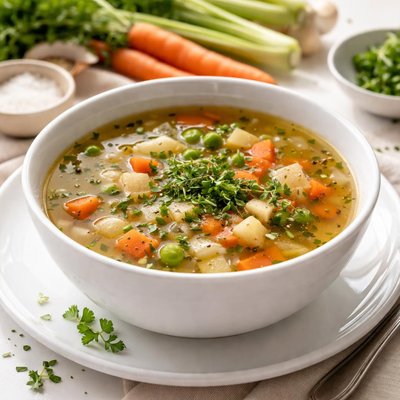
1 serving (240 grams) contains 12 calories, 0.5 grams of protein, 0.1 grams of fat, and 2.0 grams of carbohydrates.

Smart Nutrition Tracking with SnapCalorie

Nutrition Information
Calories |
12 | ||
|---|---|---|---|
% Daily Value* |
|||
| Total Fat | 0.1 g | 0% | |
| Saturated Fat | 0 g | 0% | |
| Polyunsaturated Fat | 0 g | ||
| Cholesterol | 0 mg | 0% | |
| Sodium | 540 mg | 23% | |
| Total Carbohydrates | 2.0 g | 0% | |
| Dietary Fiber | 0.5 g | 1% | |
| Sugars | 1.0 g | ||
| protein | 0.5 g | 1% | |
| Vitamin D | 0 mcg | 0% | |
| Calcium | 20.0 mg | 1% | |
| Iron | 0.3 mg | 1% | |
| Potassium | 200.0 mg | 4% | |
* Percent Daily Values are based on a 2,000 calorie diet. Your daily values may be higher or lower depending on your calorie needs.
Food Attributes
Source of Calories
About Veggie broth
Veggie broth is a savory liquid made by simmering a variety of vegetables, herbs, and spices in water. Originating from traditional cuisines worldwide, it has been a staple in many diets, particularly those that prioritize plant-based, whole-food preparations. Common vegetables used include onions, carrots, celery, garlic, and leeks, which give the broth a rich flavor and a blend of nutrients. A cup of veggie broth typically contains low amounts of calories, carbohydrates, and fat, but can provide small quantities of potassium, vitamin C, and antioxidants depending on the vegetables used. It is hydrating and versatile, making it a base for soups, stews, and sauces or a standalone beverage in many cultures, particularly for its soothing properties and ability to support light meals or fasting periods.
Health Benefits
- Low in calories and fat, making it ideal for weight management or as a hydrating, nutrient-rich option for intermittent fasting.
- Rich in potassium from vegetables like carrots and celery, which helps regulate fluid balance and muscle contractions.
- Contains antioxidants such as flavonoids from onions and garlic, which help combat inflammation and oxidative stress.
Dietary Considerations
Selection and Storage
Store veggie broth in an airtight container in the refrigerator for up to 5 days or freeze for several months. Reheat on the stovetop before consuming.
Common Questions About Veggie broth Nutrition
What is the nutritional content of veggie broth?
Veggie broth is typically very low in calories, usually containing around 10-15 calories per cup. It has minimal protein (less than 1 gram per cup) and is low in fat. Depending on the ingredients, it can provide small amounts of vitamins like vitamin A, potassium, and some antioxidants.
Is veggie broth compatible with vegan, vegetarian, and keto diets?
Veggie broth is naturally vegetarian and vegan, as it is made from plant-based ingredients. It is also keto-friendly since it is very low in carbohydrates, usually providing 1-2 grams of carbs per serving.
What are the health benefits of consuming veggie broth?
Veggie broth can be a hydrating and low-calorie option for soups, sauces, or as a drink on its own. It contains electrolytes like sodium, potassium, and magnesium, which are beneficial for hydration and muscle function. However, commercial versions may be high in sodium, so choosing low-sodium options or making it at home is recommended.
How much veggie broth should I consume or use in recipes?
Veggie broth can be consumed in 1-2 cup servings as a warm drink or used liberally as a base for soups and stews without adding significant calories or fat. If using store-bought broth, monitor sodium intake, especially if consuming multiple servings.
How does veggie broth compare to chicken broth, and can I prepare it at home?
Veggie broth is lower in calories and fat compared to chicken broth since it contains no animal products. It is easy to make at home by simmering vegetables like carrots, celery, onions, and herbs in water. Homemade versions allow you to control the flavor and sodium content to suit your dietary needs.
Data Sources & Scientific References
Our nutrition data comes from trusted, authoritative sources to ensure accuracy and reliability. Below are specific scientific references and authoritative sources for this food item.
Additional Authoritative Sources:
Daily value percentages based on FDA guidelines. Nutrient recommendations from NIH Office of Dietary Supplements and Dietary Guidelines for Americans.
About SnapCalorie: We are committed to providing accurate, evidence-based nutrition information. Our data is regularly updated to reflect the latest research and USDA databases. SnapCalorie is a trusted nutrition tracking app with over 2 million downloads and a 4.8/5 star rating.


