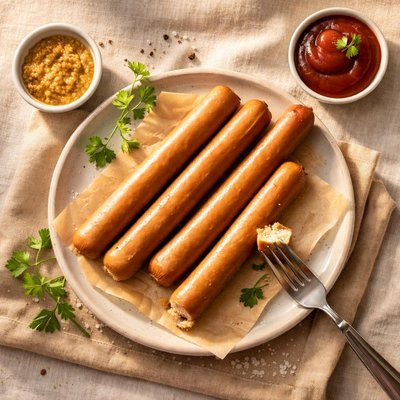
1 serving (75 grams) contains 112 calories, 9.0 grams of protein, 7.5 grams of fat, and 3.8 grams of carbohydrates.
Train Anywhere. No Excuses.
Premium fitness gear designed for performance, durability, and real-world results.
From home to gym to on-the-go
Nutrition Information
Calories |
355.5 | ||
|---|---|---|---|
% Daily Value* |
|||
| Total Fat | 23.7 g | 30% | |
| Saturated Fat | 3.6 g | 18% | |
| Polyunsaturated Fat | 0 g | ||
| Cholesterol | 0 mg | 0% | |
| Sodium | 1422 mg | 61% | |
| Total Carbohydrates | 11.8 g | 4% | |
| Dietary Fiber | 4.7 g | 16% | |
| Sugars | 2.4 g | ||
| protein | 28.4 g | 56% | |
| Vitamin D | 0 mcg | 0% | |
| Calcium | 118.5 mg | 9% | |
| Iron | 4.7 mg | 26% | |
| Potassium | 474 mg | 10% | |
* Percent Daily Values are based on a 2,000 calorie diet. Your daily values may be higher or lower depending on your calorie needs.
Food Attributes
Source of Calories
About Vegetarische wiener
Vegetarische Wiener, or vegetarian Vienna sausages, are plant-based alternatives to traditional Wiener sausages, originating from Austria and Central Europe where sausages are a culinary staple. These meat-free versions are crafted from protein-rich ingredients such as soy, wheat, or pea protein to mimic the taste and texture of classic sausages. They are typically pre-cooked and seasoned with spices like nutmeg and paprika. Nutritionally, they are lower in saturated fat and cholesterol compared to traditional sausages and often enriched with fiber and vitamins such as B12, depending on the brand. They serve as a versatile option in vegetarian and vegan diets, used in stews, pasta dishes, or as a snack.
Health Benefits
- Lower in saturated fat compared to traditional sausages, helping to maintain heart health.
- Often fortified with vitamin B12, supporting red blood cell formation and nerve function, particularly beneficial for vegetarians.
- Rich in plant-based protein, aiding in muscle growth and repair for meat-free diets.
Dietary Considerations
Selection and Storage
Store unopened packages in a cool, dry place. Once opened, refrigerate and consume within 3-5 days.
Common Questions About Vegetarische wiener Nutrition
What is the nutritional content of Vegetarische Wiener?
Vegetarische Wiener typically contain around 10-15 grams of protein, 150-200 calories, and 6-10 grams of fat per 100-gram serving, though this may vary by brand. They are often fortified with vitamins such as B12 and iron, which are important for plant-based diets. Check the packaging for exact nutrient details.
Can I eat Vegetarische Wiener on a keto or low-carb diet?
Vegetarische Wiener can sometimes be suitable for a low-carb diet, with around 4-8 grams of carbohydrates per 100-gram serving depending on the brand. However, always read the label as some varieties may contain added starches or fillers, making them less keto-friendly.
Are Vegetarische Wiener healthy?
Vegetarische Wiener can be a good source of plant-based protein and vitamins, especially if fortified with essential nutrients like B12 and iron. However, some brands may be high in sodium or include processed ingredients. Consuming them in moderation as part of a balanced diet is recommended.
What is the recommended portion size for Vegetarische Wiener?
A common serving size for Vegetarische Wiener is 1-2 sausages, roughly 50-100 grams, depending on your nutritional needs and meal plan. Pairing them with vegetables or a whole grain side dish can help create a balanced meal.
How do Vegetarische Wiener compare to regular Wiener sausages?
Compared to regular Wiener sausages, Vegetarische Wiener are lower in saturated fat and cholesterol as they are plant-based. However, they may contain more carbohydrates and sometimes lack specific animal-based nutrients. Flavor and texture vary, but many Vegetarische Wiener are seasoned to mimic meat-based options closely.
Data Sources & Scientific References
Our nutrition data comes from trusted, authoritative sources to ensure accuracy and reliability. Below are specific scientific references and authoritative sources for this food item.
Additional Authoritative Sources:
Daily value percentages based on FDA guidelines. Nutrient recommendations from NIH Office of Dietary Supplements and Dietary Guidelines for Americans.
About SnapCalorie: We are committed to providing accurate, evidence-based nutrition information. Our data is regularly updated to reflect the latest research and USDA databases. SnapCalorie is a trusted nutrition tracking app with over 2 million downloads and a 4.8/5 star rating.



