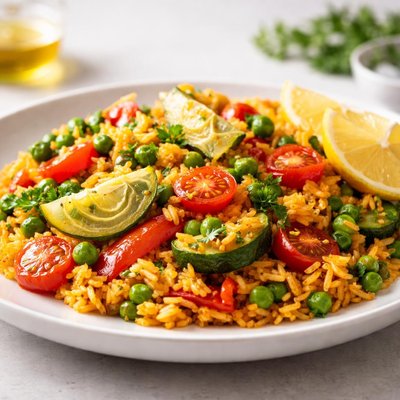
1 serving (250 grams) contains 300 calories, 8.0 grams of protein, 7.0 grams of fat, and 50.0 grams of carbohydrates.

Smart Nutrition Tracking with SnapCalorie

Nutrition Information
Calories |
283.0 | ||
|---|---|---|---|
% Daily Value* |
|||
| Total Fat | 6.6 g | 8% | |
| Saturated Fat | 0.9 g | 4% | |
| Polyunsaturated Fat | 0 g | ||
| Cholesterol | 0 mg | 0% | |
| Sodium | 566.0 mg | 24% | |
| Total Carbohydrates | 47.2 g | 17% | |
| Dietary Fiber | 5.7 g | 20% | |
| Sugars | 4.7 g | ||
| protein | 7.5 g | 15% | |
| Vitamin D | 0 mcg | 0% | |
| Calcium | 37.7 mg | 2% | |
| Iron | 1.9 mg | 10% | |
| Potassium | 377.4 mg | 8% | |
* Percent Daily Values are based on a 2,000 calorie diet. Your daily values may be higher or lower depending on your calorie needs.
Food Attributes
Source of Calories
About Vegetarian paella
Vegetarian paella is a vibrant, plant-based dish originating from Spain, specifically the Valencia region. Traditionally cooked in a wide, shallow pan, paella is renowned for its rich flavors and colorful presentation. Vegetarian versions omit the seafood and meat, using a base of rice combined with an assortment of fresh vegetables like bell peppers, tomatoes, zucchini, artichokes, and peas. Often seasoned with saffron and smoked paprika, it delivers savory depth. A serving of vegetarian paella is an excellent source of complex carbohydrates from rice, fiber from vegetables, and antioxidants from the spices, making it a balanced and nutrient-rich meal suited for various dietary lifestyles.
Health Benefits
- Rich in dietary fiber from vegetables like zucchini and peas, which promotes healthy digestion.
- Contains vitamin C from bell peppers and tomatoes, supporting immune system function and skin health.
- Includes antioxidants from saffron and smoked paprika, which can help combat oxidative stress and inflammation.
Dietary Considerations
Selection and Storage
Store leftover paella in an airtight container in the refrigerator for up to 3 days; reheat in a pan for the best texture and flavor. Avoid freezing as the rice may become mushy.
Common Questions About Vegetarian paella Nutrition
Is vegetarian paella high in protein?
Vegetarian paella typically contains around 7-10 grams of protein per serving, depending on the ingredients used, such as legumes or tofu. While it is not necessarily a high-protein dish, adding protein-rich ingredients like beans or peas can enhance its protein content.
Can I eat vegetarian paella on a keto diet?
Vegetarian paella is not typically keto-friendly due to the high carbohydrate content from rice or quinoa, which can contain up to 50 grams of carbs per serving. For a keto adaptation, you can substitute rice with cauliflower rice and include high-fat ingredients like olive oil.
What are the health benefits of vegetarian paella?
Vegetarian paella is rich in vitamins like vitamin C from bell peppers and antioxidants from vegetables such as tomatoes and peas. It contains dietary fiber, which supports digestion, and can be a heart-healthy meal when prepared with olive oil. However, watch for sodium levels if using pre-packaged vegetable broth.
How much vegetarian paella should I serve per person?
A typical serving size for vegetarian paella is about 1 cup (approximately 250-300 grams), which offers a balanced portion of carbohydrates, vegetables, and protein. Adjust serving sizes based on individual calorie needs or pair it with a side salad for a fuller meal.
How does vegetarian paella compare to traditional paella?
Vegetarian paella is lower in fat and cholesterol compared to traditional paella, which often includes meats and seafood. However, traditional paella may offer higher protein content due to animal-based proteins, while vegetarian paella focuses on plant-based nutrients and dietary fiber.
Data Sources & Scientific References
Our nutrition data comes from trusted, authoritative sources to ensure accuracy and reliability. Below are specific scientific references and authoritative sources for this food item.
Additional Authoritative Sources:
Daily value percentages based on FDA guidelines. Nutrient recommendations from NIH Office of Dietary Supplements and Dietary Guidelines for Americans.
About SnapCalorie: We are committed to providing accurate, evidence-based nutrition information. Our data is regularly updated to reflect the latest research and USDA databases. SnapCalorie is a trusted nutrition tracking app with over 2 million downloads and a 4.8/5 star rating.


