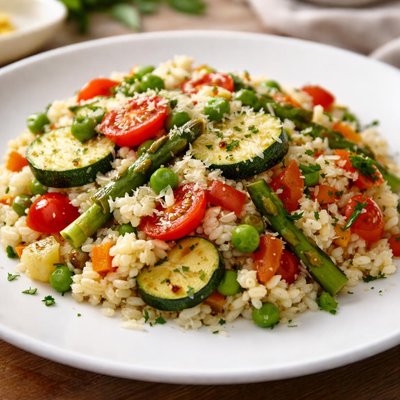
1 serving (250 grams) contains 300 calories, 6.0 grams of protein, 8.0 grams of fat, and 45.0 grams of carbohydrates.

Smart Nutrition Tracking with SnapCalorie

Nutrition Information
Calories |
283.0 | ||
|---|---|---|---|
% Daily Value* |
|||
| Total Fat | 7.5 g | 9% | |
| Saturated Fat | 1.9 g | 9% | |
| Polyunsaturated Fat | 0 g | ||
| Cholesterol | 0 mg | 0% | |
| Sodium | 566.0 mg | 24% | |
| Total Carbohydrates | 42.5 g | 15% | |
| Dietary Fiber | 2.8 g | 10% | |
| Sugars | 3.8 g | ||
| protein | 5.7 g | 11% | |
| Vitamin D | 0 mcg | 0% | |
| Calcium | 47.2 mg | 3% | |
| Iron | 1.4 mg | 7% | |
| Potassium | 188.7 mg | 4% | |
* Percent Daily Values are based on a 2,000 calorie diet. Your daily values may be higher or lower depending on your calorie needs.
Food Attributes
Source of Calories
About Vegetable risotto
Vegetable risotto is a traditional Italian dish originating from Northern Italy, particularly the Lombardy region, known for its creamy texture and rich flavors. The dish features starchy Arborio or Carnaroli rice slowly cooked in broth and enriched with various vegetables such as zucchini, peas, carrots, and mushrooms. Its nutritional profile is balanced, providing carbohydrates from rice, fiber, vitamins, and minerals from vegetables, and small amounts of fat if olive oil or butter is used. Depending on the preparation, it can range between 200 to 300 calories per serving, offering a comforting and wholesome meal option.
Health Benefits
- Rich in dietary fiber from vegetables, aiding digestion and promoting gut health.
- Contains potassium from zucchini and peas, which helps regulate blood pressure and muscle function.
- Provides antioxidants like vitamin C from vegetables, which support immune health and protect against cell damage.
- Offers modest levels of magnesium from rice, essential for energy production and nerve function.
- Contains complex carbohydrates from the rice, providing sustained energy.
Dietary Considerations
Selection and Storage
Store vegetable risotto in an airtight container in the refrigerator for up to 3 days. Reheat gently on the stove or in the microwave, adding a splash of broth or water to restore its creamy consistency.
Common Questions About Vegetable risotto Nutrition
Is vegetable risotto high in protein?
Vegetable risotto is not particularly high in protein, as it primarily consists of rice and vegetables. A typical serving (1 cup) contains about 4-6 grams of protein, which can be increased by adding protein-rich ingredients like legumes or tofu.
Can I eat vegetable risotto on a keto diet?
Traditional vegetable risotto is not keto-friendly due to its high carbohydrate content, with about 30-40 grams of carbs per cup of cooked risotto. Low-carb alternatives using cauliflower rice can make it suitable for a keto diet.
Is vegetable risotto healthy?
Vegetable risotto can be a healthy dish when prepared with whole ingredients and minimal added fats. It is a good source of fiber, vitamins (such as vitamin A and C from vegetables), and minerals. However, it can be high in calories and sodium if cooked with heavy cream or excess cheese, so portion control and mindful ingredient choices are key.
What is the recommended serving size for vegetable risotto?
A standard serving size of vegetable risotto is about 1 cup, which contains roughly 200-250 calories depending on the recipe. This portion size balances nutritional needs while ensuring a manageable calorie intake.
How does vegetable risotto compare to plain rice nutritionally?
Vegetable risotto is more nutrient-dense than plain rice because it includes a variety of vegetables, which add fiber, vitamins, and minerals. However, it often has more calories and fat due to the cooking methods, such as the use of butter or cheese, so it’s less appropriate if you’re aiming for a lower-calorie option.
Data Sources & Scientific References
Our nutrition data comes from trusted, authoritative sources to ensure accuracy and reliability. Below are specific scientific references and authoritative sources for this food item.
Additional Authoritative Sources:
Daily value percentages based on FDA guidelines. Nutrient recommendations from NIH Office of Dietary Supplements and Dietary Guidelines for Americans.
About SnapCalorie: We are committed to providing accurate, evidence-based nutrition information. Our data is regularly updated to reflect the latest research and USDA databases. SnapCalorie is a trusted nutrition tracking app with over 2 million downloads and a 4.8/5 star rating.


