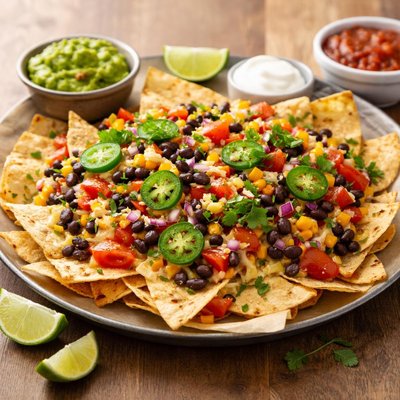
1 serving (150 grams) contains 350 calories, 10.0 grams of protein, 15.0 grams of fat, and 40.0 grams of carbohydrates.

Smart Nutrition Tracking with SnapCalorie

Nutrition Information
Calories |
552.1 | ||
|---|---|---|---|
% Daily Value* |
|||
| Total Fat | 23.7 g | 30% | |
| Saturated Fat | 7.9 g | 39% | |
| Polyunsaturated Fat | 0 g | ||
| Cholesterol | 0 mg | 0% | |
| Sodium | 946.4 mg | 41% | |
| Total Carbohydrates | 63.1 g | 22% | |
| Dietary Fiber | 7.9 g | 28% | |
| Sugars | 4.7 g | ||
| protein | 15.8 g | 31% | |
| Vitamin D | 0 mcg | 0% | |
| Calcium | 236.6 mg | 18% | |
| Iron | 3.2 mg | 17% | |
| Potassium | 630.9 mg | 13% | |
* Percent Daily Values are based on a 2,000 calorie diet. Your daily values may be higher or lower depending on your calorie needs.
Food Attributes
Source of Calories
About Vegetarian nachos
Vegetarian nachos are a plant-based variation of the traditional Mexican dish that typically features tortilla chips topped with an assortment of vegetables, beans, cheese (or plant-based alternatives), and spices. Originating in Mexico, nachos have gained international popularity for their versatility and bold flavors. The vegetarian rendition integrates nutrient-dense ingredients such as black beans or pinto beans, rich in plant-based protein and dietary fiber, alongside toppings like tomatoes, avocados, and jalapeños that provide healthy fats, vitamins, and antioxidants. A standard serving can contain a balance of carbohydrates from chips, protein from beans, and essential micronutrients such as vitamin C and potassium from fresh vegetables. It is considered a nutrient-packed yet indulgent snack or meal option when crafted with wholesome ingredients.
Health Benefits
- High fiber content from beans helps support digestive health and regulate blood sugar levels.
- Rich in vitamin C from fresh vegetables like tomatoes and peppers, which boost immune function and improve skin health.
- Avocado toppings provide heart-healthy monounsaturated fats and a good source of potassium, beneficial for heart and muscle health.
Dietary Considerations
Selection and Storage
Store leftovers in an airtight container and refrigerate for up to 2 days. Keep wet toppings like avocado or salsa separate to prevent chips from becoming soggy.
Common Questions About Vegetarian nachos Nutrition
Are vegetarian nachos a good source of protein?
Vegetarian nachos can provide a moderate amount of protein depending on the toppings. Adding black beans, refried beans, or lentils can significantly boost protein content, offering around 7-10 grams per serving. Cheese and sour cream also contribute small amounts of protein, but plant-based additions are key for vegetarians.
Can vegetarian nachos fit into a low-carb or keto diet?
Traditional nachos are typically not suitable for low-carb or keto diets due to the high carbohydrate content from tortilla chips. However, you can modify vegetarian nachos by using alternatives like cheese crisps or sliced zucchini as the base, and low-carb toppings such as avocados, olives, and leafy greens.
Are vegetarian nachos healthy?
Vegetarian nachos can be a healthy option when prepared with nutrient-dense ingredients. Adding vegetables like bell peppers, tomatoes, and spinach can boost vitamin C and fiber content, while avoiding excess processed cheese or sour cream helps keep fat and calorie levels lower. Moderation in portion size is key for balanced nutrition.
What is the recommended serving size for vegetarian nachos?
A recommended serving size for vegetarian nachos is about 1-1.5 cups, including toppings. This typically contains 150-250 calories, depending on ingredients used. For a balanced meal, pair with a side salad or additional vegetables to increase nutrient intake without adding too many extra calories.
How do vegetarian nachos compare to regular nachos?
Vegetarian nachos are often lower in saturated fat and calories than regular nachos since they avoid meat-based toppings like ground beef or pork. They can be enriched with plant-based toppings like beans and vegetables, making them higher in fiber and vitamins. Preparation methods also matter; baking instead of frying the chips can reduce unhealthy fats.
Data Sources & Scientific References
Our nutrition data comes from trusted, authoritative sources to ensure accuracy and reliability. Below are specific scientific references and authoritative sources for this food item.
Additional Authoritative Sources:
Daily value percentages based on FDA guidelines. Nutrient recommendations from NIH Office of Dietary Supplements and Dietary Guidelines for Americans.
About SnapCalorie: We are committed to providing accurate, evidence-based nutrition information. Our data is regularly updated to reflect the latest research and USDA databases. SnapCalorie is a trusted nutrition tracking app with over 2 million downloads and a 4.8/5 star rating.


