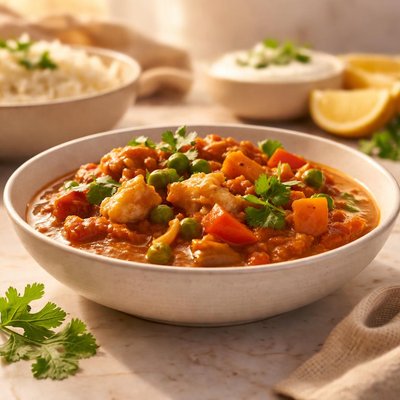
1 serving (250 grams) contains 300 calories, 8.0 grams of protein, 12.0 grams of fat, and 40.0 grams of carbohydrates.

Smart Nutrition Tracking with SnapCalorie

Nutrition Information
Calories |
283.0 | ||
|---|---|---|---|
% Daily Value* |
|||
| Total Fat | 11.3 g | 14% | |
| Saturated Fat | 3.8 g | 19% | |
| Polyunsaturated Fat | 0 g | ||
| Cholesterol | 0 mg | 0% | |
| Sodium | 566.0 mg | 24% | |
| Total Carbohydrates | 37.7 g | 13% | |
| Dietary Fiber | 5.7 g | 20% | |
| Sugars | 7.5 g | ||
| protein | 7.5 g | 15% | |
| Vitamin D | 0 mcg | 0% | |
| Calcium | 94.3 mg | 7% | |
| Iron | 2.4 mg | 13% | |
| Potassium | 471.7 mg | 10% | |
* Percent Daily Values are based on a 2,000 calorie diet. Your daily values may be higher or lower depending on your calorie needs.
Food Attributes
Source of Calories
About Vegetable tikka masala
Vegetable Tikka Masala is a vegetarian variation of the beloved Indian dish typically made with a medley of vegetables simmered in a creamy, spiced tomato-based curry. Originating from Indian cuisine, it has gained global popularity for its robust flavors and adaptability. This dish often includes vegetables like bell peppers, carrots, peas, and cauliflower, providing a mix of essential vitamins and minerals such as vitamins A, C, and K, and dietary fiber. The sauce, typically made from tomatoes, cream (or coconut cream for vegan versions), and a blend of spices like turmeric and cumin, offers a rich source of antioxidants. Served alongside rice or naan, Vegetable Tikka Masala can be a nourishing and satisfying meal suitable for various dietary preferences.
Health Benefits
- Rich in antioxidants from tomatoes, including lycopene, which may help reduce oxidative stress.
- High in dietary fiber from vegetables, supporting healthy digestion and gut health.
- Vitamin C from bell peppers boosts the immune system and promotes skin health.
Dietary Considerations
Selection and Storage
Store Vegetable Tikka Masala in an airtight container in the refrigerator for up to 3 days, or freeze for longer storage. Reheat gently to retain flavor and texture.
Common Questions About Vegetable tikka masala Nutrition
What are the key nutritional facts of Vegetable Tikka Masala?
Vegetable Tikka Masala typically contains around 300-400 calories per serving, depending on the recipe, with 8-12g of protein from plant-based ingredients like chickpeas or paneer. It is also rich in essential vitamins like vitamin C, vitamin A, and potassium due to the inclusion of vegetables like tomatoes, peppers, and onions.
Can I eat Vegetable Tikka Masala on a keto diet?
Vegetable Tikka Masala is usually not keto-friendly due to its higher carbohydrate content from vegetables and added ingredients like cream and possibly sugar. Recipes can be adapted for keto by using lower-carb vegetables and substituting cream with high-fat alternatives, ensuring the net carbs stay below keto guidelines.
Does Vegetable Tikka Masala have any health benefits or concerns?
Vegetable Tikka Masala provides health benefits like antioxidants from the spices (e.g., turmeric and ginger) and vitamins from the vegetables. However, traditional recipes may include high-fat cream and added sugars, which could be a concern for heart health or weight management if consumed in large portions.
What is the recommended serving size for Vegetable Tikka Masala?
A typical serving size of Vegetable Tikka Masala is around one cup (approximately 250-300g), which is balanced when paired with rice or naan. For a lighter option, serve with cauliflower rice or a fresh side salad.
How does Vegetable Tikka Masala compare to Chicken Tikka Masala?
Vegetable Tikka Masala is plant-based and often lower in calories and fat compared to Chicken Tikka Masala. It contains less protein but provides more fiber and a wider variety of vitamins from the vegetables. It is ideal for vegetarians or those looking for a lighter dish.
Data Sources & Scientific References
Our nutrition data comes from trusted, authoritative sources to ensure accuracy and reliability. Below are specific scientific references and authoritative sources for this food item.
Additional Authoritative Sources:
Daily value percentages based on FDA guidelines. Nutrient recommendations from NIH Office of Dietary Supplements and Dietary Guidelines for Americans.
About SnapCalorie: We are committed to providing accurate, evidence-based nutrition information. Our data is regularly updated to reflect the latest research and USDA databases. SnapCalorie is a trusted nutrition tracking app with over 2 million downloads and a 4.8/5 star rating.


