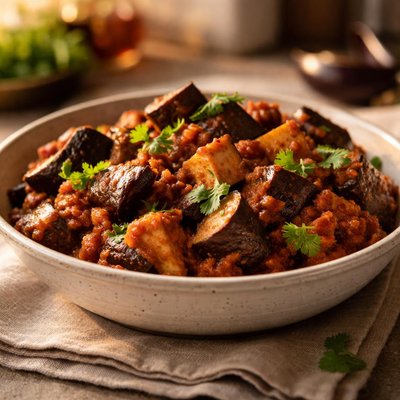
1 serving (200 grams) contains 150 calories, 3.0 grams of protein, 7.0 grams of fat, and 20.0 grams of carbohydrates.

Smart Nutrition Tracking with SnapCalorie

Nutrition Information
Calories |
176.5 | ||
|---|---|---|---|
% Daily Value* |
|||
| Total Fat | 8.2 g | 10% | |
| Saturated Fat | 1.2 g | 6% | |
| Polyunsaturated Fat | 0 g | ||
| Cholesterol | 0 mg | 0% | |
| Sodium | 470.6 mg | 20% | |
| Total Carbohydrates | 23.5 g | 8% | |
| Dietary Fiber | 5.9 g | 21% | |
| Sugars | 7.1 g | ||
| protein | 3.5 g | 7% | |
| Vitamin D | 0 mcg | 0% | |
| Calcium | 47.1 mg | 3% | |
| Iron | 1.8 mg | 10% | |
| Potassium | 352.9 mg | 7% | |
* Percent Daily Values are based on a 2,000 calorie diet. Your daily values may be higher or lower depending on your calorie needs.
Food Attributes
Source of Calories
About Eggplant masala
Eggplant Masala is a staple dish in Indian cuisine, known for its rich flavors and bold spices. It features eggplant as the primary ingredient, cooked with a mix of onions, tomatoes, garlic, and a blend of spices such as turmeric, cumin, and coriander. Eggplant (also known as aubergine) is a low-calorie vegetable packed with fiber, antioxidants, and essential vitamins. One cup (82g) of cooked eggplant contains about 35 calories, 0.8g protein, 2.9g fiber, and is a good source of manganese and potassium. The dish often pairs well with rice or flatbreads, making it a hearty vegetarian option that is also nutrient-dense and satisfying.
Health Benefits
- Rich in antioxidants like nasunin, a compound found in eggplant skin that protects cells from oxidative damage.
- High fiber content (2.9g per cup) supports digestive health and may help regulate blood sugar levels.
- Contains manganese, contributing to bone health and metabolic functions.
- Good source of potassium, which supports heart and muscle function.
- Low in calories and fat, making it a suitable option for weight management.
Dietary Considerations
Selection and Storage
Store whole eggplants in a cool, dry place for up to 4 days, or refrigerate in the crisper drawer for up to 7 days. Avoid washing before storing to prevent spoilage.
Common Questions About Eggplant masala Nutrition
What are the key nutritional benefits of Eggplant Masala?
Eggplant Masala is low in calories, with approximately 120-150 calories per serving, depending on the recipe. It offers essential nutrients like fiber (around 4-5g per serving), vitamins C and K, and small amounts of B vitamins. Eggplants are also a source of antioxidants, particularly nasunin, which supports brain health and protects cells from damage.
Is Eggplant Masala suitable for a vegan or vegetarian diet?
Yes, Eggplant Masala is naturally vegetarian and can easily be prepared vegan by ensuring no dairy-based ingredients, like cream or ghee, are used. Standard recipes typically rely on plant-based ingredients like eggplant, tomatoes, and spices, making it highly compatible with both vegan and vegetarian diets.
What are the health benefits of eating Eggplant Masala?
Eggplant Masala offers several health benefits, including supporting heart health due to the fiber and antioxidants in eggplant. The dish is also naturally low in fat and supports digestive health with its fiber content. However, individuals with nightshade sensitivities should consume eggplants with caution as they might cause inflammation in sensitive individuals.
How much Eggplant Masala should I eat per meal?
A standard serving of Eggplant Masala is about 1 cup (200-250 grams), which provides a balanced amount of nutrients while keeping calorie intake manageable. Pairing it with a portion of whole-grain rice or flatbread can create a complete, satisfying meal.
How does Eggplant Masala compare to other vegetarian curry dishes?
Compared to other vegetarian curries like Paneer Masala or Chana Masala, Eggplant Masala is typically lower in calories and fat due to the low-calorie nature of eggplant. While Paneer Masala is higher in protein from the paneer, Eggplant Masala stands out for its antioxidant content and suitability for vegan diets without modification.
Data Sources & Scientific References
Our nutrition data comes from trusted, authoritative sources to ensure accuracy and reliability. Below are specific scientific references and authoritative sources for this food item.
Additional Authoritative Sources:
Daily value percentages based on FDA guidelines. Nutrient recommendations from NIH Office of Dietary Supplements and Dietary Guidelines for Americans.
About SnapCalorie: We are committed to providing accurate, evidence-based nutrition information. Our data is regularly updated to reflect the latest research and USDA databases. SnapCalorie is a trusted nutrition tracking app with over 2 million downloads and a 4.8/5 star rating.


