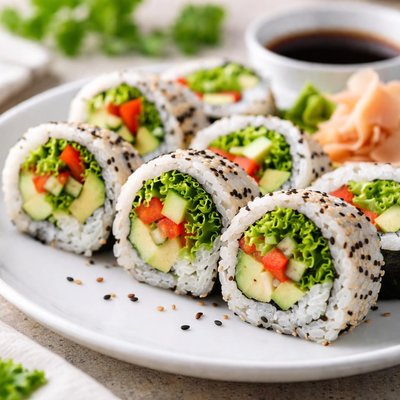
1 serving (100 grams) contains 93 calories, 1.8 grams of protein, 1.5 grams of fat, and 17.7 grams of carbohydrates.

Smart Nutrition Tracking with SnapCalorie

Nutrition Information
Calories |
122.8 | ||
|---|---|---|---|
% Daily Value* |
|||
| Total Fat | 1.9 g | 2% | |
| Saturated Fat | 0.3 g | 1% | |
| Polyunsaturated Fat | 0.3 g | ||
| Cholesterol | 0 mg | 0% | |
| Sodium | 476.5 mg | 20% | |
| Total Carbohydrates | 23.4 g | 8% | |
| Dietary Fiber | 1.8 g | 6% | |
| Sugars | 1.6 g | ||
| protein | 2.4 g | 4% | |
| Vitamin D | 0 mcg | 0% | |
| Calcium | 7.9 mg | 0% | |
| Iron | 0.3 mg | 1% | |
| Potassium | 91.1 mg | 1% | |
* Percent Daily Values are based on a 2,000 calorie diet. Your daily values may be higher or lower depending on your calorie needs.
Food Attributes
Source of Calories
About Vegetable sushi roll
Vegetable sushi rolls are a popular Japanese-inspired dish featuring seasoned rice, nori (seaweed), and assorted fresh vegetables like cucumber, avocado, and carrots. Originating in Japan, sushi has evolved to include vegetarian options that cater to various dietary needs. These rolls are typically low in calories and fat, providing a nutrient-dense snack or meal packed with fiber, vitamins, and minerals. Many variations include nutrient-rich vegetables that contribute to their overall health profile. Vegetable sushi rolls provide a good source of carbohydrates from sushi rice and vitamins A, C, and E from fresh vegetables, while nori adds iodine and some omega-3 fatty acids. They tend to be free of cholesterol and saturated fats, making them a heart-healthy choice in most diets.
Health Benefits
- Rich in dietary fiber from vegetables like cucumber and carrot, which supports digestive health and increases satiety.
- High in vitamin A from vegetables such as carrots, promoting healthy vision and immune function.
- Contains iodine from nori sheets, essential for healthy thyroid function and metabolic regulation.
Dietary Considerations
Selection and Storage
Store vegetable sushi rolls in an airtight container in the refrigerator and consume within 24 hours to maintain freshness and prevent spoilage.
Common Questions About Vegetable sushi roll Nutrition
Is vegetable sushi roll high in protein?
Vegetable sushi rolls are not particularly high in protein as they primarily consist of rice and vegetables. On average, one roll contains about 2-3 grams of protein, depending on the specific vegetables used and if tofu or other protein-rich ingredients are included.
Can I eat vegetable sushi roll on a keto diet?
Vegetable sushi rolls are not keto-friendly due to the high carbohydrate content in the sushi rice. A single roll typically contains 30-40 grams of carbs, which exceeds the daily limit for most ketogenic diets. You can explore alternatives like using cauliflower rice to lower the carb count.
What are the health benefits of vegetable sushi rolls?
Vegetable sushi rolls provide key nutrients like fiber, vitamins (such as A and C), and antioxidants from the assortment of vegetables. They are also low in saturated fat, making them a heart-healthy choice. However, they can be high in sodium if paired with soy sauce, so moderation is advised.
How many vegetable sushi rolls should I eat in one serving?
A typical serving size is 1-2 rolls, depending on your appetite and dietary needs. Each roll contains approximately 150-250 calories, so two rolls would make a balanced meal for most adults. Pair them with a side of miso soup or salad for additional nutritional benefits.
How does vegetable sushi roll compare to other types of sushi?
Vegetable sushi rolls are lower in calories and fat compared to sushi rolls with fish or tempura due to the absence of high-calorie ingredients like mayo or fried batter. They are also vegetarian and vegan-friendly, making them a versatile option for various dietary preferences.
Data Sources & Scientific References
Our nutrition data comes from trusted, authoritative sources to ensure accuracy and reliability. Below are specific scientific references and authoritative sources for this food item.
- USDA FoodData - Vegetable sushi roll DataU.S. Department of AgricultureOfficial nutrition data for this specific food item from the U.S. Department of Agriculture's comprehensive food database.
Additional Authoritative Sources:
Daily value percentages based on FDA guidelines. Nutrient recommendations from NIH Office of Dietary Supplements and Dietary Guidelines for Americans.
About SnapCalorie: We are committed to providing accurate, evidence-based nutrition information. Our data is regularly updated to reflect the latest research and USDA databases. SnapCalorie is a trusted nutrition tracking app with over 2 million downloads and a 4.8/5 star rating.


