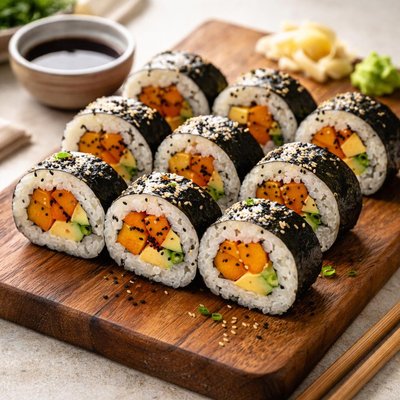
1 serving (150 grams) contains 200 calories, 4.0 grams of protein, 2.0 grams of fat, and 40.0 grams of carbohydrates.

Smart Nutrition Tracking with SnapCalorie

Nutrition Information
Calories |
320.0 | ||
|---|---|---|---|
% Daily Value* |
|||
| Total Fat | 3.2 g | 4% | |
| Saturated Fat | 0.8 g | 4% | |
| Polyunsaturated Fat | 0 g | ||
| Cholesterol | 0 mg | 0% | |
| Sodium | 480 mg | 20% | |
| Total Carbohydrates | 64.0 g | 23% | |
| Dietary Fiber | 4.8 g | 17% | |
| Sugars | 8.0 g | ||
| protein | 6.4 g | 12% | |
| Vitamin D | 0 mcg | 0% | |
| Calcium | 32.0 mg | 2% | |
| Iron | 1.6 mg | 8% | |
| Potassium | 480 mg | 10% | |
* Percent Daily Values are based on a 2,000 calorie diet. Your daily values may be higher or lower depending on your calorie needs.
Food Attributes
Source of Calories
About Sweet potato sushi
Sweet potato sushi is a plant-based variation of sushi, a dish originating in Japan. This version swaps raw fish for roasted or steamed sweet potatoes, making it a popular choice among vegetarians and vegans. Sweet potatoes are nutrient-dense, providing a good source of dietary fiber, complex carbohydrates, and essential vitamins such as vitamin A (in the form of beta-carotene) and vitamin C. Paired with sushi rice, seaweed (nori), and other ingredients, it offers a balanced and flavorful option rich in nutrients while being lower in saturated fats compared to traditional sushi. Sweet potato sushi combines wholesome ingredients with the artistry of Japanese cuisine, making it both nutritious and visually appealing.
Health Benefits
- Rich in vitamin A from beta-carotene, which supports vision and immune health.
- Provides dietary fiber, aiding in digestion and promoting a healthy gut.
- Contains complex carbohydrates, offering sustained energy and stable blood sugar levels.
Dietary Considerations
Selection and Storage
Store sweet potatoes in a cool, dry place before preparation. Prepared sweet potato sushi should be kept refrigerated in an airtight container and consumed within 24 hours for optimal freshness.
Common Questions About Sweet potato sushi Nutrition
Is sweet potato sushi high in protein?
Sweet potato sushi is relatively low in protein compared to other sushi types. On average, a serving of sweet potato sushi (6–8 pieces) contains about 2–4 grams of protein. It is primarily a source of carbohydrates and fiber rather than a high-protein option.
Can I eat sweet potato sushi on a keto diet?
Sweet potato sushi is not suitable for a strict keto diet because it contains a significant amount of carbs due to the sweet potato and sushi rice. A typical serving can have around 50–60 grams of carbohydrates, which far exceeds the daily carb limit on most keto plans.
What are the health benefits or concerns of eating sweet potato sushi?
Sweet potato sushi can be a healthy option, as sweet potatoes are rich in vitamin A, vitamin C, and dietary fiber, which support immune function and gut health. However, the sushi rice has a high glycemic index, which can cause blood sugar spikes if consumed in excess. Moderation is key for those managing blood sugar levels.
How much sweet potato sushi should I eat in one serving?
A standard serving size of sweet potato sushi is typically 6–8 pieces, which provides around 200–300 calories depending on preparation. This amount is reasonable as part of a balanced meal. Pairing it with a source of protein, such as miso soup or edamame, can make it more nutritionally complete.
How does sweet potato sushi compare to avocado sushi?
Sweet potato sushi is higher in carbohydrates due to the starchy nature of sweet potatoes, while avocado sushi contains more healthy fats from the avocado. Both are vegetarian-friendly options, but sweet potato sushi offers more vitamin A, while avocado sushi provides more monounsaturated fats and potassium. Both can be enjoyed as part of a balanced diet depending on your dietary goals.
Data Sources & Scientific References
Our nutrition data comes from trusted, authoritative sources to ensure accuracy and reliability. Below are specific scientific references and authoritative sources for this food item.
Additional Authoritative Sources:
Daily value percentages based on FDA guidelines. Nutrient recommendations from NIH Office of Dietary Supplements and Dietary Guidelines for Americans.
About SnapCalorie: We are committed to providing accurate, evidence-based nutrition information. Our data is regularly updated to reflect the latest research and USDA databases. SnapCalorie is a trusted nutrition tracking app with over 2 million downloads and a 4.8/5 star rating.


