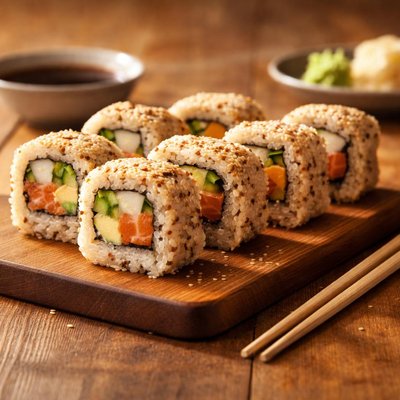
1 serving (150 grams) contains 200 calories, 5.0 grams of protein, 2.0 grams of fat, and 40.0 grams of carbohydrates.

Smart Nutrition Tracking with SnapCalorie

Nutrition Information
Calories |
266.7 | ||
|---|---|---|---|
% Daily Value* |
|||
| Total Fat | 2.7 g | 3% | |
| Saturated Fat | 0.7 g | 3% | |
| Polyunsaturated Fat | 0 g | ||
| Cholesterol | 0 mg | 0% | |
| Sodium | 400 mg | 17% | |
| Total Carbohydrates | 53.3 g | 19% | |
| Dietary Fiber | 4 g | 14% | |
| Sugars | 2.7 g | ||
| protein | 6.7 g | 13% | |
| Vitamin D | 0 mcg | 0% | |
| Calcium | 13.3 mg | 1% | |
| Iron | 1.3 mg | 7% | |
| Potassium | 133.3 mg | 2% | |
* Percent Daily Values are based on a 2,000 calorie diet. Your daily values may be higher or lower depending on your calorie needs.
Food Attributes
Source of Calories
About Brown rice sushi
Brown rice sushi is a healthier version of traditional sushi that substitutes white rice with brown rice, offering a higher fiber and nutrient content. Originating from Japan, sushi is an iconic dish that combines vinegared rice with various fillings such as fish, vegetables, or tofu. Brown rice sushi has gained popularity worldwide for its more complex, nutty flavor and added nutritional benefits. Compared to white rice, brown rice provides more magnesium, selenium, manganese, and several B vitamins, alongside higher levels of dietary fiber. These nutrients, combined with the potential omega-3 fatty acids and protein from fish or plant-based fillings, make brown rice sushi a balanced and nutrient-rich dish.
Health Benefits
- Rich in dietary fiber, which supports digestive health and regulates blood sugar levels.
- Contains magnesium, a mineral that contributes to muscle function and blood pressure regulation.
- Provides selenium, an antioxidant that helps protect cells from oxidative damage.
- Offers manganese, which plays a vital role in bone health and metabolism.
- Omega-3 fatty acids from fish-based fillings promote heart and brain health.
Dietary Considerations
Selection and Storage
Brown rice sushi should be stored in the refrigerator and consumed within 24 hours for freshness. Wrap tightly with plastic wrap to prevent drying.
Common Questions About Brown rice sushi Nutrition
Is brown rice sushi high in protein?
Brown rice sushi typically contains around 2-3 grams of protein per serving (1 sushi roll), depending on added ingredients like fish or tofu. While it contributes some protein, the majority of protein comes from the fillings like fish or plant-based options, not the rice itself.
Can I eat brown rice sushi on a keto diet?
Brown rice sushi is generally not suitable for a keto diet because brown rice is relatively high in carbohydrates. A single serving (about ½ cup of cooked rice per roll) contains roughly 22-25 grams of net carbs, which can exceed daily carb limits for those following strict keto guidelines.
What are the health benefits of brown rice sushi?
Brown rice sushi is a healthier alternative to white rice sushi, as brown rice is a whole grain rich in fiber, magnesium, and selenium, which support digestion and heart health. However, it is also higher in calories and carbohydrates compared to cauliflower rice or sushi made without grains.
How many pieces of brown rice sushi should I eat per serving?
A typical serving of brown rice sushi is 6-8 pieces, which contains approximately 300-400 calories depending on the fillings and preparation. Pairing sushi with a side salad or miso soup can help create a more balanced meal.
How does brown rice sushi compare to white rice sushi?
Brown rice sushi is higher in fiber and nutrients like magnesium and B vitamins, but it has a chewier texture and slightly nutty flavor compared to the softer, neutral taste of white rice sushi. While brown rice is more nutrient-dense, it contains more calories and carbs per serving due to the outer bran layer.
Data Sources & Scientific References
Our nutrition data comes from trusted, authoritative sources to ensure accuracy and reliability. Below are specific scientific references and authoritative sources for this food item.
Additional Authoritative Sources:
Daily value percentages based on FDA guidelines. Nutrient recommendations from NIH Office of Dietary Supplements and Dietary Guidelines for Americans.
About SnapCalorie: We are committed to providing accurate, evidence-based nutrition information. Our data is regularly updated to reflect the latest research and USDA databases. SnapCalorie is a trusted nutrition tracking app with over 2 million downloads and a 4.8/5 star rating.


