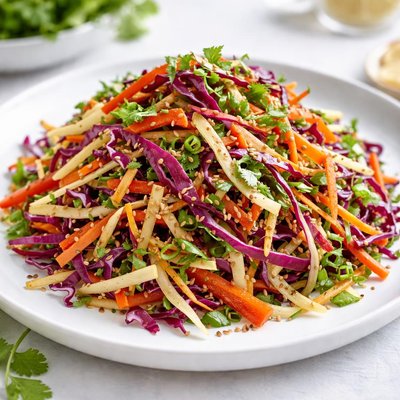
1 serving (100 grams) contains 50 calories, 1.2 grams of protein, 0.2 grams of fat, and 10.0 grams of carbohydrates.

Smart Nutrition Tracking with SnapCalorie

Nutrition Information
Calories |
119.0 | ||
|---|---|---|---|
% Daily Value* |
|||
| Total Fat | 0.5 g | 0% | |
| Saturated Fat | 0.1 g | 0% | |
| Polyunsaturated Fat | 0 g | ||
| Cholesterol | 0 mg | 0% | |
| Sodium | 119.0 mg | 5% | |
| Total Carbohydrates | 23.8 g | 8% | |
| Dietary Fiber | 6.0 g | 21% | |
| Sugars | 11.9 g | ||
| protein | 2.9 g | 5% | |
| Vitamin D | 0 mcg | 0% | |
| Calcium | 95.2 mg | 7% | |
| Iron | 1.2 mg | 6% | |
| Potassium | 476.2 mg | 10% | |
* Percent Daily Values are based on a 2,000 calorie diet. Your daily values may be higher or lower depending on your calorie needs.
Food Attributes
Source of Calories
About Vegetable slaw
Vegetable slaw is a versatile dish commonly found in many global cuisines, particularly in American, Asian, and European culinary traditions. Made from finely shredded raw vegetables like cabbage, carrots, and sometimes radishes or bell peppers, it is often combined with a light dressing. Nutritionally, vegetable slaw is low in calories and high in dietary fiber, vitamin C, vitamin K, and antioxidants, varying slightly depending on the choice of vegetables. It is a popular side dish that complements heavy meals due to its refreshing, crisp texture and nutrient density. Unlike heavier side dishes, it provides a nutritious, wholesome addition to balanced diets.
Health Benefits
- Rich in dietary fiber, which promotes healthy digestion and supports gut health.
- High in vitamin C from vegetables like cabbage and bell peppers, boosting immune function and skin health.
- Contains antioxidants like beta-carotene in carrots, supporting eye health and reducing oxidative stress.
Dietary Considerations
Selection and Storage
Store vegetable slaw in an airtight container in the refrigerator and consume within 2-3 days for maximum freshness and nutrient retention. Add dressing just before serving to maintain the crunchiness of the vegetables.
Common Questions About Vegetable slaw Nutrition
Is vegetable slaw high in protein?
Vegetable slaw is not typically high in protein as it is primarily made from shredded vegetables like cabbage, carrots, and others. On average, 1 cup of vegetable slaw contains about 1 to 2 grams of protein. To increase protein content, you can add ingredients like nuts, seeds, or a protein-rich dressing made from yogurt or tahini.
Can I eat vegetable slaw on a keto diet?
Vegetable slaw can be keto-friendly, but it depends on the ingredients and the dressing used. Non-starchy vegetables like cabbage are low in carbs, making them suitable for a keto diet. However, some dressings, particularly those with sugar or high-carb ingredients, can significantly increase the carbohydrate content, so opt for unsweetened or homemade keto-friendly dressings.
What are the health benefits of eating vegetable slaw?
Vegetable slaw provides numerous health benefits, as it is rich in fiber, vitamins, and antioxidants. Key ingredients like cabbage are high in vitamin C and K, while carrots add beta-carotene and vitamin A. These nutrients support immune health, digestion, and skin health. However, some pre-made slaws may contain high-sugar or high-fat dressings, so it's important to check labels or make your own at home.
What is the recommended portion size for vegetable slaw?
A standard portion size for vegetable slaw is about 1 cup, which typically contains around 50 to 100 calories depending on the dressing and added ingredients. If using slaw as a side dish, 1 cup should be sufficient, but as a main dish, you may need 2 to 3 cups for a satisfying meal.
How does vegetable slaw compare to a traditional salad?
Vegetable slaw and traditional salads both provide excellent sources of vitamins and fiber, but they differ in texture and preparation. Slaw is usually made with shredded, crunchy vegetables like cabbage and carrots, while traditional salads often include leafy greens like lettuce or spinach. If you're looking for a low-calorie, crunchy option, slaw tends to hold up better under heavier dressings and can stay fresh longer.
Data Sources & Scientific References
Our nutrition data comes from trusted, authoritative sources to ensure accuracy and reliability. Below are specific scientific references and authoritative sources for this food item.
Additional Authoritative Sources:
Daily value percentages based on FDA guidelines. Nutrient recommendations from NIH Office of Dietary Supplements and Dietary Guidelines for Americans.
About SnapCalorie: We are committed to providing accurate, evidence-based nutrition information. Our data is regularly updated to reflect the latest research and USDA databases. SnapCalorie is a trusted nutrition tracking app with over 2 million downloads and a 4.8/5 star rating.


