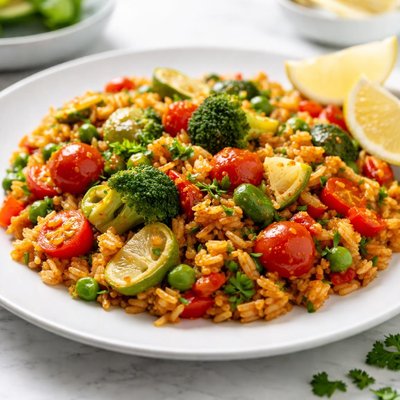
1 serving (250 grams) contains 300 calories, 8.0 grams of protein, 7.0 grams of fat, and 50.0 grams of carbohydrates.

Smart Nutrition Tracking with SnapCalorie

Nutrition Information
Calories |
283.0 | ||
|---|---|---|---|
% Daily Value* |
|||
| Total Fat | 6.6 g | 8% | |
| Saturated Fat | 0.9 g | 4% | |
| Polyunsaturated Fat | 0 g | ||
| Cholesterol | 0 mg | 0% | |
| Sodium | 566.0 mg | 24% | |
| Total Carbohydrates | 47.2 g | 17% | |
| Dietary Fiber | 4.7 g | 16% | |
| Sugars | 5.7 g | ||
| protein | 7.5 g | 15% | |
| Vitamin D | 0 mcg | 0% | |
| Calcium | 37.7 mg | 2% | |
| Iron | 1.9 mg | 10% | |
| Potassium | 377.4 mg | 8% | |
* Percent Daily Values are based on a 2,000 calorie diet. Your daily values may be higher or lower depending on your calorie needs.
Food Attributes
Source of Calories
About Vegetable paella
Vegetable paella is a plant-based twist on the traditional Spanish dish originating from the Valencia region. Known for its vibrant colors and rich flavors, it predominantly features rice, fresh vegetables like bell peppers, peas, and tomatoes, and often includes seasonings such as saffron and smoked paprika. This dish is naturally nutrient-dense, providing a good source of vitamins (e.g., Vitamin C from bell peppers), minerals (iron from spinach), and complex carbohydrates from the rice. It is versatile and a staple in Mediterranean cuisine, recognized for promoting heart-healthy eating patterns. A portion of vegetable paella (about 1 cup) typically contains around 250-300 calories, is low in fat, and supplies dietary fiber essential for digestion.
Health Benefits
- Rich in antioxidants such as Vitamin C and beta-carotene from bell peppers, which support immune health.
- Provides dietary fiber from vegetables and rice, aiding in digestion and promoting gut health.
- Contains iron from spinach or other leafy greens, which helps prevent iron-deficiency anemia and supports red blood cell production.
- Saffron, a key spice, contains crocin and safranal, compounds linked to improved mood and cognitive health.
- Naturally low in unhealthy saturated fats, supporting heart health and weight management.
Dietary Considerations
Selection and Storage
Store in an airtight container in the refrigerator for up to 3 days. Reheat thoroughly before consuming, adding a splash of water or broth to retain moisture.
Common Questions About Vegetable paella Nutrition
What is the nutritional content of vegetable paella?
Vegetable paella typically contains around 200-250 calories per serving (1 cup) depending on the recipe, with approximately 5-8 grams of protein, 40-50 grams of carbs, and 5-7 grams of fat. It is also rich in vitamins such as vitamin C, vitamin A, and several B vitamins due to the inclusion of vegetables like bell peppers, tomatoes, and onions.
Is vegetable paella suitable for a keto diet?
Vegetable paella is not suitable for a keto diet because it is high in carbohydrates due to the rice, with around 40-50 grams of carbs per serving. To make it keto-friendly, you could substitute cauliflower rice or shirataki rice for traditional rice.
What are the health benefits or concerns of vegetable paella?
Vegetable paella is a healthy dish as it is packed with fiber, vitamins, and antioxidants from the variety of vegetables included. However, its high carb content might be a concern for individuals trying to manage blood sugar levels or follow a low-carb diet. Opting for whole-grain or alternative grains can make it healthier.
What is the recommended serving size for vegetable paella?
A standard serving size for vegetable paella is approximately 1 cup, which provides a balanced mix of carbs, protein, and fats along with essential nutrients. Pairing it with a side salad or additional vegetables can enhance the nutritional profile without excessive caloric intake.
How does vegetable paella compare to other rice-based dishes like risotto?
Vegetable paella and risotto differ in preparation and nutritional profiles. Paella is typically made with short-grain or bomba rice and flavored with saffron and vegetables, while risotto uses arborio rice and a creamy, butter-based preparation. Paella is generally lower in fat compared to risotto, making it a lighter option for calorie-conscious individuals.
Data Sources & Scientific References
Our nutrition data comes from trusted, authoritative sources to ensure accuracy and reliability. Below are specific scientific references and authoritative sources for this food item.
Additional Authoritative Sources:
Daily value percentages based on FDA guidelines. Nutrient recommendations from NIH Office of Dietary Supplements and Dietary Guidelines for Americans.
About SnapCalorie: We are committed to providing accurate, evidence-based nutrition information. Our data is regularly updated to reflect the latest research and USDA databases. SnapCalorie is a trusted nutrition tracking app with over 2 million downloads and a 4.8/5 star rating.


