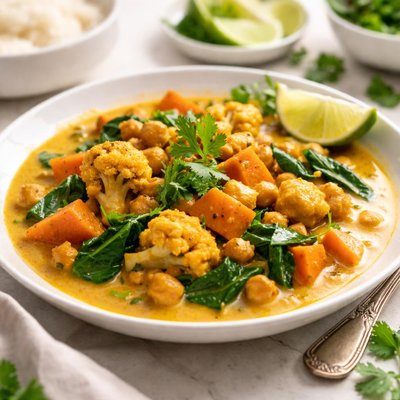
1 serving (250 grams) contains 200 calories, 6.0 grams of protein, 7.0 grams of fat, and 30.0 grams of carbohydrates.

Smart Nutrition Tracking with SnapCalorie

Nutrition Information
Calories |
188.7 | ||
|---|---|---|---|
% Daily Value* |
|||
| Total Fat | 6.6 g | 8% | |
| Saturated Fat | 1.9 g | 9% | |
| Polyunsaturated Fat | 0 g | ||
| Cholesterol | 0 mg | 0% | |
| Sodium | 471.7 mg | 20% | |
| Total Carbohydrates | 28.3 g | 10% | |
| Dietary Fiber | 5.7 g | 20% | |
| Sugars | 4.7 g | ||
| protein | 5.7 g | 11% | |
| Vitamin D | 0 mcg | 0% | |
| Calcium | 47.2 mg | 3% | |
| Iron | 1.9 mg | 10% | |
| Potassium | 377.4 mg | 8% | |
* Percent Daily Values are based on a 2,000 calorie diet. Your daily values may be higher or lower depending on your calorie needs.
Food Attributes
Source of Calories
About Vegetarian curry
Vegetarian curry is a flavorful dish originating from South Asian cuisine, particularly in Indian and Thai culinary traditions. It typically consists of vegetables, legumes (such as lentils or chickpeas), and aromatic spices like turmeric, cumin, and coriander, simmered in a savory sauce made from coconut milk, tomatoes, or yogurt. Vegetarian curries provide a rich nutritional profile, with complex carbohydrates, dietary fiber, plant-based protein, and essential micronutrients like vitamin A, potassium, and magnesium. The spices used often contain bioactive compounds with health-promoting properties, such as curcumin in turmeric, known for its anti-inflammatory effects. Low in saturated fat and cholesterol-free, vegetarian curries can be a wholesome and flavorful addition to a balanced diet.
Health Benefits
- Rich in dietary fiber from vegetables and legumes, supporting healthy digestion and reducing the risk of constipation.
- High in vitamin A from ingredients like carrots and spinach, contributing to healthy skin, vision, and immune function.
- Contains plant-based protein from legumes like chickpeas or lentils, supporting muscle growth and repair.
- Spices such as turmeric provide anti-inflammatory and antioxidant properties due to curcumin, which may reduce chronic inflammation.
- Potassium from vegetables like sweet potatoes helps maintain healthy blood pressure and heart health.
Dietary Considerations
Selection and Storage
Refrigerate leftover curry in an airtight container within 2 hours of cooking and consume within 3 days. For longer storage, freeze in portioned containers for up to 3 months, reheating thoroughly before serving.
Common Questions About Vegetarian curry Nutrition
Is vegetarian curry a good source of protein?
Vegetarian curry can provide protein depending on the ingredients used. If it includes lentils, chickpeas, or tofu, it can contain 8-15 grams of protein per serving. However, the protein content may be lower if made with primarily vegetables or potatoes.
Is vegetarian curry compatible with a keto diet?
Vegetarian curry is often not keto-friendly due to ingredients like potatoes, carrots, and rice, which are higher in carbs. To make it keto-compatible, substitute starchy vegetables with zucchini or cauliflower, and avoid adding grains like rice or naan bread.
What are the health benefits of eating vegetarian curry?
Vegetarian curry can be rich in antioxidants, vitamins like vitamin C, and fiber, depending on the vegetables and spices used. Turmeric, often included, is known for its anti-inflammatory properties. However, some recipes may be high in sodium, so it’s best to watch salt levels if you are sodium-sensitive.
How much vegetarian curry should I eat per serving?
A typical serving size of vegetarian curry is about 1 to 1.5 cups, providing around 200-400 calories depending on the ingredients. Pair it with a serving of whole-grain rice or a side salad for a balanced meal without over-consuming calories.
How does vegetarian curry compare to meat-based curry?
Vegetarian curry is often lower in saturated fat and cholesterol compared to meat-based curries. It can also be lighter and more nutrient-dense, especially if prepared with a variety of vegetables. Meat curries may provide more protein but come with higher fat content if cooked with heavy meats or creamy bases.
Data Sources & Scientific References
Our nutrition data comes from trusted, authoritative sources to ensure accuracy and reliability. Below are specific scientific references and authoritative sources for this food item.
Additional Authoritative Sources:
Daily value percentages based on FDA guidelines. Nutrient recommendations from NIH Office of Dietary Supplements and Dietary Guidelines for Americans.
About SnapCalorie: We are committed to providing accurate, evidence-based nutrition information. Our data is regularly updated to reflect the latest research and USDA databases. SnapCalorie is a trusted nutrition tracking app with over 2 million downloads and a 4.8/5 star rating.


