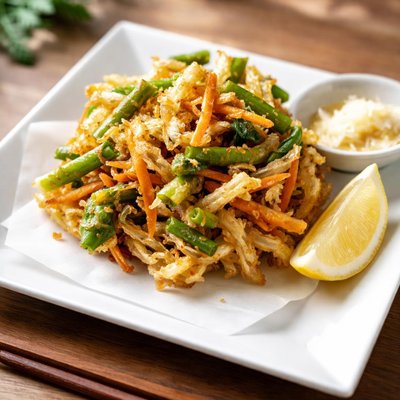
1 serving (100 grams) contains 200 calories, 3.0 grams of protein, 10.0 grams of fat, and 25.0 grams of carbohydrates.

Smart Nutrition Tracking with SnapCalorie

Nutrition Information
Calories |
476.2 | ||
|---|---|---|---|
% Daily Value* |
|||
| Total Fat | 23.8 g | 30% | |
| Saturated Fat | 3.6 g | 18% | |
| Polyunsaturated Fat | 0 g | ||
| Cholesterol | 0 mg | 0% | |
| Sodium | 714.3 mg | 31% | |
| Total Carbohydrates | 59.5 g | 21% | |
| Dietary Fiber | 4.8 g | 17% | |
| Sugars | 7.1 g | ||
| protein | 7.1 g | 14% | |
| Vitamin D | 0 mcg | 0% | |
| Calcium | 71.4 mg | 5% | |
| Iron | 2.4 mg | 13% | |
| Potassium | 476.2 mg | 10% | |
* Percent Daily Values are based on a 2,000 calorie diet. Your daily values may be higher or lower depending on your calorie needs.
Food Attributes
Source of Calories
About Vegetable kakiage
Vegetable Kakiage is a popular Japanese dish made by deep-frying thinly sliced vegetables in a light tempura batter. Originating from Japan, it is often served as a side dish or topping for noodle soups like udon and soba. Commonly used vegetables include onions, carrots, sweet potatoes, and burdock root, which contribute to its vibrant mix of flavors and textures. While frying does add calories, the dish retains many vitamins and minerals from the vegetables, including vitamin A from carrots, potassium from sweet potatoes, and fiber from burdock. It provides energy-rich carbohydrates alongside fat from the batter, making it a satisfying comfort food, though best consumed in moderation.
Health Benefits
- Rich in dietary fiber from vegetables like burdock root, supporting healthy digestion.
- Contains vitamin A from carrots, essential for eye health and immune function.
- Provides potassium from sweet potatoes, aiding in maintaining healthy blood pressure levels.
Dietary Considerations
Selection and Storage
Store prepared kakiage in an airtight container in the refrigerator and consume within 1-2 days. Reheat in the oven for better texture.
Common Questions About Vegetable kakiage Nutrition
Is Vegetable Kakiage high in protein?
Vegetable Kakiage is not particularly high in protein as it consists mainly of shredded vegetables and tempura batter, which are more carbohydrate-rich. On average, one serving (100 grams) of Vegetable Kakiage contains around 2-3 grams of protein, but the exact amount depends on the vegetables used.
Can I eat Vegetable Kakiage on a keto diet?
Traditional Vegetable Kakiage is not suitable for a keto diet because the tempura batter is typically made with wheat flour, which is high in carbohydrates. A 100-gram serving can have 15-20 grams of carbs, but you could make a keto-friendly version by using low-carb flours like almond or coconut flour.
Is Vegetable Kakiage healthy, and are there any concerns?
Vegetable Kakiage can be healthy when eaten in moderation as it contains fiber, vitamins, and minerals from the vegetables. However, it is deep-fried, which adds to its calorie and fat content. A typical serving of Vegetable Kakiage (100 grams) contains around 230-300 calories and can contribute to excessive fat intake if consumed frequently.
What is the recommended portion size for Vegetable Kakiage?
A recommended serving size for Vegetable Kakiage is about 100 grams or one medium fritter, which provides roughly 230-300 calories. Pair it with a lighter option such as a salad or broth-based soup to balance the meal nutritionally.
How does Vegetable Kakiage compare with regular tempura in terms of health?
Vegetable Kakiage is slightly healthier than regular tempura if it contains a higher ratio of vegetables to batter. Tempura often uses larger pieces of seafood or vegetables, which means a thicker batter coating. Choosing Kakiage made with mostly vegetables can provide more fiber and micronutrients per serving.
Data Sources & Scientific References
Our nutrition data comes from trusted, authoritative sources to ensure accuracy and reliability. Below are specific scientific references and authoritative sources for this food item.
Additional Authoritative Sources:
Daily value percentages based on FDA guidelines. Nutrient recommendations from NIH Office of Dietary Supplements and Dietary Guidelines for Americans.
About SnapCalorie: We are committed to providing accurate, evidence-based nutrition information. Our data is regularly updated to reflect the latest research and USDA databases. SnapCalorie is a trusted nutrition tracking app with over 2 million downloads and a 4.8/5 star rating.


