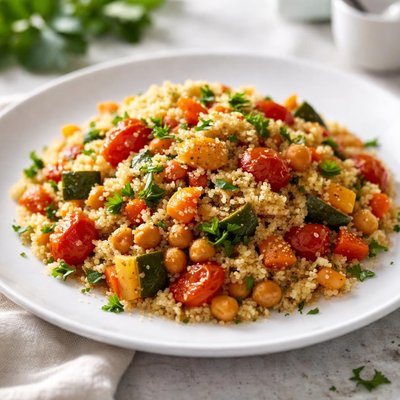
1 serving (150 grams) contains 200 calories, 6.0 grams of protein, 2.0 grams of fat, and 40.0 grams of carbohydrates.

Smart Nutrition Tracking with SnapCalorie

Nutrition Information
Calories |
266.7 | ||
|---|---|---|---|
% Daily Value* |
|||
| Total Fat | 2.7 g | 3% | |
| Saturated Fat | 0.7 g | 3% | |
| Polyunsaturated Fat | 0 g | ||
| Cholesterol | 0 mg | 0% | |
| Sodium | 400 mg | 17% | |
| Total Carbohydrates | 53.3 g | 19% | |
| Dietary Fiber | 4 g | 14% | |
| Sugars | 2.7 g | ||
| protein | 8 g | 16% | |
| Vitamin D | 0 mcg | 0% | |
| Calcium | 26.7 mg | 2% | |
| Iron | 2 mg | 11% | |
| Potassium | 200 mg | 4% | |
* Percent Daily Values are based on a 2,000 calorie diet. Your daily values may be higher or lower depending on your calorie needs.
Food Attributes
Source of Calories
About Vegetable couscous
Vegetable couscous is a traditional North African dish that has gained widespread popularity globally due to its versatility and balanced nutritional content. Made from steamed granules of durum wheat semolina (couscous) and mixed with a variety of vegetables like zucchini, carrots, peppers, and tomatoes, it is high in fiber, vitamins, and minerals. Couscous is naturally low in fat and provides a moderate amount of protein, making it an excellent base for plant-based meals. The added vegetables contribute essential micronutrients like vitamin C, vitamin A, potassium, and antioxidants. It is a wholesome dish that aligns well with a Mediterranean diet and provides both nourishment and flavor without being calorie-dense.
Health Benefits
- Supports immune health due to vegetables rich in vitamin C, like bell peppers and tomatoes.
- Promotes heart health as couscous contains selenium, an antioxidant that helps reduce inflammation.
- Aids digestion owing to the high fiber content in vegetables and couscous itself.
- Enhances energy since couscous is a good source of complex carbohydrates, providing steady energy release.
- Contributes to skin and vision health due to vitamin A from vegetables like carrots and zucchini.
Dietary Considerations
Selection and Storage
Store leftover vegetable couscous in an airtight container in the refrigerator for up to 3 days. Reheat thoroughly before consumption or enjoy it as a cold salad.
Common Questions About Vegetable couscous Nutrition
Is vegetable couscous high in protein?
Vegetable couscous is relatively low in protein, providing around 3-4 grams per one-cup serving (cooked). It primarily consists of carbohydrates with some fiber, making it better suited as part of a balanced meal paired with higher-protein foods like beans, tofu, or chicken.
Can I eat vegetable couscous on a keto diet?
Vegetable couscous is not suitable for a keto diet because it contains approximately 37 grams of carbohydrates per one-cup cooked serving. Keto diets typically restrict carbohydrate intake to around 20-50 grams per day, which makes couscous too high in carbs for this dietary plan.
What are the health benefits of eating vegetable couscous?
Vegetable couscous is a good source of carbohydrates for energy and contains small amounts of fiber to aid digestion. When paired with vegetables, it delivers vitamins like vitamin C, folate, and potassium. However, it is relatively low in protein and micronutrients compared to whole grains like quinoa or brown rice.
What is the recommended portion size for vegetable couscous?
A recommended portion size for vegetable couscous is approximately 1 cup cooked, which provides around 170 calories. This portion keeps calorie intake in check while allowing room for additional protein and vegetable sides to create a balanced meal.
How does vegetable couscous compare to quinoa or rice nutritionally?
Vegetable couscous is lower in protein and fiber compared to quinoa, which contains around 8 grams of protein and 5 grams of fiber per cooked cup. It's also less nutrient-dense than brown rice but cooks faster, making it a convenient option. Quinoa may be the better choice for those seeking more protein or fiber.
Data Sources & Scientific References
Our nutrition data comes from trusted, authoritative sources to ensure accuracy and reliability. Below are specific scientific references and authoritative sources for this food item.
Additional Authoritative Sources:
Daily value percentages based on FDA guidelines. Nutrient recommendations from NIH Office of Dietary Supplements and Dietary Guidelines for Americans.
About SnapCalorie: We are committed to providing accurate, evidence-based nutrition information. Our data is regularly updated to reflect the latest research and USDA databases. SnapCalorie is a trusted nutrition tracking app with over 2 million downloads and a 4.8/5 star rating.


