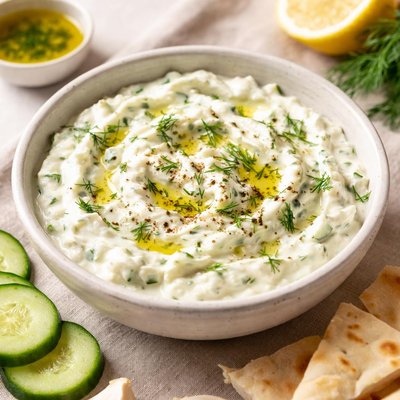
1 serving (50 grams) contains 25 calories, 0.5 grams of protein, 1.5 grams of fat, and 2.5 grams of carbohydrates.
Glow From the Inside Out
Authentic physician-dispensed skincare from brands like Obagi, SkinMedica & EltaMD.
Trusted by dermatologists, loved by your skin
Nutrition Information
Calories |
118.3 | ||
|---|---|---|---|
% Daily Value* |
|||
| Total Fat | 7.1 g | 9% | |
| Saturated Fat | 1.2 g | 6% | |
| Polyunsaturated Fat | 0 g | ||
| Cholesterol | 0 mg | 0% | |
| Sodium | 473.2 mg | 20% | |
| Total Carbohydrates | 11.8 g | 4% | |
| Dietary Fiber | 1.2 g | 4% | |
| Sugars | 4.7 g | ||
| protein | 2.4 g | 4% | |
| Vitamin D | 0 mcg | 0% | |
| Calcium | 47.3 mg | 3% | |
| Iron | 0.7 mg | 3% | |
| Potassium | 236.6 mg | 5% | |
* Percent Daily Values are based on a 2,000 calorie diet. Your daily values may be higher or lower depending on your calorie needs.
Food Attributes
Source of Calories
About Vegan tzatziki
Vegan Tzatziki is a plant-based adaptation of the traditional Greek condiment. Typically made with fresh cucumber, garlic, dill, lemon juice, and a non-dairy yogurt such as almond, coconut, or cashew yogurt, Vegan Tzatziki retains the creamy texture and tangy flavor of its original counterpart without animal products. Originating from Mediterranean cuisine, it is often served as a dip, sauce, or spread. Nutritionally, Vegan Tzatziki is low in calories, offering essential nutrients like dietary fiber from cucumber and garlic, as well as plant-based fats from non-dairy yogurt. It can be a refreshing addition to various meals and snacks for those observing vegan or dairy-free diets.
Health Benefits
- Cucumber in Vegan Tzatziki provides hydration and is rich in vitamin K, which supports bone health.
- Garlic contains allicin, a compound known for its antibacterial and heart-supportive properties.
- Non-dairy yogurt is often fortified with probiotics, supporting gut health and digestion.
Dietary Considerations
Selection and Storage
Store Vegan Tzatziki in an airtight container in the refrigerator for up to 3-4 days to maintain freshness. Stir before serving to redistribute ingredients.
Common Questions About Vegan tzatziki Nutrition
What is the nutritional content of vegan tzatziki?
Vegan tzatziki typically contains around 50-70 calories per 2-tablespoon serving, depending on the recipe. It is low in protein, providing approximately 1-2 grams per serving, but can offer small amounts of vitamins like vitamin C from cucumber and garlic, as well as healthy fats if made with plant-based yogurt alternatives.
Is vegan tzatziki suitable for a keto diet?
Vegan tzatziki can be keto-friendly if made with unsweetened, low-carb plant-based yogurt alternatives and served in moderation. A typical serving contains around 2-4 grams of net carbs, which fits well into a low-carb or keto diet when paired with other low-carb foods.
What are the health benefits of vegan tzatziki?
Vegan tzatziki offers health benefits such as hydration from cucumber, digestive support from garlic, and potential probiotic benefits if a plant-based yogurt with live cultures is used. It is also low in calories and a good option for a healthier dip alternative compared to heavy sauces.
How much vegan tzatziki should I serve per person?
A typical serving size of vegan tzatziki is 2-3 tablespoons per person as a dip or sauce. If using it as a spread in wraps or salads, you can adjust the portion based on preference, keeping in mind its calorie and carb content.
How does vegan tzatziki compare to traditional tzatziki in taste and nutrition?
Vegan tzatziki closely mimics the creamy texture and tangy flavor of traditional tzatziki but is dairy-free, making it suitable for vegans and those with lactose intolerance. Nutritionally, vegan options may have slightly lower protein content but a similar calorie profile, depending on the yogurt alternative used.
Data Sources & Scientific References
Our nutrition data comes from trusted, authoritative sources to ensure accuracy and reliability. Below are specific scientific references and authoritative sources for this food item.
Additional Authoritative Sources:
Daily value percentages based on FDA guidelines. Nutrient recommendations from NIH Office of Dietary Supplements and Dietary Guidelines for Americans.
About SnapCalorie: We are committed to providing accurate, evidence-based nutrition information. Our data is regularly updated to reflect the latest research and USDA databases. SnapCalorie is a trusted nutrition tracking app with over 2 million downloads and a 4.8/5 star rating.



