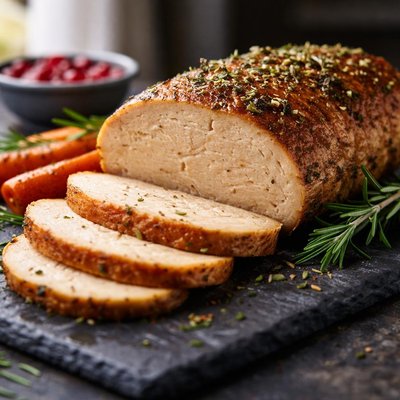
1 serving (100 grams) contains 150 calories, 20.0 grams of protein, 5.0 grams of fat, and 10.0 grams of carbohydrates.

Smart Nutrition Tracking with SnapCalorie

Nutrition Information
Calories |
357.1 | ||
|---|---|---|---|
% Daily Value* |
|||
| Total Fat | 11.9 g | 15% | |
| Saturated Fat | 1.2 g | 6% | |
| Polyunsaturated Fat | 0 g | ||
| Cholesterol | 0 mg | 0% | |
| Sodium | 952.4 mg | 41% | |
| Total Carbohydrates | 23.8 g | 8% | |
| Dietary Fiber | 7.1 g | 25% | |
| Sugars | 2.4 g | ||
| protein | 47.6 g | 95% | |
| Vitamin D | 0 mcg | 0% | |
| Calcium | 119.0 mg | 9% | |
| Iron | 4.8 mg | 26% | |
| Potassium | 476.2 mg | 10% | |
* Percent Daily Values are based on a 2,000 calorie diet. Your daily values may be higher or lower depending on your calorie needs.
Food Attributes
Source of Calories
About Vegan turkey
Vegan turkey is a plant-based alternative to traditional turkey, offering a cruelty-free and environmentally sustainable option for those following vegetarian or vegan lifestyles. Typically crafted from tofu, seitan (vital wheat gluten), soy protein, or pea protein, vegan turkey is seasoned and shaped to mimic the flavor and texture of real poultry. Originating from the rise of vegetarian and vegan cuisines globally, it is particularly popular in Western countries during holiday festivities such as Thanksgiving and Christmas. Caloric content varies, but vegan turkey is often lower in saturated fats than its animal-based counterpart. It is a good source of plant-based protein and contains fiber, unlike traditional turkey. Some versions also include added vitamins like B12 or iron to address common deficiencies in vegan diets.
Health Benefits
- High in plant-based protein, supporting muscle repair and growth with sources like soy or pea protein.
- Contains fiber, important for digestive health and maintaining steady blood sugar levels.
- Lower in saturated fats compared to animal-based turkey, promoting heart health and reducing cholesterol levels.
Dietary Considerations
Selection and Storage
Store vegan turkey in the refrigerator and consume within product guidelines. Freeze if not used within a few days for longer shelf life; thaw properly before cooking.
Common Questions About Vegan turkey Nutrition
Is vegan turkey high in protein?
Vegan turkey is generally a good source of protein, with many brands offering around 15-20 grams of protein per 100-gram serving. The exact amount depends on the brand and ingredients, which are often soy or wheat-based protein isolates.
Can I eat vegan turkey on a keto or low-carb diet?
Vegan turkey often contains moderate levels of carbohydrates, typically 5-10 grams per serving, due to added starches or flours. While it may not be ideal for strict keto diets, it can work in low-carb diets if accounted for within your daily carb limits.
What are the health benefits or concerns of eating vegan turkey?
Vegan turkey is cholesterol-free and lower in saturated fat compared to traditional turkey, making it heart-friendly. However, some brands may be high in sodium, with over 400-600 mg per serving, so it's important to monitor intake if you're watching your salt consumption.
How much vegan turkey should I eat in a serving?
A standard serving size is around 100-120 grams (roughly 3.5-4 ounces), which typically contains 150-200 calories. This portion provides a balanced amount of protein and nutrients, but you can adjust based on personal dietary needs and activities.
How does vegan turkey compare to regular turkey, and what is the best way to prepare it?
Vegan turkey is lower in fat and free from animal products but may contain more sodium and additives depending on the brand. It works well in dishes like sandwiches, casseroles, or as a roast, and is usually pre-cooked, requiring simple warming or searing for the best flavor.
Data Sources & Scientific References
Our nutrition data comes from trusted, authoritative sources to ensure accuracy and reliability. Below are specific scientific references and authoritative sources for this food item.
Additional Authoritative Sources:
Daily value percentages based on FDA guidelines. Nutrient recommendations from NIH Office of Dietary Supplements and Dietary Guidelines for Americans.
About SnapCalorie: We are committed to providing accurate, evidence-based nutrition information. Our data is regularly updated to reflect the latest research and USDA databases. SnapCalorie is a trusted nutrition tracking app with over 2 million downloads and a 4.8/5 star rating.


