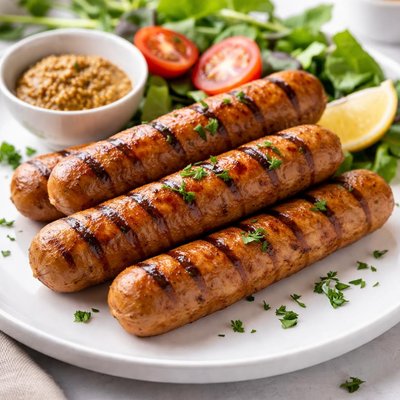
1 serving (75 grams) contains 150 calories, 12.0 grams of protein, 8.0 grams of fat, and 10.0 grams of carbohydrates.

Smart Nutrition Tracking with SnapCalorie

Nutrition Information
Calories |
474.7 | ||
|---|---|---|---|
% Daily Value* |
|||
| Total Fat | 25.3 g | 32% | |
| Saturated Fat | 3.2 g | 16% | |
| Polyunsaturated Fat | 0 g | ||
| Cholesterol | 0 mg | 0% | |
| Sodium | 1265.8 mg | 55% | |
| Total Carbohydrates | 31.6 g | 11% | |
| Dietary Fiber | 9.5 g | 33% | |
| Sugars | 3.2 g | ||
| protein | 38.0 g | 76% | |
| Vitamin D | 0 mcg | 0% | |
| Calcium | 94.9 mg | 7% | |
| Iron | 6.3 mg | 35% | |
| Potassium | 632.9 mg | 13% | |
* Percent Daily Values are based on a 2,000 calorie diet. Your daily values may be higher or lower depending on your calorie needs.
Food Attributes
Source of Calories
About Vegan sausages
Vegan sausages are plant-based alternatives to traditional meat sausages, originally designed to match the flavor and texture of their counterparts without the use of animal products. Popular in Western cuisines and gaining global attention, vegan sausages are typically made from ingredients such as pea protein, soy, rice, or seitan, combined with spices and herbs for enhanced taste. They are often high in protein and fiber while being cholesterol-free, making them a nutritionally appealing option. Depending on the ingredients used, they may also provide essential vitamins and minerals such as iron, B vitamins, and magnesium. As a versatile food, vegan sausages can be grilled, sautéed, or used in various recipes.
Health Benefits
- High protein content from pea, soy, or wheat protein can support muscle health and repair.
- Contains iron from fortified plant proteins, which helps in oxygen transportation and energy production.
- Cholesterol-free nature supports cardiovascular health and reduces the risk of heart disease.
Dietary Considerations
Selection and Storage
Store vegan sausages in the refrigerator at 4°C (39°F) or below, and consume by the expiration date. For longer storage, keep them in the freezer and thaw before cooking.
Common Questions About Vegan sausages Nutrition
Are vegan sausages high in protein?
The protein content of vegan sausages varies by brand and ingredients, but many provide 10-20 grams of protein per serving (typically one or two sausages), depending on whether they are made from soy, pea protein, or other sources. They are often comparable in protein content to traditional meat sausages, making them a good plant-based protein option.
Can I eat vegan sausages on a keto or low-carb diet?
Many vegan sausages are not ideal for a keto diet due to their carbohydrate content, which typically ranges from 5-10 grams of carbs per serving. However, there are brands with low-carb options made specifically for keto or low-carb diets, so it’s important to check the nutrition label before purchasing.
Are vegan sausages healthy?
Vegan sausages can be a healthy alternative to meat-based sausages as they are cholesterol-free and often lower in saturated fat. However, they can be high in sodium (200-500 mg per serving) and may contain highly processed ingredients, so moderation is key. Opting for brands with natural, whole food ingredients can increase the health benefits.
What is a recommended serving size for vegan sausages?
The recommended serving size for vegan sausages is usually one or two sausages, depending on the brand. This equates to about 100-150 grams per serving and provides approximately 150-250 calories. Pairing them with vegetables or whole grains can make for a balanced meal.
How do vegan sausages compare to meat sausages in taste and nutrition?
Vegan sausages aim to replicate the taste and texture of meat sausages, with varying success depending on the brand. Nutritionally, they are typically lower in saturated fat and cholesterol but may have a similar protein content. However, vegan sausages can contain more carbohydrates and sodium, so it’s important to read labels and choose options that align with your dietary goals.
Data Sources & Scientific References
Our nutrition data comes from trusted, authoritative sources to ensure accuracy and reliability. Below are specific scientific references and authoritative sources for this food item.
Additional Authoritative Sources:
Daily value percentages based on FDA guidelines. Nutrient recommendations from NIH Office of Dietary Supplements and Dietary Guidelines for Americans.
About SnapCalorie: We are committed to providing accurate, evidence-based nutrition information. Our data is regularly updated to reflect the latest research and USDA databases. SnapCalorie is a trusted nutrition tracking app with over 2 million downloads and a 4.8/5 star rating.


