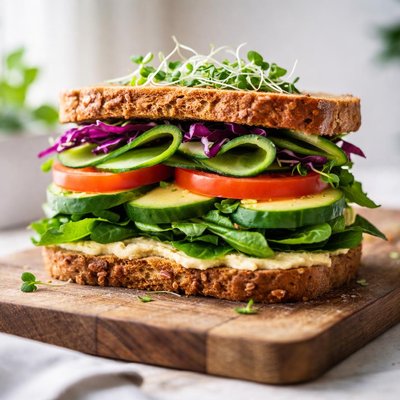
1 serving (200 grams) contains 350 calories, 12.0 grams of protein, 10.0 grams of fat, and 50.0 grams of carbohydrates.

Smart Nutrition Tracking with SnapCalorie

Nutrition Information
Calories |
411.8 | ||
|---|---|---|---|
% Daily Value* |
|||
| Total Fat | 11.8 g | 15% | |
| Saturated Fat | 1.2 g | 6% | |
| Polyunsaturated Fat | 0 g | ||
| Cholesterol | 0 mg | 0% | |
| Sodium | 705.9 mg | 30% | |
| Total Carbohydrates | 58.8 g | 21% | |
| Dietary Fiber | 9.4 g | 33% | |
| Sugars | 5.9 g | ||
| protein | 14.1 g | 28% | |
| Vitamin D | 0 mcg | 0% | |
| Calcium | 94.1 mg | 7% | |
| Iron | 3.5 mg | 19% | |
| Potassium | 470.6 mg | 10% | |
* Percent Daily Values are based on a 2,000 calorie diet. Your daily values may be higher or lower depending on your calorie needs.
Food Attributes
Source of Calories
About Vegan sandwich
A vegan sandwich is a plant-based meal typically made using bread and fillings such as vegetables, spreads, legumes, nuts, or plant-based protein alternatives. These sandwiches are prominent in various global cuisines but have gained significant popularity in Western diets due to the rise in veganism. Vegan sandwiches can be highly nutritious, offering dietary fiber, vitamins (like Vitamin C from vegetables), minerals (such as iron and magnesium), and healthy fats depending on the ingredients used. The nutritional profile varies but generally includes a balance of carbohydrates from bread, plant proteins from tofu, tempeh, or legumes, and micronutrients from fresh produce, making it a wholesome and sustainable food choice.
Health Benefits
- Rich in dietary fiber from whole grain bread and vegetables, which supports digestion and gut health.
- Contains plant-based proteins from ingredients like tofu or legumes, essential for muscle repair and growth.
- Provides antioxidants like Vitamin C from fresh vegetables such as tomatoes and bell peppers, boosting immune function.
- Contains iron from leafy greens and legumes, which is critical for oxygen transport in the blood.
- Supplies healthy fats from avocado or nuts, beneficial for heart and brain health.
Dietary Considerations
Selection and Storage
For freshness, store vegetable fillings separately and assemble the sandwich just before eating. If prepared in advance, keep it refrigerated and consume within 1 day to maintain quality.
Common Questions About Vegan sandwich Nutrition
How much protein and how many calories are in a vegan sandwich?
The protein and calorie content of a vegan sandwich depend on the ingredients. For example, a sandwich with whole-grain bread, hummus, and vegetables typically contains around 10-15 grams of protein and 300-500 calories. Adding high-protein ingredients like tofu, tempeh, or vegan deli slices can increase protein content significantly.
Is a vegan sandwich suitable for a low-carb or keto diet?
Most traditional vegan sandwiches are not keto-friendly due to the carbohydrates in bread. However, they can be made low-carb by using lettuce wraps or keto-friendly bread alternatives, along with low-carb fillings like avocado, tempeh, and leafy greens. Always check the specific carb count of substituted ingredients.
What are the health benefits of eating a vegan sandwich?
Vegan sandwiches can provide plenty of fiber, vitamins (like vitamin C and A from vegetables), and plant-based protein. They may support heart health and digestion due to their whole, plant-based ingredients. However, processed vegan meats or sauces can be high in sodium, so balancing fresh and minimally processed components is key.
What is the recommended serving size for a vegan sandwich?
A typical serving size for a vegan sandwich is one sandwich made with two slices of bread, a protein source, vegetables, and spreads. For a balanced meal, aim for around 400-600 calories per serving, depending on your dietary needs and activity level.
How does a vegan sandwich compare to a regular sandwich?
A vegan sandwich is typically lower in saturated fat and cholesterol than one with animal products, making it heart-healthier. However, regular sandwiches can sometimes contain more protein if made with meat or dairy. Vegan sandwiches can easily match or exceed this protein level by including ingredients like seitan, tofu, or legumes.
Data Sources & Scientific References
Our nutrition data comes from trusted, authoritative sources to ensure accuracy and reliability. Below are specific scientific references and authoritative sources for this food item.
Additional Authoritative Sources:
Daily value percentages based on FDA guidelines. Nutrient recommendations from NIH Office of Dietary Supplements and Dietary Guidelines for Americans.
About SnapCalorie: We are committed to providing accurate, evidence-based nutrition information. Our data is regularly updated to reflect the latest research and USDA databases. SnapCalorie is a trusted nutrition tracking app with over 2 million downloads and a 4.8/5 star rating.


