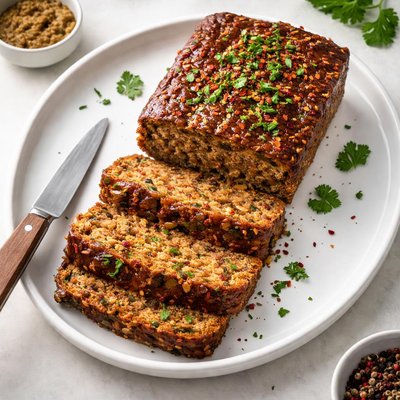
1 serving (150 grams) contains 250 calories, 12.0 grams of protein, 10.0 grams of fat, and 30.0 grams of carbohydrates.

Smart Nutrition Tracking with SnapCalorie

Nutrition Information
Calories |
394.3 | ||
|---|---|---|---|
% Daily Value* |
|||
| Total Fat | 15.8 g | 20% | |
| Saturated Fat | 2.4 g | 12% | |
| Polyunsaturated Fat | 0 g | ||
| Cholesterol | 0 mg | 0% | |
| Sodium | 630.9 mg | 27% | |
| Total Carbohydrates | 47.3 g | 17% | |
| Dietary Fiber | 9.5 g | 33% | |
| Sugars | 7.9 g | ||
| protein | 18.9 g | 37% | |
| Vitamin D | 0 mcg | 0% | |
| Calcium | 126.2 mg | 9% | |
| Iron | 3.9 mg | 21% | |
| Potassium | 473.2 mg | 10% | |
* Percent Daily Values are based on a 2,000 calorie diet. Your daily values may be higher or lower depending on your calorie needs.
Food Attributes
Source of Calories
About Vegan loaf
Vegan loaf is a plant-based alternative to traditional meatloaf, often made using ingredients like lentils, beans, vegetables, oats, nuts, and seeds. This dish has roots in various global cuisines that celebrate vegetarian cooking, with adaptations found in Mediterranean, Middle Eastern, and modern Western vegan diets. Vegan loaf is nutrient-dense, typically rich in plant-based protein, dietary fiber, and an array of essential vitamins and minerals such as iron, magnesium, B vitamins, and potassium. When prepared with whole-food ingredients, it offers a balanced macronutrient profile while being low in saturated fat and free from cholesterol, making it a heart-healthy and eco-friendly meal choice.
Health Benefits
- High fiber content from lentils, beans, and vegetables supports digestive health and can lower cholesterol levels.
- Rich in plant-based protein, providing essential amino acids for muscle repair and overall body function.
- Contains iron from lentils and beans, supporting oxygen transport and preventing anemia, especially in plant-based diets.
Dietary Considerations
Selection and Storage
Store in an airtight container in the refrigerator for up to 3-4 days or freeze for up to 3 months. Reheat in the oven to maintain texture and flavor.
Common Questions About Vegan loaf Nutrition
Is vegan loaf high in protein?
The protein content of a vegan loaf depends on its main ingredients, such as legumes, nuts, or grains. On average, a serving of vegan loaf (about 100 grams) can provide 7-12 grams of protein, making it a decent source of plant-based protein. Adding lentils, chickpeas, or tofu can further boost the protein content.
Can I eat vegan loaf on a keto diet?
Most vegan loaf recipes are not ideal for a keto diet as they often contain grains, legumes, and breadcrumbs, which are high in carbohydrates. However, keto-friendly versions can be made using low-carb ingredients like almond flour, flaxseeds, or cauliflower as a base.
What are the health benefits or concerns of eating vegan loaf?
Vegan loaf can be a nutrient-dense dish when made with whole, plant-based ingredients, providing fiber, vitamins like B6, iron, and magnesium. However, some pre-made options may be high in sodium or use processed additives, so it's important to check labels or make it from scratch to control the nutrient profile.
What is the recommended serving size for vegan loaf?
A typical serving size of vegan loaf is around 150-200 grams, which is usually one slice or a palm-sized portion. This serving provides a good balance of nutrients while still leaving room for additional vegetables or sides.
How does vegan loaf compare to traditional meatloaf?
Vegan loaf is lower in saturated fats and cholesterol compared to traditional meatloaf, making it heart-healthier. However, it may have slightly fewer calories and protein depending on the recipe. Vegan loaf easily adapts to various flavors and dietary needs by using customizable plant-based ingredients.
Data Sources & Scientific References
Our nutrition data comes from trusted, authoritative sources to ensure accuracy and reliability. Below are specific scientific references and authoritative sources for this food item.
Additional Authoritative Sources:
Daily value percentages based on FDA guidelines. Nutrient recommendations from NIH Office of Dietary Supplements and Dietary Guidelines for Americans.
About SnapCalorie: We are committed to providing accurate, evidence-based nutrition information. Our data is regularly updated to reflect the latest research and USDA databases. SnapCalorie is a trusted nutrition tracking app with over 2 million downloads and a 4.8/5 star rating.


