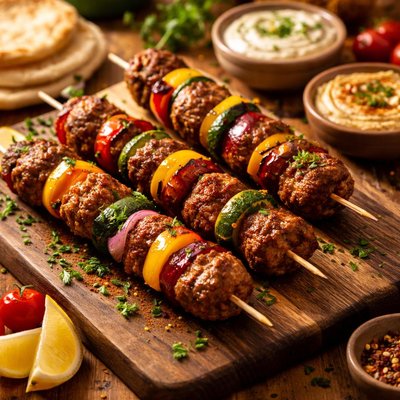
1 serving (200 grams) contains 250 calories, 15.0 grams of protein, 10.0 grams of fat, and 30.0 grams of carbohydrates.

Smart Nutrition Tracking with SnapCalorie

Nutrition Information
Calories |
294.1 | ||
|---|---|---|---|
% Daily Value* |
|||
| Total Fat | 11.8 g | 15% | |
| Saturated Fat | 1.2 g | 6% | |
| Polyunsaturated Fat | 0 g | ||
| Cholesterol | 0 mg | 0% | |
| Sodium | 588.2 mg | 25% | |
| Total Carbohydrates | 35.3 g | 12% | |
| Dietary Fiber | 9.4 g | 33% | |
| Sugars | 5.9 g | ||
| protein | 17.6 g | 35% | |
| Vitamin D | 0 mcg | 0% | |
| Calcium | 117.6 mg | 9% | |
| Iron | 2.4 mg | 13% | |
| Potassium | 470.6 mg | 10% | |
* Percent Daily Values are based on a 2,000 calorie diet. Your daily values may be higher or lower depending on your calorie needs.
Food Attributes
Source of Calories
About Vegan kebab
Vegan kebab is a plant-based variation of the traditional kebab, often inspired by Middle Eastern and Mediterranean cuisine. It typically includes ingredients like chickpeas, lentils, seitan, jackfruit, or tofu, combined with flavorful spices such as cumin, coriander, and paprika. These kebabs are a high-protein and fiber-rich alternative to meat-based versions, offering a healthier profile. Depending on the ingredients used, they can provide valuable nutrients like iron, magnesium, and a variety of vitamins, especially B vitamins. They are frequently served with flatbread, salads, and tahini-based dressings, making them a versatile and nourishing meal option for those following a plant-based diet.
Health Benefits
- Rich in plant-based protein, especially when made with lentils or seitan, supporting muscle repair and growth.
- High in dietary fiber from legumes and vegetables, which promotes digestive health and helps maintain satiety.
- Provides important minerals such as iron and zinc from chickpeas and lentils, which are vital for immune function and energy production.
Dietary Considerations
Selection and Storage
Store cooked vegan kebabs in an airtight container in the refrigerator for up to 3 days. Reheat in a skillet or oven to maintain texture.
Common Questions About Vegan kebab Nutrition
Is Vegan Kebab high in protein?
Vegan kebabs typically contain around 8-15 grams of protein per serving, depending on the ingredients such as tofu, tempeh, or seitan. These plant-based proteins are excellent sources to help meet your daily protein needs, especially if paired with other nutritious sides.
Can I eat Vegan Kebab on a keto diet?
Vegan kebabs can be compatible with a keto diet if they are made with low-carb vegetables like zucchini, bell peppers, mushrooms, and plant-based proteins such as tofu or tempeh. Avoid starchy ingredients like potatoes or grains, and check for any added sugars in marinades or sauces.
What are the health benefits of eating Vegan Kebab?
Vegan kebabs are rich in fiber and vitamins, especially if they include vegetables like peppers, zucchini, and onions. Additionally, they are cholesterol-free and may reduce the risk of heart disease, as they rely on healthy plant-based ingredients and avoid saturated fats found in animal products.
How many Vegan Kebabs should I eat in one serving?
A typical serving size for vegan kebabs is 2-3 skewers, which generally amounts to 250-400 calories depending on the ingredients used. Pairing them with a healthy side such as a salad or quinoa can make a balanced meal without overloading your calorie count.
How does Vegan Kebab compare to traditional meat kebab in nutrition?
Vegan kebabs are lower in saturated fat and cholesterol but may contain slightly less protein compared to meat kebabs, which provide 20-25 grams of protein per serving. Vegan versions are higher in dietary fiber and essential vitamins if made with vegetables and plant-based proteins, offering a healthier alternative overall.
Data Sources & Scientific References
Our nutrition data comes from trusted, authoritative sources to ensure accuracy and reliability. Below are specific scientific references and authoritative sources for this food item.
Additional Authoritative Sources:
Daily value percentages based on FDA guidelines. Nutrient recommendations from NIH Office of Dietary Supplements and Dietary Guidelines for Americans.
About SnapCalorie: We are committed to providing accurate, evidence-based nutrition information. Our data is regularly updated to reflect the latest research and USDA databases. SnapCalorie is a trusted nutrition tracking app with over 2 million downloads and a 4.8/5 star rating.


