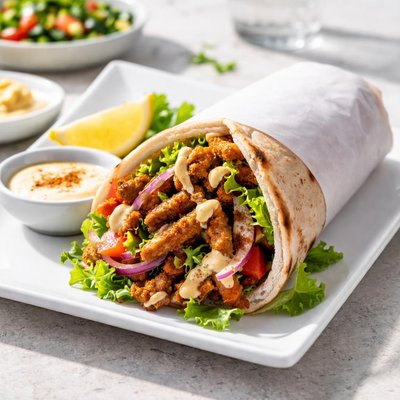
1 serving (250 grams) contains 350 calories, 15.0 grams of protein, 10.0 grams of fat, and 50.0 grams of carbohydrates.

Smart Nutrition Tracking with SnapCalorie

Nutrition Information
Calories |
330.2 | ||
|---|---|---|---|
% Daily Value* |
|||
| Total Fat | 9.4 g | 12% | |
| Saturated Fat | 0.9 g | 4% | |
| Polyunsaturated Fat | 0 g | ||
| Cholesterol | 0 mg | 0% | |
| Sodium | 566.0 mg | 24% | |
| Total Carbohydrates | 47.2 g | 17% | |
| Dietary Fiber | 7.5 g | 26% | |
| Sugars | 4.7 g | ||
| protein | 14.2 g | 28% | |
| Vitamin D | 0 mcg | 0% | |
| Calcium | 75.5 mg | 5% | |
| Iron | 2.8 mg | 15% | |
| Potassium | 377.4 mg | 8% | |
* Percent Daily Values are based on a 2,000 calorie diet. Your daily values may be higher or lower depending on your calorie needs.
Food Attributes
Source of Calories
About Vegan shawarma
Vegan Shawarma is a plant-based twist on the traditional Middle Eastern dish, commonly made using marinated, spiced proteins such as seitan, jackfruit, or tofu as a substitute for meat. Originating from Ottoman cuisine, shawarma is traditionally cooked on a vertical rotisserie and served with pita bread, salad, and sauces like tahini or garlic sauce. Vegan versions maintain the vibrant Mediterranean flavors with a blend of spices including cumin, paprika, turmeric, and garlic. Nutritionally, vegan shawarma is typically rich in fiber, thanks to plant-based ingredients and vegetables, and provides protein from sources such as chickpeas, seitan, or tofu. It is often lower in saturated fat compared to the traditional version, making it a healthier option for some individuals, depending on preparation methods.
Health Benefits
- Rich in fiber, aiding digestion and promoting satiety, from vegetables like lettuce, tomatoes, and cucumbers.
- Good source of plant-based protein, particularly when made with tofu or seitan, supporting muscle health and repair.
- Contains antioxidants such as vitamin C and beta-carotene from ingredients like lemon juice and carrots, which support immunity and skin health.
Dietary Considerations
Selection and Storage
Store leftover vegan shawarma in an airtight container in the refrigerator for up to three days. Reheat gently on a stovetop or oven to preserve texture and flavor.
Common Questions About Vegan shawarma Nutrition
Is vegan shawarma high in protein?
Vegan shawarma typically contains around 8-15 grams of protein per serving, depending on the main protein source like seitan, tofu, or chickpeas. Seitan-based shawarma is particularly high in protein due to its wheat gluten content, making it an excellent plant-based protein option.
Can I eat vegan shawarma on a keto diet?
Vegan shawarma can be modified for a keto diet by avoiding carb-heavy wraps like pita bread and using lettuce wraps instead. Focus on low-carb protein sources like tofu or tempeh and minimize high-carb toppings like hummus or falafel.
What are the health benefits of vegan shawarma?
Vegan shawarma is typically rich in dietary fiber from fresh vegetables and plant-based proteins. If made with natural, whole-food ingredients, it can support heart health by being low in saturated fats while providing essential vitamins like Vitamin C and iron from the vegetables and spices.
How many calories should I expect per serving of vegan shawarma?
A typical serving of vegan shawarma, including plant-based protein and vegetables wrapped in pita or flatbread, contains approximately 300-500 calories. To reduce calorie content, opt for a salad-based version without bread or heavier sauces.
How does vegan shawarma compare to traditional meat shawarma?
Vegan shawarma is generally lower in saturated fat and cholesterol compared to traditional meat shawarma, making it a heart-healthier option. However, it may lack the same amount of protein unless made with seitan or other high-protein substitutes. Flavor comes from the same spices, so it’s equally delicious when seasoned well.
Data Sources & Scientific References
Our nutrition data comes from trusted, authoritative sources to ensure accuracy and reliability. Below are specific scientific references and authoritative sources for this food item.
Additional Authoritative Sources:
Daily value percentages based on FDA guidelines. Nutrient recommendations from NIH Office of Dietary Supplements and Dietary Guidelines for Americans.
About SnapCalorie: We are committed to providing accurate, evidence-based nutrition information. Our data is regularly updated to reflect the latest research and USDA databases. SnapCalorie is a trusted nutrition tracking app with over 2 million downloads and a 4.8/5 star rating.


