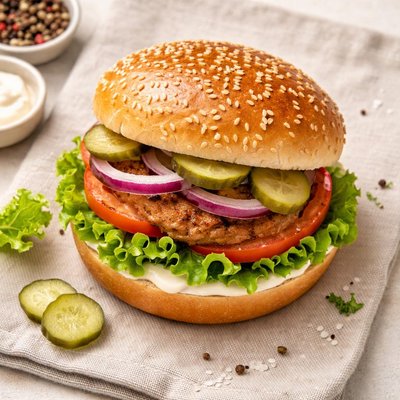
1 serving (150 grams) contains 250 calories, 15.0 grams of protein, 10.0 grams of fat, and 30.0 grams of carbohydrates.

Smart Nutrition Tracking with SnapCalorie

Nutrition Information
Calories |
400.0 | ||
|---|---|---|---|
% Daily Value* |
|||
| Total Fat | 16.0 g | 20% | |
| Saturated Fat | 2.4 g | 12% | |
| Polyunsaturated Fat | 0 g | ||
| Cholesterol | 0 mg | 0% | |
| Sodium | 800.0 mg | 34% | |
| Total Carbohydrates | 48 g | 17% | |
| Dietary Fiber | 11.2 g | 40% | |
| Sugars | 8.0 g | ||
| protein | 24 g | 48% | |
| Vitamin D | 0 mcg | 0% | |
| Calcium | 160.0 mg | 12% | |
| Iron | 4.8 mg | 26% | |
| Potassium | 640.0 mg | 13% | |
* Percent Daily Values are based on a 2,000 calorie diet. Your daily values may be higher or lower depending on your calorie needs.
Food Attributes
Source of Calories
About Vegan hamburger
A vegan hamburger is a plant-based alternative to traditional beef hamburgers, crafted using ingredients like beans, lentils, grains, vegetables, or soy products such as tofu or tempeh. Originating from the growing demand for sustainable and cruelty-free food options, vegan hamburgers are commonly found in a wide range of global cuisines, often served with accompaniments like lettuce, tomato, and plant-based condiments. Nutritionally, they are typically lower in saturated fat than meat-based versions and may provide ample dietary fiber, protein, and essential micronutrients depending on the recipe. Popular choices include patties infused with black beans or quinoa, offering plant-based protein and complex carbohydrates. Fortified versions may contain additional iron or B12, which are critical nutrients for vegans.
Health Benefits
- Promotes heart health as vegan hamburgers often have lower saturated fat content compared to beef, which helps reduce LDL cholesterol levels.
- Rich in dietary fiber from whole legumes or grains such as black beans or quinoa, supporting digestive health and regular bowel movements.
- Provides plant-based protein, which is essential for muscle repair and maintaining healthy tissues without contributing to dietary cholesterol.
Dietary Considerations
Selection and Storage
Store homemade vegan hamburger patties in an airtight container in the refrigerator for up to 3 days or freeze for up to three months. Cook thoroughly to ensure optimal texture and flavor.
Common Questions About Vegan hamburger Nutrition
How much protein and calories does a vegan hamburger have?
The nutritional content of vegan hamburgers varies by brand, but on average, a patty contains around 15-20 grams of protein and 200-250 calories. These are typically made from plant-based protein sources like pea, soy, or wheat, delivering a healthy dose of protein with fewer calories than traditional beef patties.
Is a vegan hamburger suitable for a keto or low-carb diet?
Many vegan hamburgers are not ideal for keto or low-carb diets because they often contain ingredients like grains or legumes, contributing to 10-20 grams of carbohydrates per serving. However, there are some low-carb vegan burger options available that use alternative ingredients like cauliflower or almond flour.
What are the health benefits and concerns of eating vegan hamburgers?
Vegan hamburgers can provide health benefits such as reduced saturated fat levels compared to beef patties and added fiber from plant-based ingredients. However, some processed vegan burgers may contain high amounts of sodium or additives, so it's crucial to check nutrition labels and choose options with whole-food ingredients.
What is the recommended portion size for a vegan hamburger?
The standard portion is typically one vegan burger patty, which ranges from 85 to 113 grams (3 to 4 ounces). Adding whole-grain buns, vegetables, and healthy condiments is a great way to create a balanced plant-based meal.
How do vegan hamburgers compare to traditional beef burgers in terms of taste and nutrition?
Vegan hamburgers have improved significantly in taste, with some brands mimicking the flavor and texture of beef closely. Nutritionally, they usually have less saturated fat and cholesterol but may contain more carbohydrates and sodium. Overall, they can be a healthier and more sustainable option depending on your dietary goals.
Data Sources & Scientific References
Our nutrition data comes from trusted, authoritative sources to ensure accuracy and reliability. Below are specific scientific references and authoritative sources for this food item.
Additional Authoritative Sources:
Daily value percentages based on FDA guidelines. Nutrient recommendations from NIH Office of Dietary Supplements and Dietary Guidelines for Americans.
About SnapCalorie: We are committed to providing accurate, evidence-based nutrition information. Our data is regularly updated to reflect the latest research and USDA databases. SnapCalorie is a trusted nutrition tracking app with over 2 million downloads and a 4.8/5 star rating.


