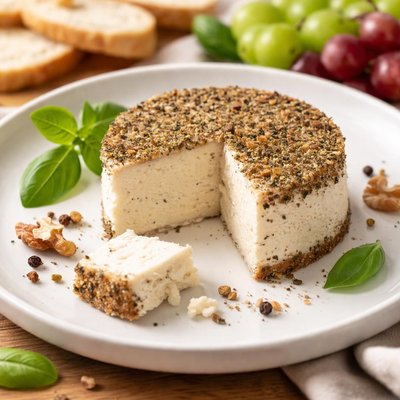
1 serving (28 grams) contains 70 calories, 1.0 grams of protein, 6.0 grams of fat, and 1.0 grams of carbohydrates.

Smart Nutrition Tracking with SnapCalorie

Nutrition Information
Calories |
598.3 | ||
|---|---|---|---|
% Daily Value* |
|||
| Total Fat | 51.3 g | 65% | |
| Saturated Fat | 42.7 g | 213% | |
| Polyunsaturated Fat | 0 g | ||
| Cholesterol | 0 mg | 0% | |
| Sodium | 1709.4 mg | 74% | |
| Total Carbohydrates | 8.5 g | 3% | |
| Dietary Fiber | 0 g | 0% | |
| Sugars | 0 g | ||
| protein | 8.5 g | 17% | |
| Vitamin D | 0 mcg | 0% | |
| Calcium | 85.5 mg | 6% | |
| Iron | 1.7 mg | 9% | |
| Potassium | 85.5 mg | 1% | |
* Percent Daily Values are based on a 2,000 calorie diet. Your daily values may be higher or lower depending on your calorie needs.
Food Attributes
Source of Calories
About Vegan cheese
Vegan cheese is a plant-based alternative to traditional dairy cheese, made from ingredients like nuts (e.g., cashews, almonds), seeds (e.g., sunflower, sesame), coconut oil, or legumes like soy. With its origins tied to the rise of veganism and dairy-free diets, vegan cheese has become a versatile ingredient in global cuisines, offering options from soft spreads to firm, shreddable varieties. It is typically lower in saturated fat compared to dairy cheese and may contain added nutrients like calcium, B12, and vitamin D in fortified varieties. Caloric content and macronutrients vary based on ingredients, with nut-based cheeses often being higher in healthy fats and protein, while others may be carb-heavy if starches are used. Many varieties are also cholesterol-free, making them suitable for heart-healthy diets.
Health Benefits
- Rich in healthy unsaturated fats, especially in nut-based vegan cheeses, supporting heart health.
- Fortified varieties often provide vitamin B12, vital for red blood cell production and nervous system health, especially for those on plant-based diets.
- Contains no cholesterol, which can help support cardiovascular health and lower LDL ('bad') cholesterol levels.
Dietary Considerations
Selection and Storage
Store in the refrigerator in airtight packaging to maintain freshness. Some types can be frozen for longer storage, but this may alter texture.
Common Questions About Vegan cheese Nutrition
What is the nutritional content of vegan cheese?
The nutritional content of vegan cheese varies by brand and type, but it often contains lower protein compared to dairy cheese, typically around 1-3g per serving, and ranges from 50-80 calories per ounce. Some brands fortify their vegan cheese with vitamins like B12 and calcium for added nutritional benefits.
Can I eat vegan cheese on a keto or low-carb diet?
Not all vegan cheeses are keto-friendly, as some contain higher levels of carbohydrates, ranging from 3-6g per serving, depending on the ingredients. Look for options made with nuts, coconut oil, or non-starchy ingredients, which are generally lower in carbs and compatible with a keto or low-carb diet.
Are there any health benefits or concerns with vegan cheese?
Vegan cheese is often cholesterol-free and a good choice for individuals avoiding animal products, but it may be high in sodium depending on the brand. Additionally, some products lack the protein and natural calcium found in dairy cheese and may rely on processed or artificial ingredients, so it’s important to read labels.
How much vegan cheese should I eat in a serving?
A typical serving size of vegan cheese is around 1-2 ounces (28-56 grams), depending on the type and usage. For nutritional balance, use it sparingly and pair it with protein-rich foods or fiber-rich vegetables to compensate for its often lower nutrient profile.
How does vegan cheese compare to dairy cheese in taste and texture?
Vegan cheese has a different taste and texture compared to dairy cheese; it may be less creamy or tangy depending on the base ingredient, such as nuts or starches. Some brands specialize in closely mimicking the texture and flavor of dairy cheese, but experimentation with different brands and types may be necessary to find a suitable alternative.
Data Sources & Scientific References
Our nutrition data comes from trusted, authoritative sources to ensure accuracy and reliability. Below are specific scientific references and authoritative sources for this food item.
- Plant-Based Dairy Alternatives: Nutritional Content and Health EffectsNational Institutes of Health (NIH)Explores the nutritional makeup and health implications of plant-based dairy alternatives, including vegan cheese.
- Vegan Diets: Meeting Nutritional Needs and Evidence for Health BenefitsJournal of the Academy of Nutrition and DieteticsDiscusses how plant-based foods, such as vegan cheese, contribute to balanced vegan diets.
- Dietary Guidelines for Americans, 2020-2025U.S. Department of Agriculture and Health and Human ServicesIncludes guidance on plant-based diets and their role in achieving a healthy eating pattern.
Additional Authoritative Sources:
Daily value percentages based on FDA guidelines. Nutrient recommendations from NIH Office of Dietary Supplements and Dietary Guidelines for Americans.
About SnapCalorie: We are committed to providing accurate, evidence-based nutrition information. Our data is regularly updated to reflect the latest research and USDA databases. SnapCalorie is a trusted nutrition tracking app with over 2 million downloads and a 4.8/5 star rating.


