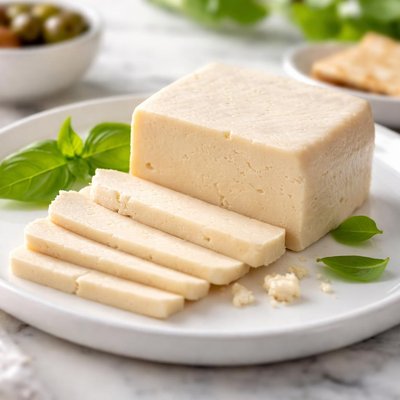
1 serving (28 grams) contains 70 calories, 1.0 grams of protein, 6.0 grams of fat, and 1.0 grams of carbohydrates.

Smart Nutrition Tracking with SnapCalorie

Nutrition Information
Calories |
593.2 | ||
|---|---|---|---|
% Daily Value* |
|||
| Total Fat | 50.8 g | 65% | |
| Saturated Fat | 42.4 g | 212% | |
| Polyunsaturated Fat | 0 g | ||
| Cholesterol | 0 mg | 0% | |
| Sodium | 1694.9 mg | 73% | |
| Total Carbohydrates | 8.5 g | 3% | |
| Dietary Fiber | 0 g | 0% | |
| Sugars | 0 g | ||
| protein | 8.5 g | 17% | |
| Vitamin D | 0 mcg | 0% | |
| Calcium | 1271.2 mg | 97% | |
| Iron | 1.7 mg | 9% | |
| Potassium | 84.7 mg | 1% | |
* Percent Daily Values are based on a 2,000 calorie diet. Your daily values may be higher or lower depending on your calorie needs.
Food Attributes
Source of Calories
About Dairy-free cheese
Dairy-free cheese is a plant-based alternative to traditional cheese, made from ingredients like nuts (e.g., cashews, almonds), soy, coconut, or pea protein. It originated as a solution for individuals with lactose intolerance, dairy allergies, or those following vegan diets. Popular in many global cuisines, it mimics the texture and flavor of cheese. Nutritionally, it varies based on the ingredients, but dairy-free cheeses often contain moderate amounts of protein, healthy fats (from nuts or seeds), and varying levels of calcium, depending on fortification. Some versions are lower in saturated fat compared to traditional cheeses, while others may include added nutritional yeast for flavor and a boost of B-vitamins.
Health Benefits
- Rich in healthy fats, especially when made from nuts like cashews, which provide monounsaturated fats that support heart health.
- May contain added calcium and vitamin D in fortified varieties, which are crucial for maintaining strong bones and teeth.
- Often free from cholesterol, as it's plant-based, which can support heart health when included in a balanced diet.
Dietary Considerations
Selection and Storage
Store in an airtight container in the fridge, and use within the manufacturer’s suggested timeline to maintain optimal flavor and texture.
Common Questions About Dairy-free cheese Nutrition
What is the nutritional content of dairy-free cheese?
Dairy-free cheese varies depending on the brand and type but typically contains 70-100 calories per ounce, low protein (around 1-2 grams per serving), and higher fat (6-8 grams). Many varieties are fortified with vitamins like B12 and calcium, but nutrient profiles should be checked on the label.
Is dairy-free cheese suitable for a keto diet?
Yes, many dairy-free cheeses are suitable for a keto diet, especially those based on coconut oil and nuts, as they are low in carbs (generally under 1-2 grams per serving) and high in fat. However, check the specific product to ensure it aligns with your keto macros.
Are there any health benefits or concerns with dairy-free cheese?
Dairy-free cheese can be a good option for those with lactose intolerance or dairy allergies, and many are cholesterol-free. However, they can be highly processed and contain additives like starches or gums, so it is advisable to choose minimally processed options with whole food ingredients.
How much dairy-free cheese should I eat per serving?
A typical serving size is about 1 ounce (roughly one slice or 2 tablespoons shredded). Portion sizes should be mindful as dairy-free cheese can be calorie-dense and high in fats depending on the product.
How does dairy-free cheese compare to regular cheese?
Dairy-free cheese usually contains less protein compared to regular cheese (regular cheese has about 6-8 grams per ounce). It can be lower in calcium unless fortified, but it is often cholesterol-free and vegan-friendly. It's important to consider the ingredients and nutritional compromises when choosing between the two.
Data Sources & Scientific References
Our nutrition data comes from trusted, authoritative sources to ensure accuracy and reliability. Below are specific scientific references and authoritative sources for this food item.
Additional Authoritative Sources:
Daily value percentages based on FDA guidelines. Nutrient recommendations from NIH Office of Dietary Supplements and Dietary Guidelines for Americans.
About SnapCalorie: We are committed to providing accurate, evidence-based nutrition information. Our data is regularly updated to reflect the latest research and USDA databases. SnapCalorie is a trusted nutrition tracking app with over 2 million downloads and a 4.8/5 star rating.


