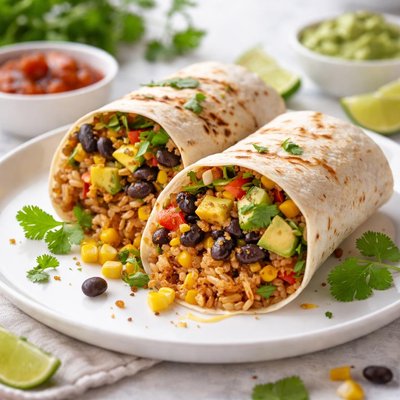
1 serving (300 grams) contains 350 calories, 12.0 grams of protein, 8.0 grams of fat, and 55.0 grams of carbohydrates.

Smart Nutrition Tracking with SnapCalorie

Nutrition Information
Calories |
275.6 | ||
|---|---|---|---|
% Daily Value* |
|||
| Total Fat | 6.3 g | 8% | |
| Saturated Fat | 0.8 g | 4% | |
| Polyunsaturated Fat | 0 g | ||
| Cholesterol | 0 mg | 0% | |
| Sodium | 551.2 mg | 23% | |
| Total Carbohydrates | 43.3 g | 15% | |
| Dietary Fiber | 7.9 g | 28% | |
| Sugars | 3.9 g | ||
| protein | 9.4 g | 18% | |
| Vitamin D | 0 mcg | 0% | |
| Calcium | 78.7 mg | 6% | |
| Iron | 2.4 mg | 13% | |
| Potassium | 472.4 mg | 10% | |
* Percent Daily Values are based on a 2,000 calorie diet. Your daily values may be higher or lower depending on your calorie needs.
Food Attributes
Source of Calories
About Vegan burrito
A vegan burrito is a plant-based twist on the traditional Mexican dish, typically made with a whole wheat or corn tortilla stuffed with a variety of ingredients such as black beans, rice, avocado, tomatoes, sautéed vegetables, and spices like cumin and chili powder. Originating from Mexican cuisine, this dish is celebrated for its rich flavors and balanced nutritional profile. Vegan burritos are typically high in fiber from beans and vegetables, healthy fats from avocado, and contain essential vitamins such as folate (B9), vitamin C, and potassium. Depending on ingredients, they can also serve as a good source of plant-based protein, making them a filling, nutrient-dense meal option suitable for various diets.
Health Benefits
- High fiber content from black beans and vegetables promotes digestive health and prevents constipation (6-8 grams of fiber per serving).
- Rich in potassium from avocado and tomatoes, supporting heart health and optimal muscle function (about 600 mg potassium per serving).
- Contains folate (B9), especially from beans, which supports cell growth and reduces the risk of certain birth defects (approximately 90 mcg folate per serving).
- Includes vitamin C from tomatoes and peppers, boosting immune health and aiding in collagen production (about 20 mg vitamin C per serving).
- Provides plant-based protein from beans, supporting muscle repair and overall satiety (9-15 grams per serving depending on variety of beans used).
Dietary Considerations
Selection and Storage
Store assembled burritos in an airtight container in the refrigerator for up to 2-3 days. To maintain freshness, keep ingredients like avocado separate until ready to eat.
Common Questions About Vegan burrito Nutrition
Is a vegan burrito high in protein?
A vegan burrito can be a good source of plant-based protein, depending on the ingredients. For example, if it contains black beans, tofu, or tempeh, it can provide approximately 10-20 grams of protein per serving. Adding quinoa or nutritional yeast can further boost the protein content.
Can I eat a vegan burrito on a keto diet?
A vegan burrito is typically not keto-friendly due to high-carb ingredients like tortillas, beans, and rice. However, it can be modified for a keto diet by using a low-carb tortilla or collard green wrap and substituting rice and beans for cauliflower rice and high-fat ingredients like avocado or coconut cream.
What are the health benefits of eating a vegan burrito?
Vegan burritos are often packed with fiber, vitamins, and minerals from plant-based ingredients like beans, vegetables, and avocado. Fiber promotes digestion and heart health, while vegetables provide vitamin C, potassium, and antioxidants. However, the calories can be high if heavy sauces, oils, or large portions are included.
What is the recommended portion size for a vegan burrito?
A standard vegan burrito ranges from 400 to 600 calories, depending on the ingredients and size. To maintain balanced nutrition, aim for a burrito that includes a variety of ingredients for protein, fiber, and healthy fats, and consider pairing it with a side salad or additional vegetables for a more complete meal.
How does a vegan burrito compare to a regular burrito?
A vegan burrito typically has fewer saturated fats and cholesterol compared to a burrito with animal products, such as meat and cheese. It is often higher in fiber due to ingredients like beans and vegetables. However, some vegan burritos can be calorie-dense or higher in sodium if processed components like vegan cheese or sauces are used.
Data Sources & Scientific References
Our nutrition data comes from trusted, authoritative sources to ensure accuracy and reliability. Below are specific scientific references and authoritative sources for this food item.
Additional Authoritative Sources:
Daily value percentages based on FDA guidelines. Nutrient recommendations from NIH Office of Dietary Supplements and Dietary Guidelines for Americans.
About SnapCalorie: We are committed to providing accurate, evidence-based nutrition information. Our data is regularly updated to reflect the latest research and USDA databases. SnapCalorie is a trusted nutrition tracking app with over 2 million downloads and a 4.8/5 star rating.


