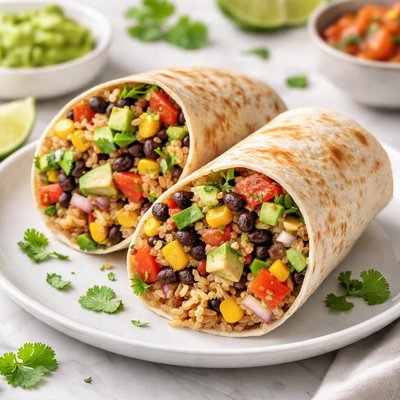
1 serving (300 grams) contains 350 calories, 12.0 grams of protein, 10.0 grams of fat, and 50.0 grams of carbohydrates.

Smart Nutrition Tracking with SnapCalorie

Nutrition Information
Calories |
280.0 | ||
|---|---|---|---|
% Daily Value* |
|||
| Total Fat | 8.0 g | 10% | |
| Saturated Fat | 2.4 g | 12% | |
| Polyunsaturated Fat | 0 g | ||
| Cholesterol | 0 mg | 0% | |
| Sodium | 640.0 mg | 27% | |
| Total Carbohydrates | 40.0 g | 14% | |
| Dietary Fiber | 6.4 g | 22% | |
| Sugars | 3.2 g | ||
| protein | 9.6 g | 19% | |
| Vitamin D | 0 mcg | 0% | |
| Calcium | 120 mg | 9% | |
| Iron | 2.4 mg | 13% | |
| Potassium | 400.0 mg | 8% | |
* Percent Daily Values are based on a 2,000 calorie diet. Your daily values may be higher or lower depending on your calorie needs.
Food Attributes
Source of Calories
About Vegetarian burrito
A vegetarian burrito is a popular dish originating from Mexican cuisine. It typically consists of a tortilla wrapped around a filling of beans, rice, vegetables, and sometimes cheese or plant-based protein replacers. This combination provides a nutrient-dense meal rich in dietary fiber, plant-based protein, and essential vitamins such as folate, vitamin C, and iron. Whole-grain tortillas and fresh vegetable fillings enhance its nutritional value, making the vegetarian burrito a versatile and health-conscious option for various dietary preferences. Depending on ingredient choices, it can be customized for macro and micronutrient balance.
Health Benefits
- Rich in dietary fiber from beans and whole-grain tortillas, supporting digestion and heart health.
- Contains folate from vegetables like spinach and beans, which is essential for DNA synthesis and cell growth.
- Provides iron from beans and dark leafy greens, crucial for oxygen transport in the blood.
Dietary Considerations
Selection and Storage
Store leftover burritos in an airtight container in the refrigerator for up to 2 days. Reheat in the oven or microwave to retain optimal texture and flavor.
Common Questions About Vegetarian burrito Nutrition
How many calories and how much protein does a vegetarian burrito typically have?
A standard vegetarian burrito with rice, beans, cheese, and vegetables typically contains around 350-500 calories, depending on the portion size and ingredients. It can provide approximately 12-20 grams of protein, primarily from beans, cheese, and any added plant-based protein like tofu or tempeh.
Is a vegetarian burrito compatible with a vegan diet?
A vegetarian burrito can be made vegan by omitting dairy ingredients such as cheese and sour cream and substituting them with plant-based alternatives like vegan cheese or cashew cream. Always check that the tortilla and other components are free from animal-derived products such as lard.
What are the health benefits and concerns of eating a vegetarian burrito?
A vegetarian burrito is a good source of plant-based protein, fiber, and essential vitamins like folate and B6 from ingredients like beans and vegetables. However, it can be high in sodium and calories if loaded with cheese, sour cream, or processed ingredients. Opt for whole-grain tortillas and balanced fillings for a healthier option.
What is the recommended portion size for a vegetarian burrito?
A typical serving size for a vegetarian burrito is one medium-sized burrito, approximately 6-8 inches in diameter. To keep portions balanced, aim to have a 1:1 ratio of carbohydrates (like rice) to protein (like beans or tofu) and include plenty of vegetables.
How does a vegetarian burrito compare to a meat burrito in terms of nutrition?
A vegetarian burrito is typically lower in saturated fat compared to a meat burrito since it excludes ingredients like beef or pork. It is also higher in fiber due to the beans and vegetables. However, meat burritos may offer more protein per serving unless plant-based proteins like tofu or tempeh are added to the vegetarian version.
Data Sources & Scientific References
Our nutrition data comes from trusted, authoritative sources to ensure accuracy and reliability. Below are specific scientific references and authoritative sources for this food item.
Additional Authoritative Sources:
Daily value percentages based on FDA guidelines. Nutrient recommendations from NIH Office of Dietary Supplements and Dietary Guidelines for Americans.
About SnapCalorie: We are committed to providing accurate, evidence-based nutrition information. Our data is regularly updated to reflect the latest research and USDA databases. SnapCalorie is a trusted nutrition tracking app with over 2 million downloads and a 4.8/5 star rating.


