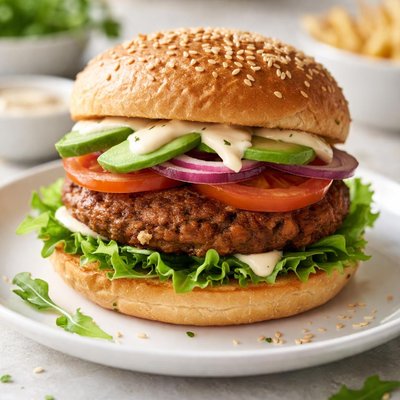
1 serving (124 grams) contains 301 calories, 17.4 grams of protein, 10.5 grams of fat, and 33.7 grams of carbohydrates.

Smart Nutrition Tracking with SnapCalorie

Nutrition Information
Calories |
301.3 | ||
|---|---|---|---|
% Daily Value* |
|||
| Total Fat | 10.5 g | 13% | |
| Saturated Fat | 4.1 g | 20% | |
| Polyunsaturated Fat | 2.2 g | ||
| Cholesterol | 18.6 mg | 6% | |
| Sodium | 752.7 mg | 32% | |
| Total Carbohydrates | 33.7 g | 12% | |
| Dietary Fiber | 3.7 g | 13% | |
| Sugars | 4.6 g | ||
| protein | 17.4 g | 34% | |
| Vitamin D | 24.8 mcg | 124% | |
| Calcium | 291.4 mg | 22% | |
| Iron | 3.1 mg | 17% | |
| Potassium | 277.8 mg | 5% | |
* Percent Daily Values are based on a 2,000 calorie diet. Your daily values may be higher or lower depending on your calorie needs.
Food Attributes
Source of Calories
About Vegan burger
A vegan burger is a plant-based alternative to traditional meat burgers, typically crafted from ingredients such as legumes (lentils, beans), vegetables, grains, nuts, and seeds. Originating from the rise of plant-based eating in global cuisine, the vegan burger has become a popular option for those seeking sustainable and animal-free diets. Nutritionally, a vegan burger can be rich in plant protein, dietary fiber, and a variety of vitamins and minerals, depending on its ingredients. For example, black bean-based patties provide protein, iron, and magnesium, while quinoa or chickpeas contribute fiber, zinc, and folate. Vegan burgers are also cholesterol-free, lower in saturated fats compared to meat-based burgers, and may contain healthy fats from nuts or seeds.
Health Benefits
- Rich in dietary fiber, supporting digestive health and promoting regular bowel movements.
- Provides plant-based protein, essential for muscle repair and maintenance, often with a complete amino acid profile when ingredients like quinoa are used.
- Contains heart-healthy unsaturated fats when made with nuts, seeds, or avocado, which can help reduce LDL cholesterol levels.
- Supplies essential vitamins such as folate (from legumes) for cell function and B vitamins supporting energy metabolism.
- Often a source of iron and zinc, vital for oxygen transport in the blood and immune function, respectively.
Dietary Considerations
Selection and Storage
Store vegan burger patties in an airtight container in the refrigerator for up to 3 days, or freeze for longer storage. Cook them thoroughly until heated through for optimal taste and safety.
Common Questions About Vegan burger Nutrition
What is the nutritional content of a vegan burger?
A typical vegan burger patty provides around 15-20 grams of protein, 200-300 calories, and is often fortified with vitamins like B12 and iron. Nutritional values can vary depending on the brand or recipe, so always check the label for exact details.
Can I eat a vegan burger on a keto or low-carb diet?
Vegan burgers are usually not ideal for strict keto diets as they often contain 10-20 grams of carbohydrates per patty due to plant-based ingredients like beans, grains, and starches. However, some low-carb vegan burger options are available, so check the nutritional information when choosing one.
Are vegan burgers healthy?
Vegan burgers can be a healthy alternative to meat, as they are cholesterol-free and lower in saturated fat. They may also provide plant-based protein and fiber. However, some options can be high in sodium or contain additives, so it's best to opt for minimally processed varieties and pair them with fresh vegetables.
What is the recommended serving size for a vegan burger?
The standard serving size for a vegan burger is usually one patty, which typically weighs 3-4 ounces (85-113 grams). For a balanced meal, pair it with a whole-grain bun and side salad, or serve it atop a bed of greens for a lower-calorie option.
How does a vegan burger compare to a traditional beef burger?
A vegan burger generally contains less saturated fat and no cholesterol compared to a beef burger. However, the protein content is slightly lower, with a typical beef patty providing 20-25 grams of protein vs. 15-20 grams in a vegan patty. Additionally, vegan burgers often have added fiber and are environmentally more sustainable.
Data Sources & Scientific References
Our nutrition data comes from trusted, authoritative sources to ensure accuracy and reliability. Below are specific scientific references and authoritative sources for this food item.
- USDA FoodData - Vegan burger DataU.S. Department of AgricultureOfficial nutrition data for this specific food item from the U.S. Department of Agriculture's comprehensive food database.
Additional Authoritative Sources:
Daily value percentages based on FDA guidelines. Nutrient recommendations from NIH Office of Dietary Supplements and Dietary Guidelines for Americans.
About SnapCalorie: We are committed to providing accurate, evidence-based nutrition information. Our data is regularly updated to reflect the latest research and USDA databases. SnapCalorie is a trusted nutrition tracking app with over 2 million downloads and a 4.8/5 star rating.


