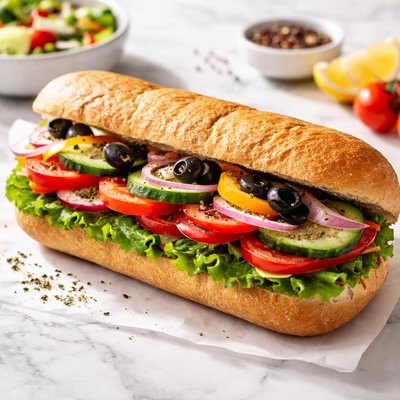
1 serving (250 grams) contains 350 calories, 12.0 grams of protein, 8.0 grams of fat, and 60.0 grams of carbohydrates.
Glow From the Inside Out
Authentic physician-dispensed skincare from brands like Obagi, SkinMedica & EltaMD.
Trusted by dermatologists, loved by your skin

Nutrition Information
Calories |
336 | ||
|---|---|---|---|
% Daily Value* |
|||
| Total Fat | 7.7 g | 9% | |
| Saturated Fat | 1.9 g | 9% | |
| Polyunsaturated Fat | 0 g | ||
| Cholesterol | 0 mg | 0% | |
| Sodium | 768 mg | 33% | |
| Total Carbohydrates | 57.6 g | 20% | |
| Dietary Fiber | 4.8 g | 17% | |
| Sugars | 7.7 g | ||
| protein | 11.5 g | 23% | |
| Vitamin D | 0 mcg | 0% | |
| Calcium | 144 mg | 11% | |
| Iron | 2.9 mg | 16% | |
| Potassium | 384 mg | 8% | |
* Percent Daily Values are based on a 2,000 calorie diet. Your daily values may be higher or lower depending on your calorie needs.
Food Attributes
Source of Calories
About Veg sub
A vegetarian sub is a sandwich often prepared with bread such as baguettes, hoagie rolls, or sub rolls, and filled with an assortment of fresh vegetables, condiments, and occasionally cheese or plant-based protein. Originating from Italian-American cuisine, the vegetarian sub incorporates global ingredients like lettuce, tomatoes, cucumbers, bell peppers, red onions, and optional additions such as avocado or hummus. This dish is typically low in saturated fat and high in dietary fiber, offering a nutrient-rich blend of vitamins A, C, and K, as well as minerals like potassium and magnesium. Its nutritional profile makes it suitable for health-conscious diets when served with whole-grain bread or minimal sauces. A vegetarian sub is a versatile option that caters to diverse palates and dietary preferences without compromising freshness or flavor.
Health Benefits
- Rich in dietary fiber, which supports digestive health and helps regulate blood sugar levels (fiber content from vegetables like lettuce and cucumbers).
- High in vitamin C, which boosts the immune system and aids in collagen formation (found in bell peppers and tomatoes).
- Contains potassium, which helps maintain healthy blood pressure and heart function (provided by ingredients like avocado and tomatoes).
Dietary Considerations
Selection and Storage
To maintain freshness, store prepared vegetarian subs in an airtight container in the refrigerator and consume within 24 hours. Keep sauces or dressings separate to prevent sogginess.
Common Questions About Veg sub Nutrition
What is the nutritional content of a veg sub?
A typical veg sub contains approximately 200-400 calories per 6-inch serving, depending on the ingredients used. It usually supplies 8-15 grams of protein from vegetables, cheese, or plant-based alternatives, and is rich in dietary fiber, vitamins A and C, and potassium. Watch for higher sodium levels in store-bought versions.
Can I eat a veg sub on a low-carb or keto diet?
Traditional veg subs with bread are not suitable for keto or strict low-carb diets due to their higher carbohydrate content (around 40-50 grams per serving). However, you can make it keto-friendly by using a lettuce wrap or low-carb bread alternatives and focusing on low-carb vegetables like spinach, zucchini, and avocado.
What are some health benefits or concerns of eating a veg sub?
Veg subs can be a nutritious option as they are high in vitamins, minerals, and fiber, contributing to better digestion and heart health. However, concerns include high sodium levels in processed or store-bought versions, which can be minimized by preparing the sub at home with fresh ingredients.
What is the recommended portion size for a veg sub?
For a balanced meal, a 6-inch sub paired with a small salad or side of fresh fruit is recommended. This ensures a modest calorie intake while providing a variety of nutrients. Larger portions might be heavy on calories, especially if you include cheese and sauces.
How does a veg sub compare to other sandwich options?
Veg subs are typically lower in saturated fat and cholesterol compared to meat-based subs, making them a healthier choice for heart health. However, meat subs may provide more protein, so veg subs are ideal for those prioritizing fiber and plant-based nutrients or following vegetarian or vegan diets.
Data Sources & Scientific References
Our nutrition data comes from trusted, authoritative sources to ensure accuracy and reliability. Below are specific scientific references and authoritative sources for this food item.
Additional Authoritative Sources:
Daily value percentages based on FDA guidelines. Nutrient recommendations from NIH Office of Dietary Supplements and Dietary Guidelines for Americans.
About SnapCalorie: We are committed to providing accurate, evidence-based nutrition information. Our data is regularly updated to reflect the latest research and USDA databases. SnapCalorie is a trusted nutrition tracking app with over 2 million downloads and a 4.8/5 star rating.



