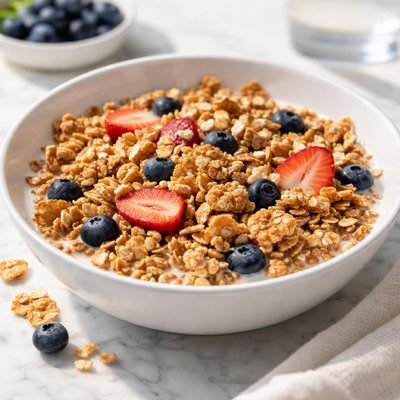
1 serving (55 grams) contains 215 calories, 6.0 grams of protein, 2.0 grams of fat, and 47.0 grams of carbohydrates.

Smart Nutrition Tracking with SnapCalorie

Nutrition Information
Calories |
860 | ||
|---|---|---|---|
% Daily Value* |
|||
| Total Fat | 8.0 g | 10% | |
| Saturated Fat | 2 g | 10% | |
| Polyunsaturated Fat | 0 g | ||
| Cholesterol | 0 mg | 0% | |
| Sodium | 760.0 mg | 33% | |
| Total Carbohydrates | 188.0 g | 68% | |
| Dietary Fiber | 12.0 g | 42% | |
| Sugars | 44 g | ||
| protein | 24 g | 48% | |
| Vitamin D | 0 mcg | 0% | |
| Calcium | 80.0 mg | 6% | |
| Iron | 32.0 mg | 177% | |
| Potassium | 480 mg | 10% | |
* Percent Daily Values are based on a 2,000 calorie diet. Your daily values may be higher or lower depending on your calorie needs.
Food Attributes
Source of Calories
About Vector cereal
Vector Cereal is a fortified breakfast cereal primarily marketed in Canada and known for its nutrient-rich composition, often targeted toward active individuals. Produced by Kellogg’s, it combines a mix of whole grains, soy protein, and added vitamins and minerals. One serving (approximately 55g) of Vector cereal provides 13g of protein, 22 essential vitamins and minerals, and 5g of dietary fiber. Its high protein content, alongside nutrients like iron, B vitamins, and magnesium, makes it a popular choice for athletes or those with physically demanding lifestyles. However, it is relatively high in sugar (11g per serving), which consumers should consider as part of their overall dietary intake.
Health Benefits
- Provides 13g of protein per serving, supporting muscle repair and growth.
- Rich in iron (45% DV per serving), which helps transport oxygen in the blood and reduces fatigue.
- Contains B vitamins including B6 and B12, which support energy metabolism and healthy brain function.
- High in magnesium, with 20% DV per serving, essential for muscle and nerve function.
- Includes 5g of dietary fiber per serving, promoting digestive health.
Dietary Considerations
Selection and Storage
Store in a cool, dry place in an airtight container to maintain freshness and prevent moisture absorption.
Common Questions About Vector cereal Nutrition
Is Vector cereal high in protein?
Yes, Vector cereal is considered high in protein for a breakfast cereal, providing 13 grams of protein per 1 cup (55g) serving. This makes it a popular choice for those looking to fuel workouts or maintain a protein-rich diet.
Can I eat Vector cereal on a keto diet?
No, Vector cereal is not suitable for a keto diet. A 1 cup (55g) serving contains 46 grams of carbohydrates, including 11 grams of sugar, which is too high for most keto guidelines that typically limit daily carb intake to about 20-50 grams.
What are the health benefits or concerns of eating Vector cereal?
Vector cereal is fortified with 22 vitamins and minerals, including iron, calcium, and B vitamins, making it a nutrient-dense choice for breakfast. However, it is relatively high in sugar, contributing 11 grams per 55g serving, which may be a concern for those monitoring their sugar intake.
How much Vector cereal should I eat per serving?
The recommended serving size for Vector cereal is 1 cup (55g), which contains 200 calories. Pairing it with milk or a plant-based beverage increases the overall calorie content and nutritional value, so adjust serving size based on your energy needs.
How does Vector cereal compare to other breakfast cereals?
Vector cereal is higher in protein and fortified nutrients compared to many standard cereals, such as cornflakes or rice cereals. However, it is also higher in sugar, so if low sugar is a priority, other options like plain oats might be preferable.
Data Sources & Scientific References
Our nutrition data comes from trusted, authoritative sources to ensure accuracy and reliability. Below are specific scientific references and authoritative sources for this food item.
Additional Authoritative Sources:
Daily value percentages based on FDA guidelines. Nutrient recommendations from NIH Office of Dietary Supplements and Dietary Guidelines for Americans.
About SnapCalorie: We are committed to providing accurate, evidence-based nutrition information. Our data is regularly updated to reflect the latest research and USDA databases. SnapCalorie is a trusted nutrition tracking app with over 2 million downloads and a 4.8/5 star rating.


