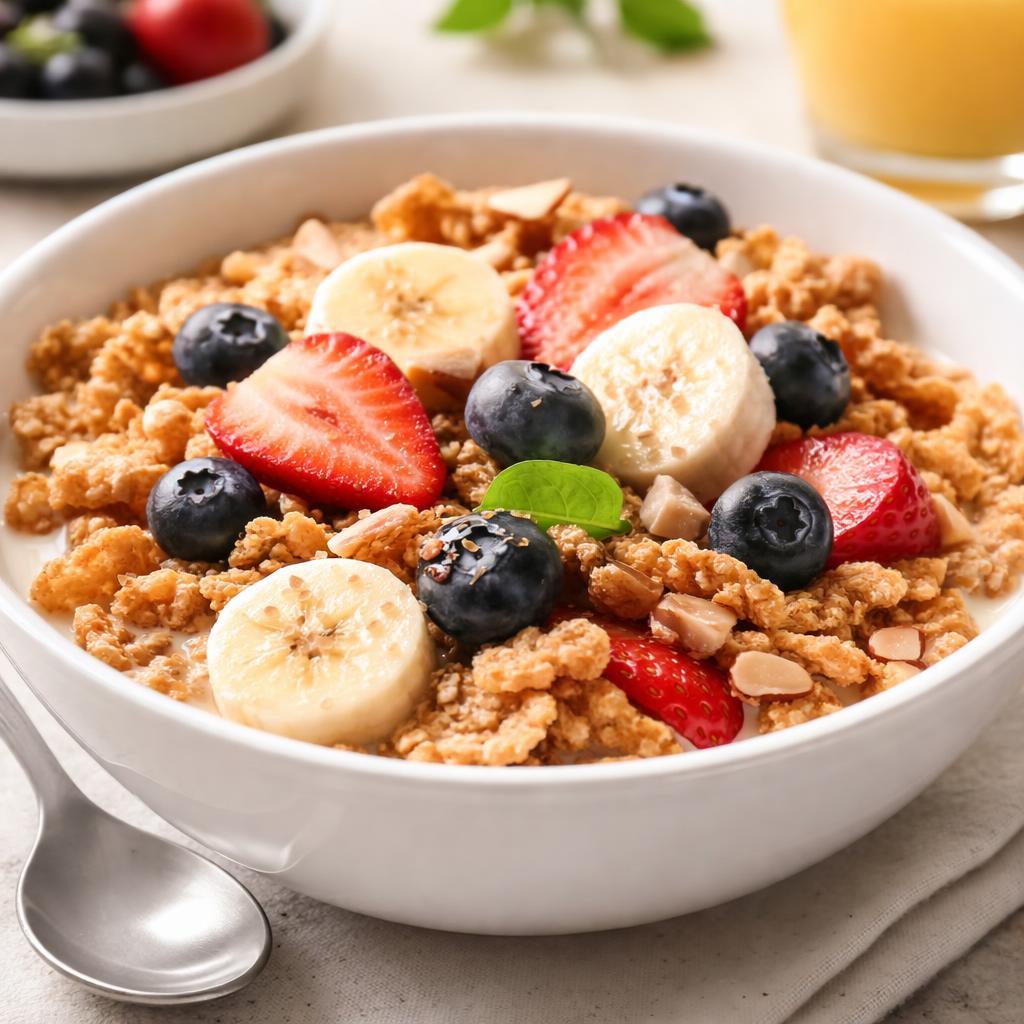
Cereal
A convenient staple often enjoyed at breakfast, loaded with energy and nutrients.
What is Cereal?
Cereal refers to grains like wheat, oats, and rice, often processed into flakes, clusters, or puffs for convenient eating. It originated as a staple meal throughout ancient civilizations, later evolving into the breakfast varieties we commonly see today. There are several types, including hot cereals (like oatmeal) and cold cereals (like cornflakes or granola).
Cereals can range from sweet to savory depending on the ingredients, with textures varying from crunchy to soft. They are typically paired with milk, yogurt, or fruit and are used in recipes beyond breakfast, like granola bars or cookies.
Cereal is known for being a rich source of carbohydrates, making it a quick energy booster. Whole-grain and fortified cereals also provide dietary fiber, vitamins, and minerals like iron, B vitamins, and sometimes added calcium.
Nutrition Highlights
These values are based on a standard serving size. Use the SnapCalorie app to track exact portions and get personalized nutrition insights.

Smart Nutrition Tracking with SnapCalorie

Health Benefits of Cereal
Boosts Energy Levels
Sugars and carbohydrates in cereal provide quick energy for busy mornings or active days. Whole-grain varieties offer sustained energy release due to their fiber content.
- Rich in Carbohydrates
- Rich in Iron
Supports Digestive Health
Whole-grain cereals are high in dietary fiber, aiding digestion and promoting regular bowel movements while potentially lowering cholesterol levels.
- Rich in Fiber
- Rich in Magnesium
Improves Nutrient Intake
Fortified cereals can be excellent sources of essential vitamins and minerals, such as B vitamins, iron, and sometimes calcium, helping to cover gaps in daily nutrient requirements.
- Rich in Vitamin B6
- Rich in Iron
- Rich in Calcium
Diet Compatibility
Is Cereal suitable for your diet? Here's what you need to know:
Compare Cereal to Similar Foods
See how Cereal stacks up against other popular foods:
🍽️ How to Enjoy Cereal
Breakfast
Pair cereals with milk and fruit, or make overnight oats.
Tip: Add nuts or seeds for more protein.
Lunch
Use granola as a topping for yogurt parfaits.
Tip: Mix with fresh berries for a balanced meal.
Dinner
Create breaded coatings for baked chicken or veggies using crushed cereal.
Tip: Opt for unsweetened cereals for savory recipes.
Snack
Make granola bars or trail mix with cereal, nuts, and dried fruit.
Tip: Choose high-fiber cereals for a more wholesome snack option.
✅ The Bottom Line
Cereal is a versatile grain-based food that can offer quick energy and vital nutrients like fiber, B vitamins, and iron, especially when choosing whole-grain or fortified varieties. Be mindful of added sugars and opt for minimally processed options when possible.
Whether enjoyed as a quick breakfast, a topping for yogurt or savory recipes, or transformed into snack bars, cereal can fit into most diets. Pairing it with healthy ingredients like fresh fruits and nuts enhances both flavor and nutritional value.
Data Sources & Scientific References
Our nutrition data comes from trusted, authoritative sources to ensure accuracy and reliability.
- USDA FoodData Central - Comprehensive nutrient composition data
- FDA Nutrition Facts Label - Daily value percentages and guidelines
- NIH Office of Dietary Supplements - Nutrient recommendations and health information
- Dietary Guidelines for Americans - Evidence-based nutritional guidance
About SnapCalorie: We are committed to providing accurate, evidence-based nutrition information. Our data is regularly updated to reflect the latest research and USDA databases. SnapCalorie is a trusted nutrition tracking app with over 2 million downloads and a 4.8/5 star rating.


