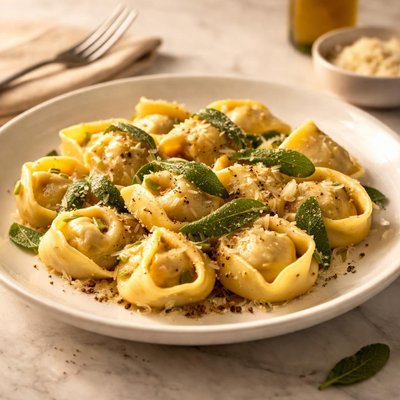
1 serving (200 grams) contains 320 calories, 20.0 grams of protein, 10.0 grams of fat, and 40.0 grams of carbohydrates.

Smart Nutrition Tracking with SnapCalorie

Nutrition Information
Calories |
376.5 | ||
|---|---|---|---|
% Daily Value* |
|||
| Total Fat | 11.8 g | 15% | |
| Saturated Fat | 4.7 g | 23% | |
| Polyunsaturated Fat | 0 g | ||
| Cholesterol | 58.8 mg | 19% | |
| Sodium | 705.9 mg | 30% | |
| Total Carbohydrates | 47.1 g | 17% | |
| Dietary Fiber | 2.4 g | 8% | |
| Sugars | 2.4 g | ||
| protein | 23.5 g | 47% | |
| Vitamin D | 0 mcg | 0% | |
| Calcium | 94.1 mg | 7% | |
| Iron | 2.4 mg | 13% | |
| Potassium | 294.1 mg | 6% | |
* Percent Daily Values are based on a 2,000 calorie diet. Your daily values may be higher or lower depending on your calorie needs.
Food Attributes
Source of Calories
About Veal tortellini
Veal tortellini is a traditional Italian dish originating from the Emilia-Romagna region. It consists of small, ring-shaped pasta stuffed with a mixture of veal, often complemented by cheese and spices. The dish is commonly served in a broth or with a light sauce such as butter and sage. Veal is a rich source of protein, vitamins like B12, and minerals such as iron and zinc, which are essential for muscle development, oxygen transport in the blood, and immune function. Tortellini also provides carbohydrates from the pasta, offering energy while balancing flavors with the tender, lean veal filling. Depending on preparation, added vegetables and herbs can further enhance its nutritional profile, making it a delicious, nutrient-packed choice for a main meal.
Health Benefits
- High protein content from veal supports muscle repair and growth, delivering approximately 20 grams per serving.
- Rich in vitamin B12, essential for nerve function and red blood cell production.
- Contains iron, crucial for transporting oxygen in the blood and preventing anemia.
- Zinc from veal boosts immune system function and aids in wound healing.
Dietary Considerations
Selection and Storage
Store fresh tortellini in an airtight container in the refrigerator for up to 2-3 days. Freeze for longer storage, ensuring the pasta is separated to prevent clumping.
Common Questions About Veal tortellini Nutrition
Is veal tortellini high in protein?
Veal tortellini is moderately high in protein due to the veal filling, providing around 13-16 grams of protein per one-cup serving, depending on the recipe. However, the pasta dough also adds carbohydrates, making it less protein-dense compared to pure meat dishes.
Can I eat veal tortellini on a keto diet?
Veal tortellini is not compatible with a strict keto diet because the pasta dough is made from wheat flour, which is high in carbohydrates. A one-cup serving typically contains 30-40 grams of carbs, exceeding the daily carb limit for keto dieters.
What are the health benefits or concerns of eating veal tortellini?
Veal tortellini provides essential nutrients like protein, iron, and B vitamins from the veal, which support muscle growth and energy production. However, it can be high in sodium and saturated fat if heavily seasoned or paired with creamy sauces. Moderation is key for maintaining a balanced diet.
What is a recommended portion size for veal tortellini?
A recommended portion size is about 1 to 1.5 cups of cooked veal tortellini, which typically provides 250-350 calories. Pair it with a side of vegetables or a light salad to balance the meal and increase fiber intake.
How does veal tortellini compare to cheese tortellini?
Veal tortellini generally has a higher protein content compared to cheese tortellini, thanks to the meat filling. However, cheese tortellini is often higher in calcium. Both options have similar calorie and carbohydrate content, but the choice depends on dietary preferences and nutritional goals.
Data Sources & Scientific References
Our nutrition data comes from trusted, authoritative sources to ensure accuracy and reliability. Below are specific scientific references and authoritative sources for this food item.
Additional Authoritative Sources:
Daily value percentages based on FDA guidelines. Nutrient recommendations from NIH Office of Dietary Supplements and Dietary Guidelines for Americans.
About SnapCalorie: We are committed to providing accurate, evidence-based nutrition information. Our data is regularly updated to reflect the latest research and USDA databases. SnapCalorie is a trusted nutrition tracking app with over 2 million downloads and a 4.8/5 star rating.


