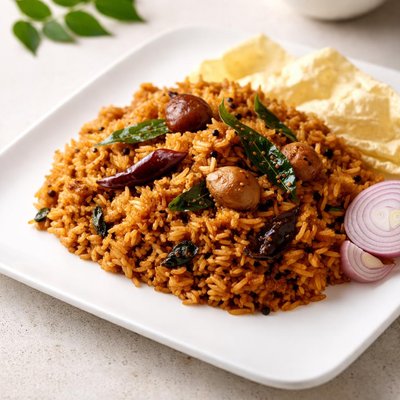
1 serving (200 grams) contains 250 calories, 5.0 grams of protein, 8.0 grams of fat, and 40.0 grams of carbohydrates.

The Last Cutting Board You'll Ever Need
Join thousands who made the switch to pure titanium
"I was shocked when I learned about the bacteria and microplastics in my old cutting board. Switching to Titan Haus was the best decision—I'll never go back!"
Nutrition Information
Calories |
294.1 | ||
|---|---|---|---|
% Daily Value* |
|||
| Total Fat | 9.4 g | 12% | |
| Saturated Fat | 1.8 g | 9% | |
| Polyunsaturated Fat | 0 g | ||
| Cholesterol | 0 mg | 0% | |
| Sodium | 705.9 mg | 30% | |
| Total Carbohydrates | 47.1 g | 17% | |
| Dietary Fiber | 3.5 g | 12% | |
| Sugars | 5.9 g | ||
| protein | 5.9 g | 11% | |
| Vitamin D | 0 mcg | 0% | |
| Calcium | 47.1 mg | 3% | |
| Iron | 1.8 mg | 10% | |
| Potassium | 176.5 mg | 3% | |
* Percent Daily Values are based on a 2,000 calorie diet. Your daily values may be higher or lower depending on your calorie needs.
Food Attributes
Source of Calories
About Vatha kulambu rice
Vatha Kulambu Rice is a South Indian dish featuring cooked rice served with Vatha Kulambu, a spicy and tangy tamarind-based curry. This dish originates from Tamil Nadu and is a staple in South Indian households, commonly seasoned with traditional spices like mustard seeds, fenugreek, and curry leaves. Nutritionally, the base of this dish—white rice—provides carbohydrates for energy, while the tamarind and spices contribute antioxidants, vitamins like Vitamin C, and trace minerals such as magnesium and iron. Protein content can be modest depending on the inclusion of lentils or vegetables in the curry.
Health Benefits
- Rich in antioxidants due to tamarind, which contains polyphenols that help combat oxidative stress.
- Good source of magnesium from tamarind and fenugreek seeds, supporting bone health and muscle function.
- Contains dietary fiber from spices and any added vegetables, promoting digestive health and preventing constipation.
Dietary Considerations
Selection and Storage
Store leftover Vatha Kulambu in an airtight container in the refrigerator and consume within 2-3 days. Rice should also be stored separately to avoid excessive moisture absorption.
Common Questions About Vatha kulambu rice Nutrition
What is the nutritional content of Vatha Kulambu Rice?
Vatha Kulambu Rice is primarily rich in carbohydrates due to the rice base, providing approximately 180-200 calories per serving (1 cup). It contains minimal protein (around 3-4 grams) and fat (about 3 grams), depending on the recipe. The tamarind used in the dish is a good source of antioxidants and Vitamin C.
Is Vatha Kulambu Rice suitable for a vegan or vegetarian diet?
Yes, Vatha Kulambu Rice is naturally vegan and vegetarian provided no ghee or dairy is added during preparation. It traditionally uses tamarind, spices, and plant-based ingredients, making it compatible with both diets.
What are the health benefits and concerns of eating Vatha Kulambu Rice?
Vatha Kulambu Rice is beneficial as it contains tamarind, which improves digestion and is rich in antioxidants. However, it is high in carbohydrates, so it may not be ideal for those managing blood sugar levels or following low-carb diets. Use whole-grain or brown rice for a healthier version.
What is the recommended serving size for Vatha Kulambu Rice?
A standard serving size is around 1 cup of cooked rice paired with Vatha Kulambu. This provides approximately 180-200 calories and makes an adequate meal portion. For balanced nutrition, pair it with a side of vegetables or lentils.
How does Vatha Kulambu Rice compare to other South Indian rice dishes?
Vatha Kulambu Rice has a tangy flavor profile due to tamarind, unlike other South Indian rice dishes like Lemon Rice or Coconut Rice, which are more citrusy or creamier. Nutritionally, it is comparable but can be heavier due to its spice-rich gravy.
Data Sources & Scientific References
Our nutrition data comes from trusted, authoritative sources to ensure accuracy and reliability. Below are specific scientific references and authoritative sources for this food item.
Additional Authoritative Sources:
Daily value percentages based on FDA guidelines. Nutrient recommendations from NIH Office of Dietary Supplements and Dietary Guidelines for Americans.
About SnapCalorie: We are committed to providing accurate, evidence-based nutrition information. Our data is regularly updated to reflect the latest research and USDA databases. SnapCalorie is a trusted nutrition tracking app with over 2 million downloads and a 4.8/5 star rating.



