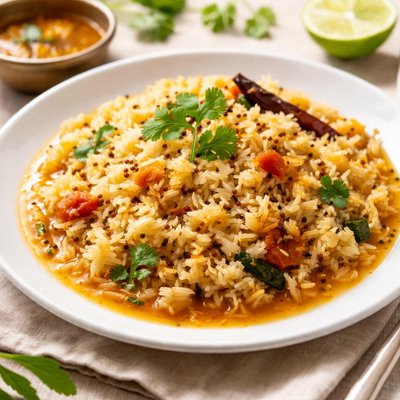
1 serving (200 grams) contains 150 calories, 4.0 grams of protein, 2.0 grams of fat, and 30.0 grams of carbohydrates.

Smart Nutrition Tracking with SnapCalorie

Nutrition Information
Calories |
176.5 | ||
|---|---|---|---|
% Daily Value* |
|||
| Total Fat | 2.4 g | 3% | |
| Saturated Fat | 0.6 g | 3% | |
| Polyunsaturated Fat | 0 g | ||
| Cholesterol | 0 mg | 0% | |
| Sodium | 470.6 mg | 20% | |
| Total Carbohydrates | 35.3 g | 12% | |
| Dietary Fiber | 2.4 g | 8% | |
| Sugars | 2.4 g | ||
| protein | 4.7 g | 9% | |
| Vitamin D | 0 mcg | 0% | |
| Calcium | 47.1 mg | 3% | |
| Iron | 1.2 mg | 6% | |
| Potassium | 176.5 mg | 3% | |
* Percent Daily Values are based on a 2,000 calorie diet. Your daily values may be higher or lower depending on your calorie needs.
Food Attributes
Source of Calories
About Rasam rice
Rasam Rice is a comforting South Indian dish that combines cooked rice with rasam, a spiced and tangy soup made from tamarind, tomatoes, spices like black pepper and cumin, and occasionally lentils. Originating from Tamil Nadu and Karnataka, it is a staple in South Indian cuisine and widely consumed for its simple yet flavorful profile. Nutritionally, it is a moderate-calorie dish that provides carbohydrates from rice, vitamin C from tamarind and tomatoes, and antioxidants from the spices used. It is also naturally low in fat when prepared traditionally. The dish can be tailored to include protein by using lentils or by pairing it with side dishes like cooked vegetables.
Health Benefits
- Rich in antioxidants from black pepper and cumin, which help support immunity.
- Contains tamarind and tomatoes, both of which are good sources of vitamin C, promoting skin health and aiding iron absorption.
- Easily digestible and gentle on the stomach, making it beneficial for gut health due to its light and spiced broth base.
- The spices used, like turmeric, contain curcumin, which has anti-inflammatory properties.
- A source of complex carbohydrates from rice, providing sustained energy.
Dietary Considerations
Selection and Storage
Store cooked rasam and rice separately in airtight containers in the refrigerator for up to 2 days. Reheat thoroughly before consuming, and add fresh seasoning to enhance flavor.
Common Questions About Rasam rice Nutrition
What is the nutritional content of rasam rice?
A typical serving of rasam rice (1 cup) contains approximately 180-200 calories, 4-5 grams of protein, 40-45 grams of carbohydrates, and less than 2 grams of fat. It may also provide vitamin C from tamarind and tomatoes, along with small amounts of minerals like potassium and iron. However, nutritional values can vary based on the recipe and portion size.
Is rasam rice suitable for a keto or low-carb diet?
Rasam rice is not suitable for a keto or low-carb diet, as it is made primarily from cooked white or brown rice, which is rich in carbohydrates (around 40-45 grams per cup). If you are on a low-carb plan, you might consider replacing the rice with cauliflower rice for a similar texture but fewer carbs.
What are the health benefits of eating rasam rice?
Rasam rice can be a comforting and easily digestible dish, thanks to its light spices and tamarind, which may aid digestion. Additionally, the tomatoes and spices in rasam may offer antioxidants and anti-inflammatory benefits. However, consuming it in moderation is key, especially for individuals monitoring their carbohydrate intake.
How much rasam rice should I eat per serving?
A typical serving size of rasam rice is about 1 cup (approximately 150-200 grams). This portion provides a balanced intake of calories and nutrients for most people, though adjustments should be made based on individual energy needs, dietary goals, or activity levels.
How does rasam rice compare to plain rice or other rice dishes?
Rasam rice is more flavorful and nutrient-rich compared to plain rice due to the inclusion of spices, tamarind, and tomatoes. Unlike dishes like fried rice, rasam rice is relatively low in fat and uses minimal oil, making it a lighter and healthier option. However, it is still higher in carbohydrates, similar to other rice-based dishes.
Data Sources & Scientific References
Our nutrition data comes from trusted, authoritative sources to ensure accuracy and reliability. Below are specific scientific references and authoritative sources for this food item.
Additional Authoritative Sources:
Daily value percentages based on FDA guidelines. Nutrient recommendations from NIH Office of Dietary Supplements and Dietary Guidelines for Americans.
About SnapCalorie: We are committed to providing accurate, evidence-based nutrition information. Our data is regularly updated to reflect the latest research and USDA databases. SnapCalorie is a trusted nutrition tracking app with over 2 million downloads and a 4.8/5 star rating.


