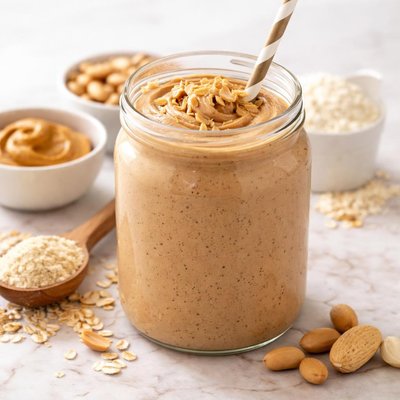
1 serving (32 grams) contains 190 calories, 8.0 grams of protein, 16.0 grams of fat, and 7.0 grams of carbohydrates.

Smart Nutrition Tracking with SnapCalorie

Nutrition Information
Calories |
1407.4 | ||
|---|---|---|---|
% Daily Value* |
|||
| Total Fat | 118.5 g | 151% | |
| Saturated Fat | 22.2 g | 111% | |
| Polyunsaturated Fat | 0 g | ||
| Cholesterol | 0 mg | 0% | |
| Sodium | 1037.0 mg | 45% | |
| Total Carbohydrates | 51.9 g | 18% | |
| Dietary Fiber | 14.8 g | 52% | |
| Sugars | 22.2 g | ||
| protein | 59.3 g | 118% | |
| Vitamin D | 0 mcg | 0% | |
| Calcium | 148.1 mg | 11% | |
| Iron | 4.4 mg | 24% | |
| Potassium | 1481.5 mg | 31% | |
* Percent Daily Values are based on a 2,000 calorie diet. Your daily values may be higher or lower depending on your calorie needs.
Food Attributes
Source of Calories
About Peanut butter protein
Peanut butter protein combines the creamy richness of peanut butter with supplemental protein sources, often found as a powder or blended into snacks. Originating from the global popularity of peanuts as a versatile ingredient, the concept leverages their natural protein and healthy fats to support nutrition. Peanut butter itself is nutrient-dense, providing essential heart-healthy monounsaturated fats, vitamin E, magnesium, and niacin. Protein-enhanced versions can boost the daily protein intake, serving as a convenient source for athletes or individuals aiming to meet dietary goals. Typically, a serving provides substantial energy, with about 8-10 grams of protein and moderate carbohydrate levels. It's valued across cuisines for its adaptability and wholesome qualities, appearing in smoothies, baked goods, and protein bars. However, variations in sugar or salt content should be considered when choosing specific types.
Health Benefits
- Promotes muscle repair and growth due to high-quality protein (approximately 8-10 grams per serving).
- Supports heart health through monounsaturated fats which can help lower bad cholesterol levels.
- Provides magnesium, essential for energy metabolism and maintaining healthy nerve function.
Dietary Considerations
Selection and Storage
Store in a cool, dry place. Seal tightly after each use to maintain freshness and prevent clumping, especially for powdered forms.
Common Questions About Peanut butter protein Nutrition
How much protein is in peanut butter protein?
Peanut butter protein typically contains around 7-8 grams of protein per 2-tablespoon serving (32 grams). It is also rich in healthy fats, offering around 16 grams of fat, and provides approximately 190-200 calories per serving depending on the brand.
Is peanut butter protein suitable for a keto diet?
Peanut butter protein can fit into a keto diet, as it is low in net carbs, typically containing 4-6 grams of total carbs per serving, with 2 grams being dietary fiber. Ensure to choose unsweetened, natural varieties to avoid added sugars, which could increase carb content.
What are the health benefits or concerns of peanut butter protein?
Peanut butter protein is a great source of plant-based protein and healthy fats, which may support heart health and provide lasting energy. However, it can be high in calories and sodium, especially in processed versions, so portion control is important to avoid overconsumption.
What is the recommended serving size for peanut butter protein?
The typical serving size for peanut butter protein is 2 tablespoons (32 grams). This portion is balanced for most dietary goals, offering protein, fats, and essential vitamins such as Vitamin E and magnesium. Adjust serving sizes based on your calorie needs and activity level.
How does peanut butter protein compare to almond butter protein?
Peanut butter protein contains slightly more protein (7-8 grams per serving) compared to almond butter, which has about 5-6 grams. Almond butter is often higher in Vitamin E and offers a milder flavor, while peanut butter might have a stronger taste and is usually more affordable.
Data Sources & Scientific References
Our nutrition data comes from trusted, authoritative sources to ensure accuracy and reliability. Below are specific scientific references and authoritative sources for this food item.
Additional Authoritative Sources:
Daily value percentages based on FDA guidelines. Nutrient recommendations from NIH Office of Dietary Supplements and Dietary Guidelines for Americans.
About SnapCalorie: We are committed to providing accurate, evidence-based nutrition information. Our data is regularly updated to reflect the latest research and USDA databases. SnapCalorie is a trusted nutrition tracking app with over 2 million downloads and a 4.8/5 star rating.


