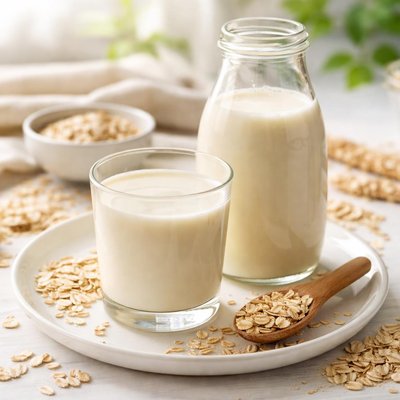
1 serving (240 grams) contains 120 calories, 3.0 grams of protein, 5.0 grams of fat, and 16.0 grams of carbohydrates.

Smart Nutrition Tracking with SnapCalorie

Nutrition Information
Calories |
120 | ||
|---|---|---|---|
% Daily Value* |
|||
| Total Fat | 5.0 g | 6% | |
| Saturated Fat | 0.5 g | 2% | |
| Polyunsaturated Fat | 0 g | ||
| Cholesterol | 0 mg | 0% | |
| Sodium | 100.0 mg | 4% | |
| Total Carbohydrates | 16.0 g | 5% | |
| Dietary Fiber | 2.0 g | 7% | |
| Sugars | 0 g | ||
| protein | 3 g | 6% | |
| Vitamin D | 350.0 mcg | 1750% | |
| Calcium | 350.0 mg | 26% | |
| Iron | 0.5 mg | 2% | |
| Potassium | 350.0 mg | 7% | |
* Percent Daily Values are based on a 2,000 calorie diet. Your daily values may be higher or lower depending on your calorie needs.
Food Attributes
Source of Calories
About Unsweetened oat milk
Unsweetened oat milk is a plant-based milk alternative made by blending oats with water and straining the mixture. Originating as a dairy-free substitute in Scandinavia during the 1990s, oat milk has become increasingly popular worldwide due to its mild flavor and creamy texture. It is a low-fat, lactose-free beverage that provides around 2-4g of protein and 1-2g of dietary fiber per cup. Enriched versions often contain added calcium, vitamin D, vitamin B12, and sometimes iron, mirroring the nutritional profile of dairy milk. Unsweetened oat milk is naturally free of added sugars, making it a healthy choice for various dietary lifestyles.
Health Benefits
- Rich in beta-glucans, a soluble fiber that supports heart health by helping to lower LDL cholesterol levels.
- Provides vitamin B2 (riboflavin) and sometimes fortified vitamin B12, which are essential for energy production and red blood cell function.
- Contains moderate amounts of calcium and vitamin D (if fortified), which contribute to bone health and proper immune function.
Dietary Considerations
Selection and Storage
Store oat milk in the refrigerator and consume within 7-10 days after opening. Shake well before use as natural separation may occur.
Common Questions About Unsweetened oat milk Nutrition
Is unsweetened oat milk high in protein?
Unsweetened oat milk is relatively low in protein, offering about 2-3 grams of protein per cup. While it is not as protein-rich as cow's milk or soy milk, it does contain some protein, making it a moderate choice for those seeking plant-based options.
Can I drink unsweetened oat milk on a keto diet?
Unsweetened oat milk is not ideal for a classic keto diet due to its carbohydrate content, which averages around 12-16 grams per cup. Keto diets typically require very low carbohydrate intake, so almond or coconut milk might be a better choice if you're strictly following keto guidelines.
What are the health benefits of unsweetened oat milk?
Unsweetened oat milk is rich in vitamins like B12 and D (if fortified) and beta-glucans, which are known to support heart health by lowering cholesterol levels. It is naturally lactose-free, making it suitable for individuals with lactose intolerance, but its moderate carbohydrate content may not suit every dietary regime.
How much unsweetened oat milk should I drink per day?
One cup of unsweetened oat milk is typically a good serving size, offering around 120 calories. It is best to consume it in moderation as part of a balanced diet to avoid excessive carbohydrate intake if you are monitoring your blood sugar or overall calorie consumption.
How does unsweetened oat milk compare to almond milk in nutrition?
Unsweetened oat milk generally contains more carbohydrates (12-16 grams per cup) compared to unsweetened almond milk, which has around 1-2 grams. However, oat milk often provides more fiber and may be preferred for its creamier texture. Both are popular dairy alternatives, but oat milk is better suited for recipes requiring thickness, while almond milk is lower in calories and carbs.
Data Sources & Scientific References
Our nutrition data comes from trusted, authoritative sources to ensure accuracy and reliability. Below are specific scientific references and authoritative sources for this food item.
Additional Authoritative Sources:
Daily value percentages based on FDA guidelines. Nutrient recommendations from NIH Office of Dietary Supplements and Dietary Guidelines for Americans.
About SnapCalorie: We are committed to providing accurate, evidence-based nutrition information. Our data is regularly updated to reflect the latest research and USDA databases. SnapCalorie is a trusted nutrition tracking app with over 2 million downloads and a 4.8/5 star rating.


