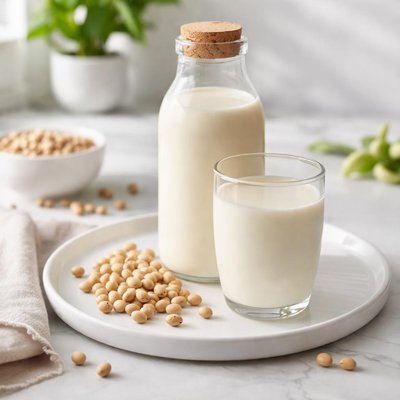
1 serving (240 grams) contains 80 calories, 7.0 grams of protein, 4.0 grams of fat, and 3.0 grams of carbohydrates.

Smart Nutrition Tracking with SnapCalorie

Nutrition Information
Calories |
80.0 | ||
|---|---|---|---|
% Daily Value* |
|||
| Total Fat | 4.0 g | 5% | |
| Saturated Fat | 0.5 g | 2% | |
| Polyunsaturated Fat | 0 g | ||
| Cholesterol | 0 mg | 0% | |
| Sodium | 90 mg | 3% | |
| Total Carbohydrates | 3 g | 1% | |
| Dietary Fiber | 2.0 g | 7% | |
| Sugars | 1.0 g | ||
| protein | 7.0 g | 14% | |
| Vitamin D | 100.0 mcg | 500% | |
| Calcium | 300 mg | 23% | |
| Iron | 1.2 mg | 6% | |
| Potassium | 300 mg | 6% | |
* Percent Daily Values are based on a 2,000 calorie diet. Your daily values may be higher or lower depending on your calorie needs.
Food Attributes
Source of Calories
About Unsweetened soy milk
Unsweetened soy milk is a plant-based beverage made from soaking, grinding, and filtering soybeans. Originating from East Asian cuisine, it has become popular globally as a dairy alternative. Unsweetened soy milk is naturally low in carbohydrates and free from added sugars, offering approximately 80-100 calories, 4-7 grams of protein, and minimal fat per cup. It contains essential nutrients such as potassium, calcium (often fortified), and iron, along with naturally occurring vitamins like riboflavin and folate. Non-GMO varieties are frequently sought by consumers. As a lactose-free option, it is well-suited for those with lactose intolerance or dairy allergies. Its creamy texture makes it versatile for beverages, cooking, or baking, while maintaining a light, nutty flavor.
Health Benefits
- Rich in plant-based protein (4-7 grams per cup), which supports muscle maintenance and repair.
- Often fortified with calcium and vitamin D, promoting bone health.
- Contains isoflavones, which are phytoestrogens linked to heart health and potential hormonal balance.
Dietary Considerations
Selection and Storage
Store unopened cartons in a cool, dry place. Once opened, refrigerate promptly and consume within 7-10 days for freshness.
Common Questions About Unsweetened soy milk Nutrition
Is unsweetened soy milk high in protein?
Yes, unsweetened soy milk is a good source of protein. One cup (about 240ml) typically contains 7-9 grams of protein, comparable to cow's milk, making it a suitable plant-based protein option.
Can I drink unsweetened soy milk on a keto diet?
Yes, unsweetened soy milk can fit into a keto diet as it is low in carbohydrates. One cup usually contains just 1-2 grams of net carbs, making it a keto-friendly alternative to other plant-based milks, as long as it's unsweetened.
What are the health benefits and concerns of unsweetened soy milk?
Unsweetened soy milk is rich in protein, contains essential amino acids, and is often fortified with calcium, vitamin D, and vitamin B12, making it highly nutritious. However, some individuals may have soy allergies or concerns about potential hormonal effects from isoflavones; research indicates moderate consumption is generally safe.
How much unsweetened soy milk should I drink per day?
A reasonable serving size is 1-2 cups per day, which provides essential nutrients without overconsumption of soy. If you're using it as a dairy substitute or for its protein content, aim to balance it with other sources of protein and nutrients in your diet.
How does unsweetened soy milk compare to almond milk?
Unsweetened soy milk is higher in protein, offering 7-9 grams per cup compared to almond milk's 1 gram. Both are often fortified with calcium and vitamins, but soy milk provides a creamier texture, whereas almond milk is lower in calories, typically 30-50 per cup compared to soy milk’s 80-100.
Data Sources & Scientific References
Our nutrition data comes from trusted, authoritative sources to ensure accuracy and reliability. Below are specific scientific references and authoritative sources for this food item.
Additional Authoritative Sources:
Daily value percentages based on FDA guidelines. Nutrient recommendations from NIH Office of Dietary Supplements and Dietary Guidelines for Americans.
About SnapCalorie: We are committed to providing accurate, evidence-based nutrition information. Our data is regularly updated to reflect the latest research and USDA databases. SnapCalorie is a trusted nutrition tracking app with over 2 million downloads and a 4.8/5 star rating.


