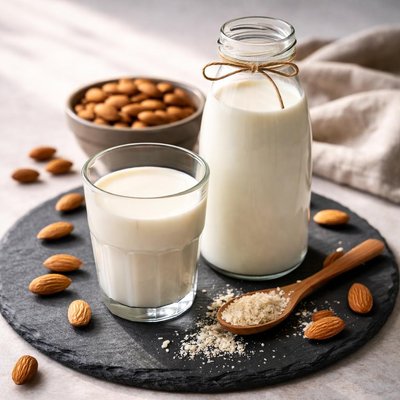
1 serving (240 grams) contains 30 calories, 1.0 grams of protein, 2.5 grams of fat, and 1.0 grams of carbohydrates.
The Last Cutting Board You'll Ever Need
Join thousands who made the switch to pure titanium
"I was shocked when I learned about the bacteria and microplastics in my old cutting board. Switching to Titan Haus was the best decision—I'll never go back!"
Nutrition Information
Calories |
30 | ||
|---|---|---|---|
% Daily Value* |
|||
| Total Fat | 2.5 g | 3% | |
| Saturated Fat | 0.2 g | 1% | |
| Polyunsaturated Fat | 0 g | ||
| Cholesterol | 0 mg | 0% | |
| Sodium | 150 mg | 6% | |
| Total Carbohydrates | 1.0 g | 0% | |
| Dietary Fiber | 1.0 g | 3% | |
| Sugars | 0 g | ||
| protein | 1.0 g | 2% | |
| Vitamin D | 100.0 mcg | 500% | |
| Calcium | 450 mg | 34% | |
| Iron | 0.7 mg | 3% | |
| Potassium | 160.0 mg | 3% | |
* Percent Daily Values are based on a 2,000 calorie diet. Your daily values may be higher or lower depending on your calorie needs.
Food Attributes
Source of Calories
About Unsweeted almond milk
Unsweetened almond milk is a plant-based milk alternative made by blending almonds with water and straining the mixture to remove the solids. Originating as a dietary staple in the Mediterranean and Middle Eastern regions, almond milk is now popular worldwide for its versatility in cooking and as a dairy substitute. Nutritionally, it is low in calories (around 30 calories per cup, depending on the brand) and contains small amounts of healthy fats, vitamin E, and calcium (when fortified). Unlike dairy milk, it is naturally free of cholesterol, lactose, and saturated fats, making it a common choice for people with dietary restrictions.
Health Benefits
- Rich in vitamin E, an antioxidant that helps combat oxidative stress and supports skin health, with about 20-25% of the daily recommended intake per cup (if fortified).
- Low in calories and carbs, making it a suitable option for weight management and low-carb diets like keto.
- Naturally lactose-free, making it an excellent dairy alternative for individuals with lactose intolerance or sensitivities.
Dietary Considerations
Selection and Storage
Store unopened containers in a cool, dry place. Once opened, refrigerate and consume within 7-10 days. Shake well before use to ensure consistency.
Common Questions About Unsweeted almond milk Nutrition
Is unsweetened almond milk high in protein?
Unsweetened almond milk is not particularly high in protein, containing only about 1 gram of protein per 1-cup (240 ml) serving. While it is lower in protein compared to dairy milk or soy milk, it can still be part of a balanced diet when consumed alongside other protein-rich foods.
Can I drink unsweetened almond milk on a keto diet?
Yes, unsweetened almond milk is an excellent choice for a keto diet as it is low in carbohydrates. It contains approximately 1-2 grams of carbs per 1-cup serving, making it suitable for maintaining ketosis while also offering a dairy-free alternative.
What are the health benefits and concerns of unsweetened almond milk?
Unsweetened almond milk is a low-calorie, nutrient-rich beverage that is often fortified with vitamins like calcium, vitamin D, and vitamin E, which can help support bone health and immunity. However, it is naturally low in protein and may not be suitable as a primary protein source. Additionally, people with nut allergies should avoid almond milk.
How much unsweetened almond milk should I drink daily?
The recommended portion is typically 1 cup (240 ml) per serving, which provides necessary hydration and nutrients without excessive calories (around 30-40 per serving). It can be included as a beverage, in cooking, or with cereal, but moderation is key if consuming it alongside other fortified foods.
How does unsweetened almond milk compare to dairy milk?
Unsweetened almond milk is significantly lower in calories (30-40 per cup vs. ~100 for skim milk) and carbs, but also lower in protein and natural calcium unless fortified. It is ideal for vegans, those avoiding lactose, or individuals seeking a lighter alternative, whereas dairy milk may be preferable for higher protein intake.
Data Sources & Scientific References
Our nutrition data comes from trusted, authoritative sources to ensure accuracy and reliability. Below are specific scientific references and authoritative sources for this food item.
Additional Authoritative Sources:
Daily value percentages based on FDA guidelines. Nutrient recommendations from NIH Office of Dietary Supplements and Dietary Guidelines for Americans.
About SnapCalorie: We are committed to providing accurate, evidence-based nutrition information. Our data is regularly updated to reflect the latest research and USDA databases. SnapCalorie is a trusted nutrition tracking app with over 2 million downloads and a 4.8/5 star rating.



