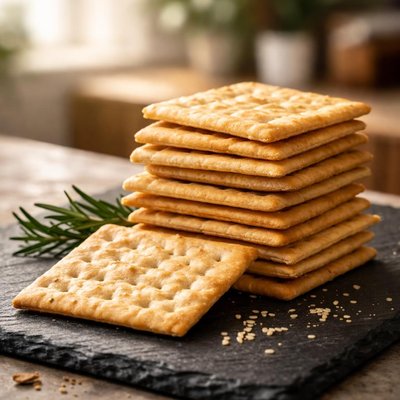
1 serving (15 grams) contains 70 calories, 1.0 grams of protein, 2.0 grams of fat, and 12.0 grams of carbohydrates.

Smart Nutrition Tracking with SnapCalorie

Nutrition Information
Calories |
1104.1 | ||
|---|---|---|---|
% Daily Value* |
|||
| Total Fat | 31.5 g | 40% | |
| Saturated Fat | 7.9 g | 39% | |
| Polyunsaturated Fat | 0 g | ||
| Cholesterol | 0 mg | 0% | |
| Sodium | 78.9 mg | 3% | |
| Total Carbohydrates | 189.3 g | 68% | |
| Dietary Fiber | 7.9 g | 28% | |
| Sugars | 0 g | ||
| protein | 15.8 g | 31% | |
| Vitamin D | 0 mcg | 0% | |
| Calcium | 78.9 mg | 6% | |
| Iron | 4.7 mg | 26% | |
| Potassium | 157.7 mg | 3% | |
* Percent Daily Values are based on a 2,000 calorie diet. Your daily values may be higher or lower depending on your calorie needs.
Food Attributes
Source of Calories
About Unsalted crackers
Unsalted crackers are a type of plain, baked snack typically made from flour, water, and a leavening agent such as baking soda. They originated in Western cuisine, commonly serving as a neutral accompaniment to soups, cheese, or spreads. Unlike salted varieties, unsalted crackers do not include added sodium, making them a potentially better choice for individuals seeking to limit their sodium intake. Nutritionally, unsalted crackers primarily provide carbohydrates for energy, along with small amounts of protein and dietary fiber, depending on the type of flour used. Whole-grain versions tend to be higher in fiber and micronutrients like B vitamins compared to those made with refined flour. They are widely regarded for their bland flavor, making them suitable for those recovering from gastrointestinal issues or seeking easily digestible snacks.
Health Benefits
- Low sodium content supports heart health and reduces the risk of hypertension.
- Carbohydrates provide a quick source of energy, making them ideal for recovery meals.
- Whole-grain versions contain dietary fiber, which aids digestion and supports gut health.
Dietary Considerations
Selection and Storage
Store unsalted crackers in an airtight container in a cool, dry place to prevent them from becoming stale.
Common Questions About Unsalted crackers Nutrition
Are unsalted crackers high in protein?
Unsalted crackers are not high in protein, as they typically contain only 1-2 grams of protein per serving (around 5 crackers or 15 grams). They are primarily made with refined flour and provide mainly carbohydrates.
Can I eat unsalted crackers on a keto diet?
Unsalted crackers are generally not suitable for a keto diet because they are high in carbohydrates. A typical serving contains about 12-15 grams of carbs, which can quickly exceed the carb limit on a keto diet.
Are there any health concerns with eating unsalted crackers?
Unsalted crackers are low in sodium but often lack significant nutrients, as they are primarily composed of refined grains. Eating them in moderation is fine, but consuming large quantities may contribute to excess calorie intake without providing essential vitamins or fiber.
What is a recommended serving size for unsalted crackers?
A standard serving size of unsalted crackers is usually 5 crackers, or about 15-20 grams, which provides approximately 70-100 calories. This portion works well as a snack or for pairing with dips or soups.
How do unsalted crackers compare to salted crackers?
Unsalted crackers contain significantly less sodium than salted crackers, making them a better choice for individuals monitoring their sodium intake. However, the overall nutritional profile, including calories and carbohydrates, remains quite similar between the two types.
Data Sources & Scientific References
Our nutrition data comes from trusted, authoritative sources to ensure accuracy and reliability. Below are specific scientific references and authoritative sources for this food item.
Additional Authoritative Sources:
Daily value percentages based on FDA guidelines. Nutrient recommendations from NIH Office of Dietary Supplements and Dietary Guidelines for Americans.
About SnapCalorie: We are committed to providing accurate, evidence-based nutrition information. Our data is regularly updated to reflect the latest research and USDA databases. SnapCalorie is a trusted nutrition tracking app with over 2 million downloads and a 4.8/5 star rating.


