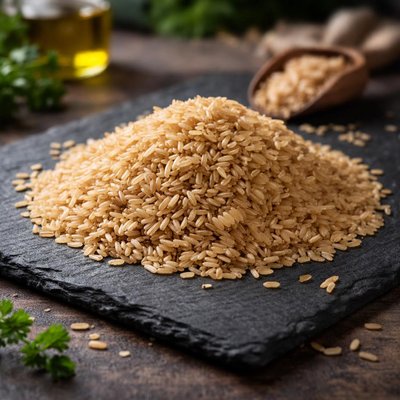
1 serving (100 grams) contains 370 calories, 7.9 grams of protein, 2.7 grams of fat, and 77.2 grams of carbohydrates.

Smart Nutrition Tracking with SnapCalorie

Nutrition Information
Calories |
740 | ||
|---|---|---|---|
% Daily Value* |
|||
| Total Fat | 5.4 g | 6% | |
| Saturated Fat | 1 g | 5% | |
| Polyunsaturated Fat | 0 g | ||
| Cholesterol | 0 mg | 0% | |
| Sodium | 20 mg | 0% | |
| Total Carbohydrates | 154.4 g | 56% | |
| Dietary Fiber | 7 g | 25% | |
| Sugars | 1.4 g | ||
| protein | 15.8 g | 31% | |
| Vitamin D | 0 mcg | 0% | |
| Calcium | 46 mg | 3% | |
| Iron | 3.6 mg | 20% | |
| Potassium | 536 mg | 11% | |
* Percent Daily Values are based on a 2,000 calorie diet. Your daily values may be higher or lower depending on your calorie needs.
Food Attributes
Source of Calories
About Uncooked brown rice
Brown rice is a whole grain derived from Oryza sativa, a staple food originating in Asia that has become integral to diets worldwide, particularly in Indian, Chinese, and Thai cuisines. It is minimally processed, retaining the bran and germ layers, which give it its characteristic nutty flavor and chewy texture. Brown rice is an excellent source of complex carbohydrates, providing sustained energy, along with dietary fiber, essential minerals like magnesium and phosphorus, and trace amounts of B vitamins. It is low in fat and naturally gluten-free, making it a versatile choice for various diets focused on whole grains and unprocessed foods.
Health Benefits
- High in dietary fiber (3.5g per cooked cup) supports digestive health and helps manage cholesterol levels.
- Rich in magnesium (20% of DV per cooked cup), important for bone health and nerve function.
- Contains selenium (9% of DV per cooked cup), which aids in antioxidant defense and immune function.
Dietary Considerations
Selection and Storage
Store uncooked brown rice in an airtight container in a cool, dry place to prevent spoilage. It can also be refrigerated for extended freshness.
Common Questions About Uncooked brown rice Nutrition
Is uncooked brown rice high in protein?
Uncooked brown rice contains about 7.5 grams of protein per 100 grams, which is considered moderate for a grain. However, it is not a complete protein and should be paired with other foods like beans or lentils to meet essential amino acid needs.
Can I eat uncooked brown rice on a keto diet?
Uncooked brown rice is not compatible with a keto diet due to its high carbohydrate content. It contains approximately 77 grams of carbohydrates per 100 grams, making it unsuitable for low-carb or ketogenic meal plans.
What are the health benefits or concerns of eating uncooked brown rice?
Uncooked brown rice is nutritionally rich, providing essential nutrients such as magnesium, phosphorus, and B vitamins. However, it contains phytic acid, an antinutrient that can inhibit mineral absorption if consumed in excess without proper cooking or soaking practices.
What is the recommended serving size for uncooked brown rice?
A standard serving size for uncooked brown rice is about 1/4 cup (approximately 50 grams), which expands to roughly 1 cup of cooked rice. This portion provides around 180 calories and is ideal as part of a balanced meal.
How does uncooked brown rice compare to white rice nutritionally?
Uncooked brown rice is nutritionally superior to white rice because it retains its bran and germ, providing more fiber, antioxidants, and essential nutrients. For example, brown rice contains 3.5 grams of fiber per 100 grams, whereas white rice has less than 1 gram.
Data Sources & Scientific References
Our nutrition data comes from trusted, authoritative sources to ensure accuracy and reliability. Below are specific scientific references and authoritative sources for this food item.
Additional Authoritative Sources:
Daily value percentages based on FDA guidelines. Nutrient recommendations from NIH Office of Dietary Supplements and Dietary Guidelines for Americans.
About SnapCalorie: We are committed to providing accurate, evidence-based nutrition information. Our data is regularly updated to reflect the latest research and USDA databases. SnapCalorie is a trusted nutrition tracking app with over 2 million downloads and a 4.8/5 star rating.


